MOE Key Laboratory of Gene Function and Regulation, State Key Laboratory of Biocontrol, School of Life Sciences, Sun Yat-sen University, Guangzhou, 510275, China.
Key Laboratory of Reproductive Medicine of Guangdong Province, The First Affiliated Hospital and School of Life Sciences, Sun Yat-sen University, Guangzhou, 510275, China.
Stem Cell Res Ther. 2020 Jul 23;11(1):314. doi: 10.1186/s13287-020-01800-w.
Embryonic stem cells (ESCs) are important source of clinical stem cells for therapy, so dissecting the functional gene regulatory network involved in their self-renewal and proliferation is an urgent task. We previously reported that Ddx56 interacts with the core transcriptional factor Oct4 by mass spectrometry analysis in ESCs. However, the exact function of Ddx56 in ESCs remains unclear.
We investigated the role of Ddx56 in mouse ESCs (mESCs) through both gain- and loss-of-function strategies. The effect of Ddx56 on mESCs was determined based on morphological changes, involvement in the network of pluripotency markers (Nanog, Oct4, Sox2), and altered lineage marker expression. In addition, the role of Ddx56 in mESCs was evaluated by polysome fractionation, qRT-PCR, and co-immunoprecipitation (co-IP). Finally, RNA sequencing was applied to explore potential network regulation by Ddx56 in mESCs.
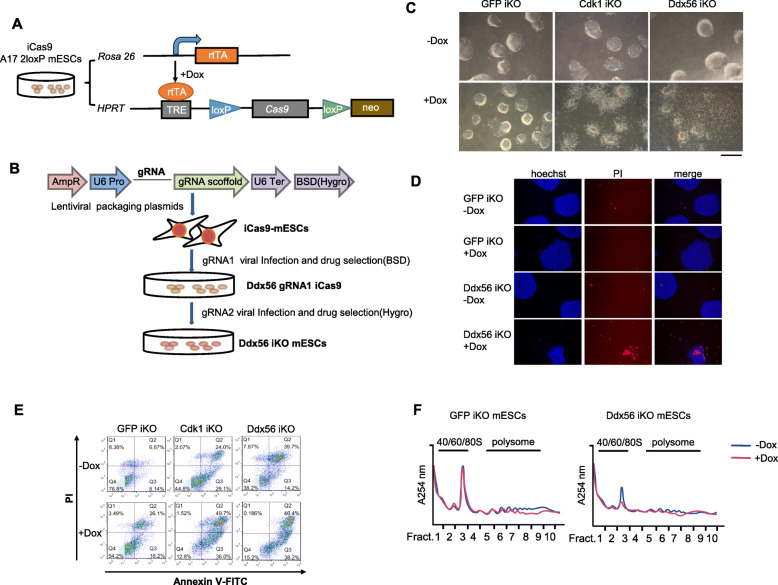
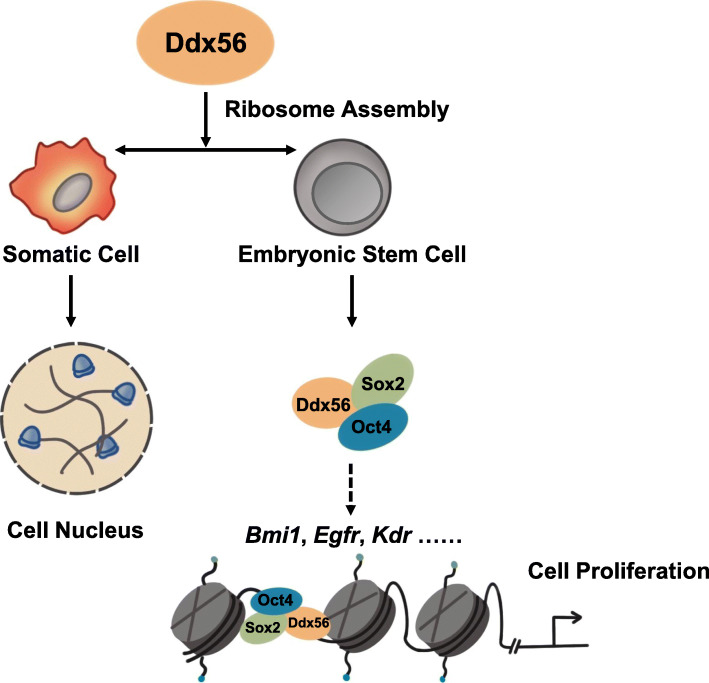
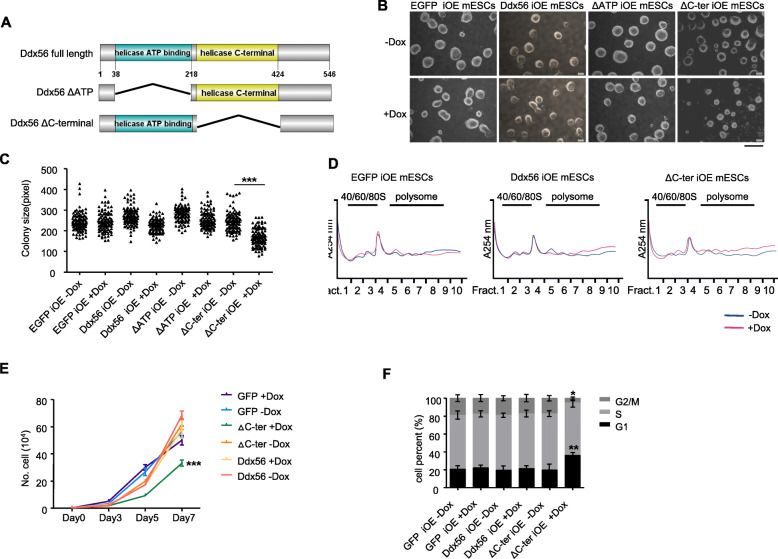
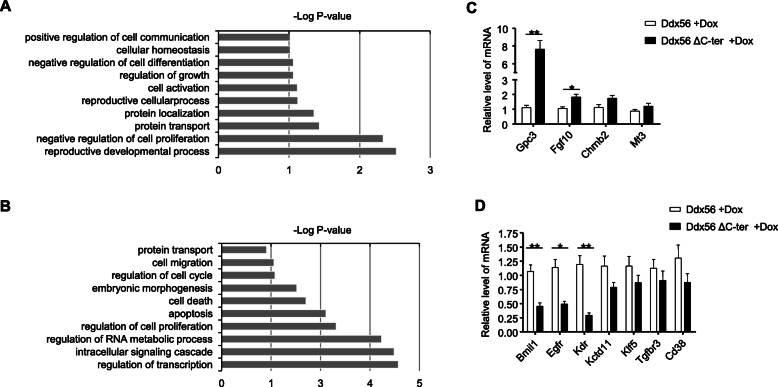
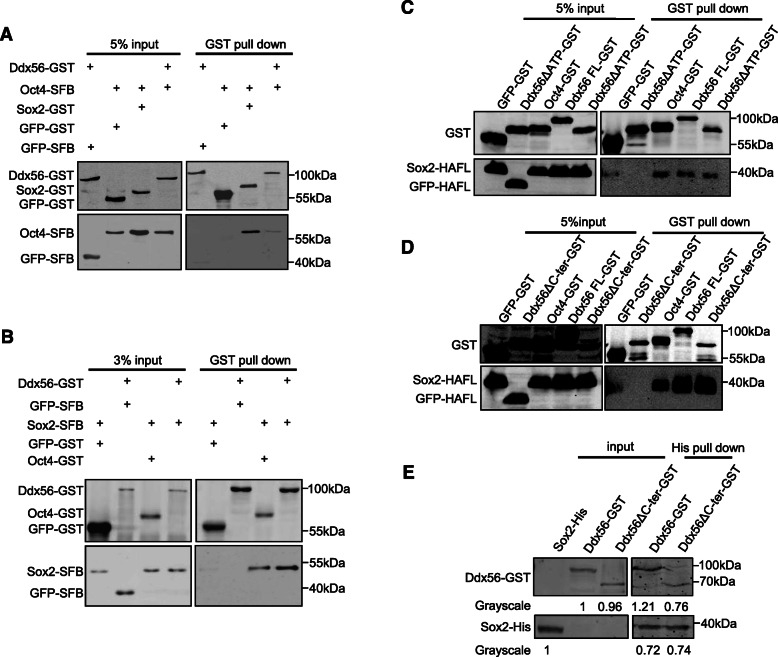
We found that Ddx56 participated in ribosome assembly, as knockout or RNAi knockdown of Ddx56 led to ribosome dysfunction and cell lethality. Surprisingly, exogenous expression of C-terminal domain truncated Ddx56 (Ddx56 ΔC-ter) did not affect ribosome assembly, but decreased mESC proliferation by downregulation of proliferation-related genes and cell cycle changing. In terms of mechanism, Ddx56 interacted with the Oct4 and Sox2 complex by binding to Sox2, whereas Ddx56 ΔC-ter showed weaker interaction with Sox2 and led to retardation of mESC proliferation.
Ddx56 maintains ESC proliferation by conventional regulation of ribosome assembly and interaction with the Oct4 and Sox2 complex.
胚胎干细胞(ESCs)是治疗用临床干细胞的重要来源,因此解析其自我更新和增殖所涉及的功能基因调控网络是当务之急。我们之前通过质谱分析发现 Ddx56 在 ESCs 中与核心转录因子 Oct4 相互作用。然而,Ddx56 在 ESCs 中的确切功能仍不清楚。
我们通过增益和失活功能策略研究了 Ddx56 在小鼠胚胎干细胞(mESCs)中的作用。基于形态变化、参与多能性标志物(Nanog、Oct4、Sox2)网络以及改变谱系标志物表达,确定 Ddx56 对 mESCs 的影响。此外,通过多核糖体分离、qRT-PCR 和共免疫沉淀(co-IP)评估了 Ddx56 在 mESCs 中的作用。最后,应用 RNA 测序来探索 Ddx56 在 mESCs 中潜在的网络调控作用。
我们发现 Ddx56 参与核糖体组装,因为 Ddx56 的敲除或 RNAi 敲低导致核糖体功能障碍和细胞死亡。令人惊讶的是,外源性表达 C 端结构域截断的 Ddx56(Ddx56 ΔC-ter)不会影响核糖体组装,但通过下调与增殖相关的基因和细胞周期改变来降低 mESC 增殖。就机制而言,Ddx56 通过与 Sox2 结合与 Oct4 和 Sox2 复合物相互作用,而 Ddx56 ΔC-ter 与 Sox2 的相互作用较弱,导致 mESC 增殖受阻。
Ddx56 通过常规的核糖体组装调控以及与 Oct4 和 Sox2 复合物的相互作用来维持 ESC 增殖。