Curtin Corrosion Centre, WA School of Mines: Minerals, Energy and Chemical Engineering, Curtin University, Kent Street, Bentley, WA, 6102, Australia.
Woodside Energy Ltd., Perth, WA, 6000, Australia.
Sci Rep. 2020 Jul 23;10(1):12287. doi: 10.1038/s41598-020-69292-5.
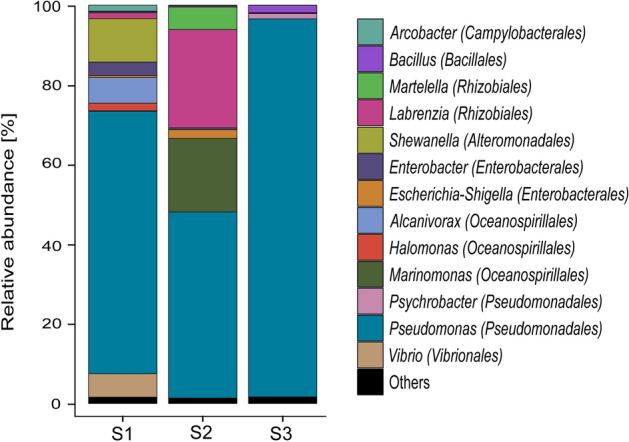
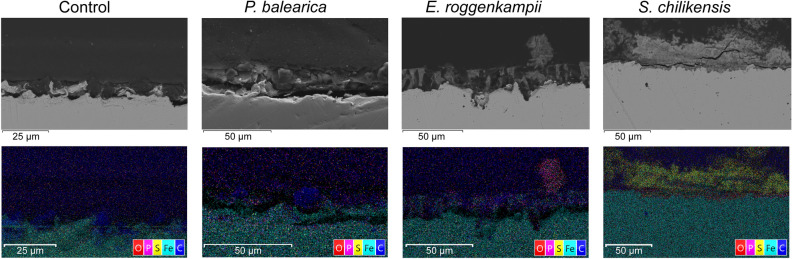
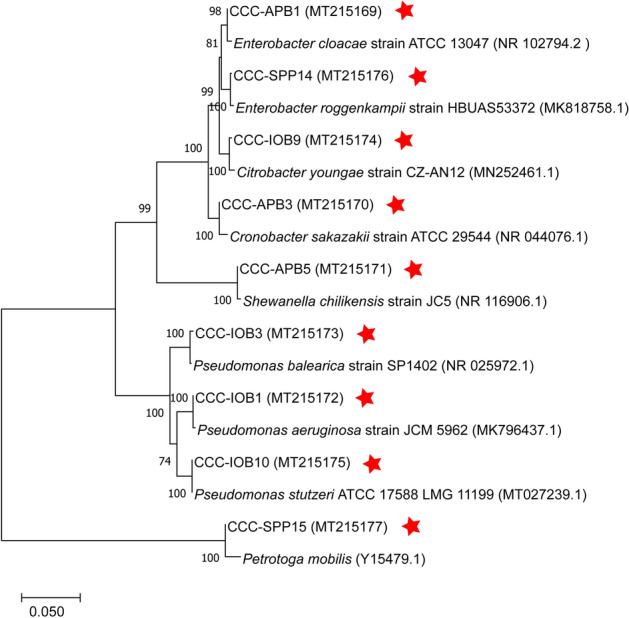
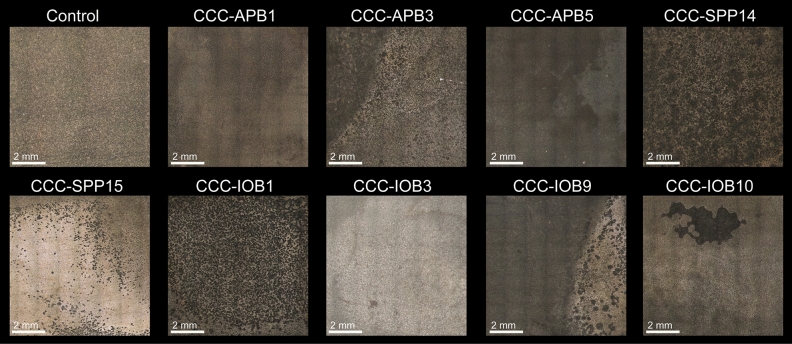
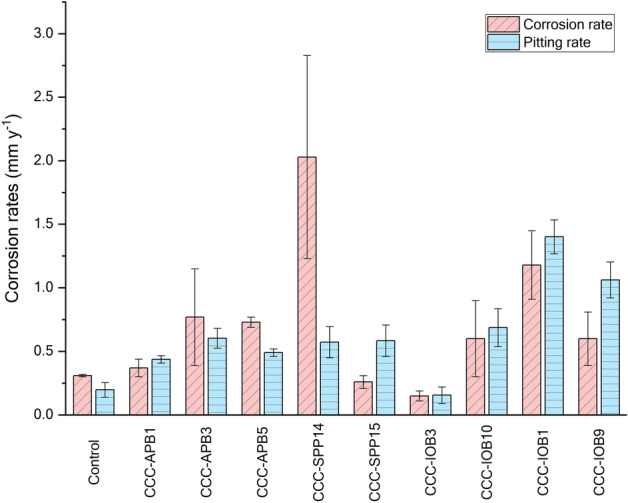
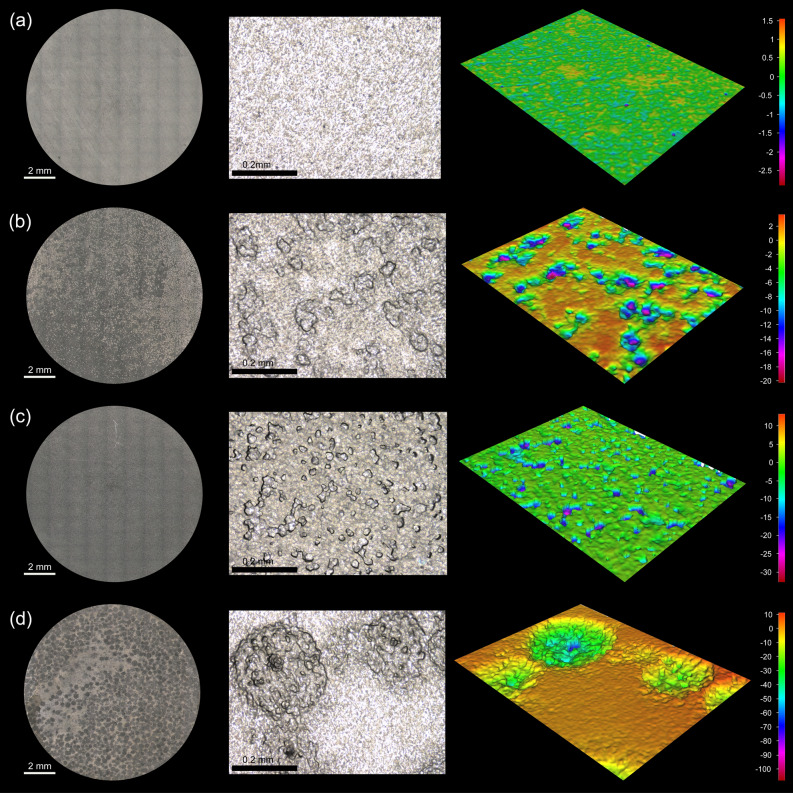
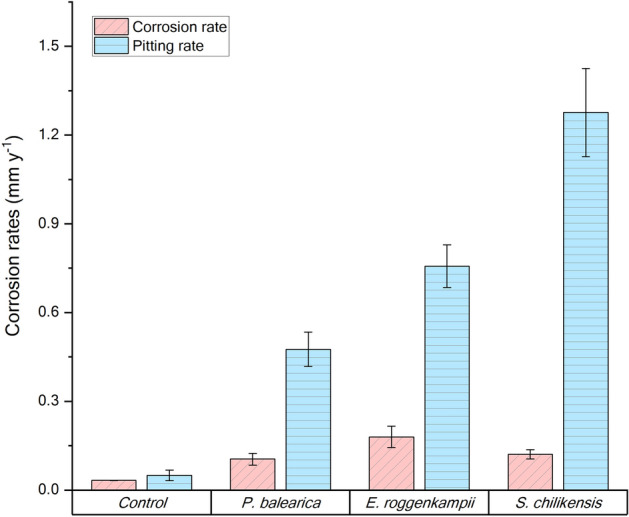
Corrosion of carbon steel by microorganisms recovered from corroded seal rings at an offshore floating production facility was investigated. Microbial diversity profiling revealed that communities in all sampled seal rings were dominated by Pseudomonas genus. Nine bacterial species, Pseudomonas aeruginosa CCC-IOB1, Pseudomonas balearica CCC-IOB3, Pseudomonas stutzeri CCC-IOB10, Citrobacter youngae CCC-IOB9, Petrotoga mobilis CCC-SPP15, Enterobacter roggenkampii CCC-SPP14, Enterobacter cloacae CCC-APB1, Cronobacter sakazakii CCC-APB3, and Shewanella chilikensis CCC-APB5 were isolated from corrosion products and identified based on 16S rRNA gene sequence. Corrosion rates induced by the individual isolates were evaluated in artificial seawater using short term immersion experiments at 40 °C under anaerobic conditions. P. balearica, E. roggenkampii, and S. chilikensis, which have not been associated with microbiologically influenced corrosion before, were further investigated at longer exposure times to better understand their effects on corrosion of carbon steel, using a combination of microbiological and surface analysis techniques. The results demonstrated that all bacterial isolates triggered general and localised corrosion of carbon steel. Differences observed in the surface deterioration pattern by the different bacterial isolates indicated variations in the corrosion reactions and mechanisms promoted by each isolate.
从海上浮式生产设施中腐蚀的密封环中回收的微生物对碳钢的腐蚀进行了研究。微生物多样性分析表明,所有采样密封环中的群落均以假单胞菌属为主。从腐蚀产物中分离出了 9 种细菌,分别为铜绿假单胞菌 CCC-IOB1、巴尔的摩假单胞菌 CCC-IOB3、施氏假单胞菌 CCC-IOB10、食酸菌 CCC-IOB9、摩氏摩根菌 CCC-SPP15、罗根氏菌 CCC-SPP14、阴沟肠杆菌 CCC-APB1、阪崎克罗诺杆菌 CCC-APB3 和希瓦氏菌 CCC-APB5,并根据 16S rRNA 基因序列进行了鉴定。在 40°C 无氧条件下,通过短期浸泡实验在人工海水中评估了单个分离物引起的腐蚀速率。以前没有与微生物影响腐蚀相关的巴尔的摩假单胞菌、罗根氏菌和希瓦氏菌,在更长的暴露时间内进行了进一步研究,以更好地了解它们对碳钢腐蚀的影响,使用了微生物学和表面分析技术的组合。结果表明,所有细菌分离物都引发了碳钢的全面和局部腐蚀。不同细菌分离物引起的表面恶化模式的差异表明,每个分离物促进的腐蚀反应和机制存在差异。