Lab Genetics & Mol Cardiology/LIM 13, Heart Institute (InCor), University of São Paulo Medical School, Av Dr Eneas C Aguiar 44, Sao Paulo, SP, 05403-000, Brazil.
Sci Rep. 2020 Jul 23;10(1):12350. doi: 10.1038/s41598-020-69413-0.
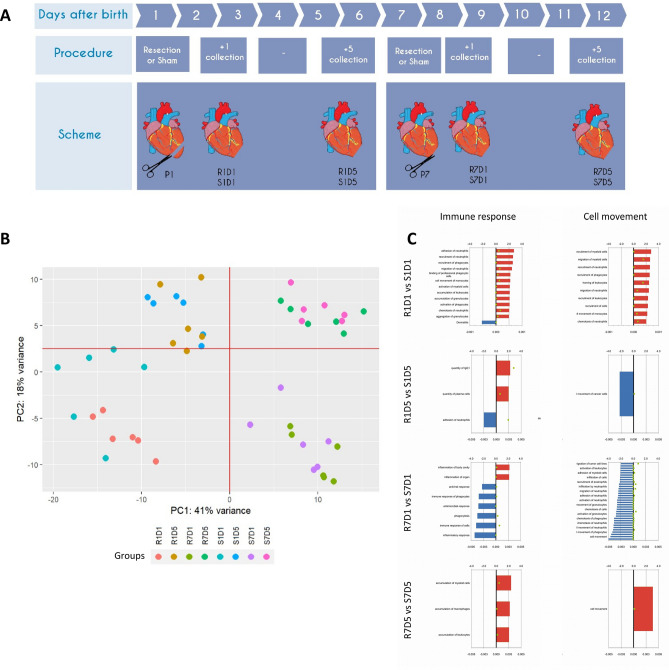
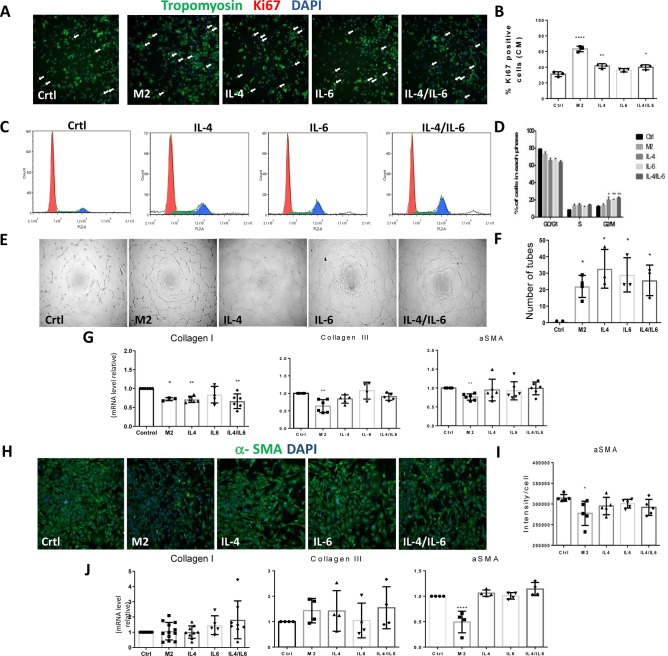
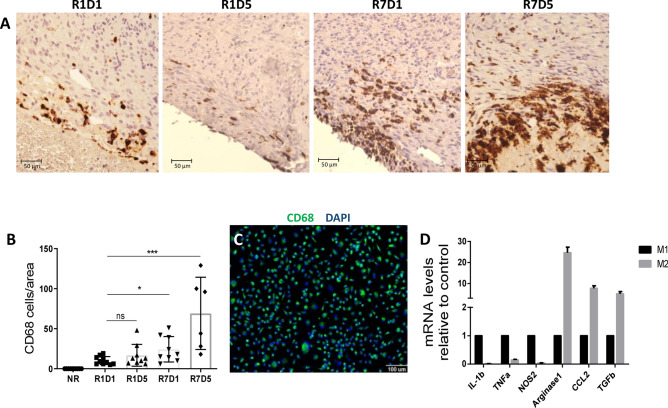
The nature of the early post-natal immune response in rodents appears to influence cardiac regeneration even though the underlying molecules remain poorly understood. Consistent with this idea, we show now significant changes in the expression of immune and cell movement gene pathways in heart samples from 1- and 7-day-old rats with ventricle resection. We then tested whether conditioned media from adult M2 anti-inflammatory macrophages target neonatal cardiac cells to a pro-regenerative like phenotype compared to the M1 pro-inflammatory macrophages. We found that M2 compared to M1 macrophage-conditioned media upregulates neonatal cardiomyocyte proliferation, suppresses myofibroblast-induced differentiation and stimulates endothelial cell tube formation. Using a cytokine array, we selected four candidate cytokine molecules uniquely expressed in M2 macrophage-conditioned media and showed that two of them (IL-4 and IL-6) induce endothelial cell proliferation whilst IL-4 promotes proliferation in neonatal cardiomyocytes and prevents myofibroblast-induced collagen type I secretion. Altogether, we provided evidence that adult M2 macrophage-conditioned media displays a paracrine beneficial pro-regenerative response in target cardiac cells and that IL-4 and IL-6 recapitulate, at least in part, these pleiotropic effects. Further characterization of macrophage immune phenotypes and their secreted molecules may give rise to novel therapeutic approaches for post-natal cardiac repair.
啮齿动物产后早期免疫反应的性质似乎会影响心脏再生,尽管其潜在分子仍知之甚少。与这一观点一致,我们现在表明,在接受心室切除的 1 天和 7 天大鼠的心脏样本中,免疫和细胞迁移基因途径的表达发生了显著变化。然后,我们测试了成年 M2 抗炎巨噬细胞的条件培养基是否会使新生儿心肌细胞向类似于再生的表型分化,而不是 M1 促炎巨噬细胞。我们发现,与 M1 巨噬细胞条件培养基相比,M2 巨噬细胞条件培养基上调了新生儿心肌细胞的增殖,抑制了成肌纤维细胞诱导的分化,并刺激了内皮细胞管形成。通过细胞因子阵列,我们选择了在 M2 巨噬细胞条件培养基中独特表达的四种候选细胞因子分子,并表明其中两种(IL-4 和 IL-6)诱导内皮细胞增殖,而 IL-4 促进新生儿心肌细胞增殖并防止成肌纤维细胞诱导的胶原 I 分泌。总之,我们提供的证据表明,成年 M2 巨噬细胞条件培养基在靶心肌细胞中显示出旁分泌的有益再生反应,并且 IL-4 和 IL-6 至少部分再现了这些多效性效应。进一步表征巨噬细胞免疫表型及其分泌的分子可能会为产后心脏修复带来新的治疗方法。