Di Trani Nicola, Silvestri Antonia, Wang Yu, Demarchi Danilo, Liu Xuewu, Grattoni Alessandro
Department of Nanomedicine, Houston Methodist Research Institute, Houston, TX 77030, USA.
University of Chinese Academy of Science (UCAS), Shijingshan, 19 Yuquan Road, Beijing 100049, China.
Pharmaceutics. 2020 Jul 19;12(7):679. doi: 10.3390/pharmaceutics12070679.
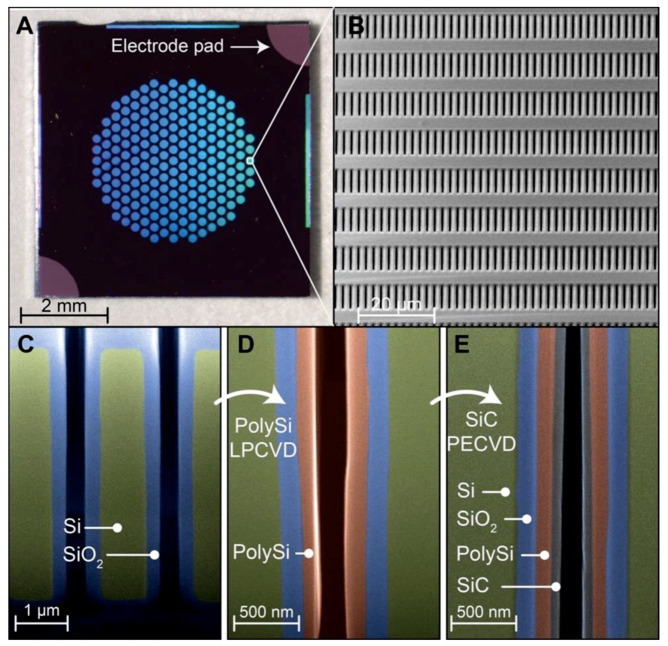
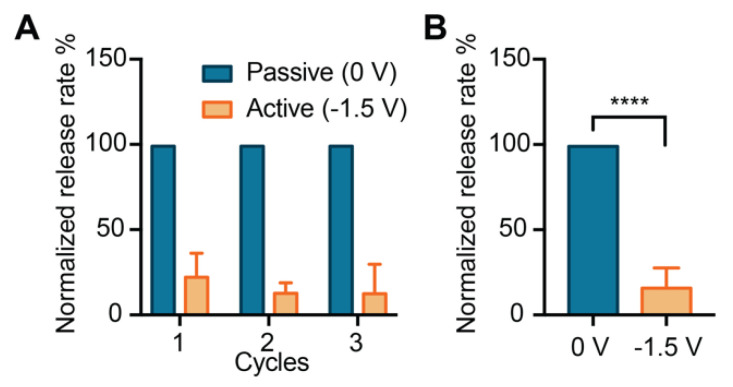
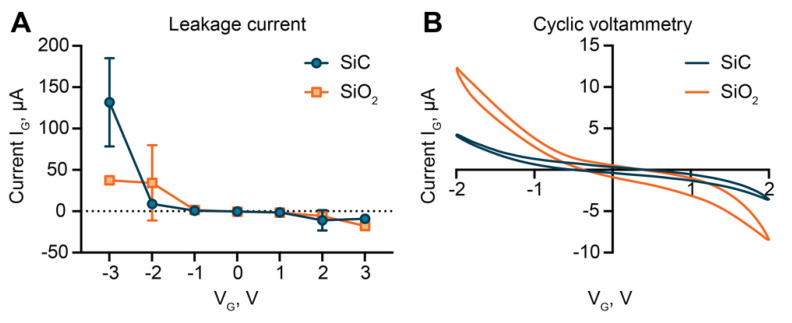
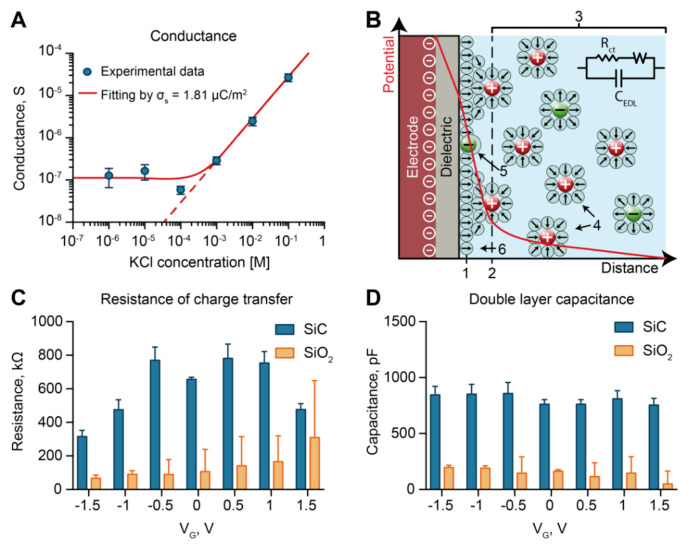
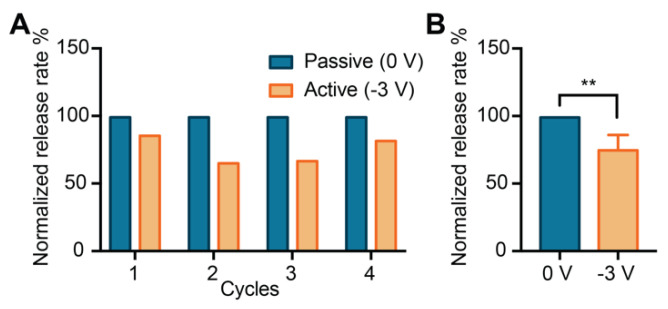
Individualized long-term management of chronic pathologies remains an elusive goal despite recent progress in drug formulation and implantable devices. The lack of advanced systems for therapeutic administration that can be controlled and tailored based on patient needs precludes optimal management of pathologies, such as diabetes, hypertension, rheumatoid arthritis. Several triggered systems for drug delivery have been demonstrated. However, they mostly rely on continuous external stimuli, which hinder their application for long-term treatments. In this work, we investigated a silicon nanofluidic technology that incorporates a gate electrode and examined its ability to achieve reproducible control of drug release. Silicon carbide (SiC) was used to coat the membrane surface, including nanochannels, ensuring biocompatibility and chemical inertness for long-term stability for in vivo deployment. With the application of a small voltage (≤ 3 V DC) to the buried polysilicon electrode, we showed in vitro repeatable modulation of membrane permeability of two model analytes-methotrexate and quantum dots. Methotrexate is a first-line therapeutic approach for rheumatoid arthritis; quantum dots represent multi-functional nanoparticles with broad applicability from bio-labeling to targeted drug delivery. Importantly, SiC coating demonstrated optimal properties as a gate dielectric, which rendered our membrane relevant for multiple applications beyond drug delivery, such as lab on a chip and micro total analysis systems (µTAS).
尽管在药物制剂和可植入设备方面取得了最新进展,但慢性病的个体化长期管理仍然是一个难以实现的目标。缺乏能够根据患者需求进行控制和定制的先进治疗给药系统,使得诸如糖尿病、高血压、类风湿性关节炎等疾病无法得到最佳管理。已经证明了几种触发式给药系统。然而,它们大多依赖于持续的外部刺激,这阻碍了它们在长期治疗中的应用。在这项工作中,我们研究了一种包含栅电极的硅纳米流体技术,并考察了其实现药物释放可重复控制的能力。碳化硅(SiC)用于涂覆包括纳米通道在内的膜表面,确保生物相容性和化学惰性,以实现体内长期稳定性。通过向埋入的多晶硅电极施加小电压(≤3 V直流),我们展示了对两种模型分析物——甲氨蝶呤和量子点的膜渗透性进行体外可重复调节。甲氨蝶呤是类风湿性关节炎的一线治疗方法;量子点代表多功能纳米颗粒,具有从生物标记到靶向给药的广泛适用性。重要的是,SiC涂层表现出作为栅极电介质的最佳性能,这使我们的膜适用于除药物递送之外的多种应用,如芯片实验室和微全分析系统(µTAS)。