Department of Biology, American University of Beirut, P.O. Box 11-0236, Beirut, Lebanon.
Department of Pharmacology and Therapeutics, Beirut Arab University, P.O. Box 11-5020, Beirut, Lebanon.
Int J Mol Sci. 2020 Jul 21;21(14):5160. doi: 10.3390/ijms21145160.
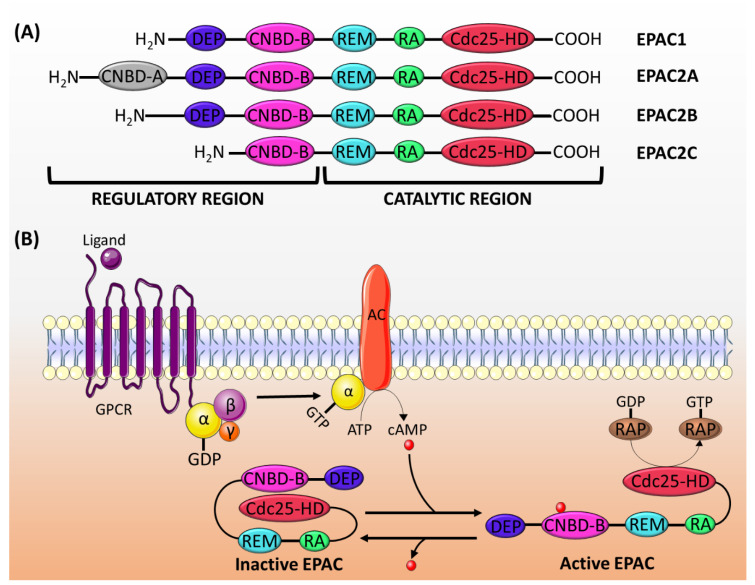
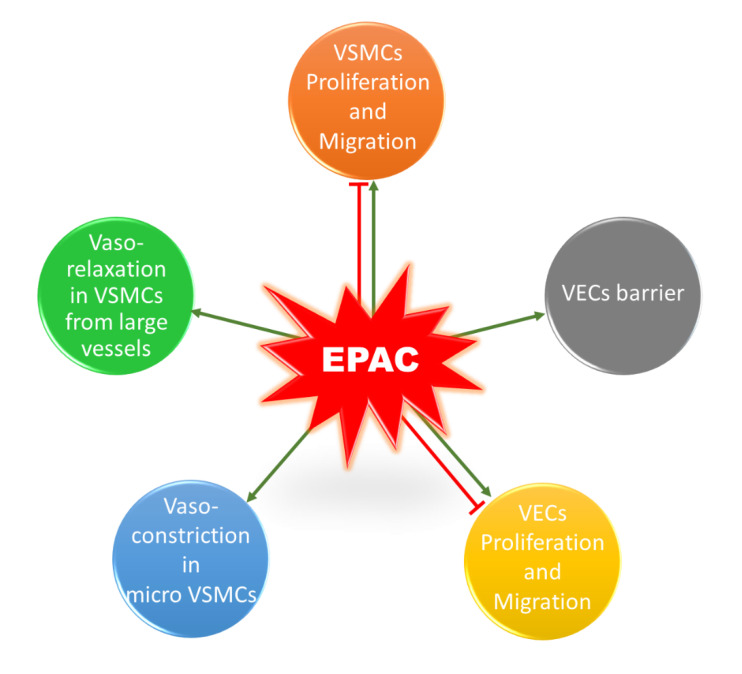
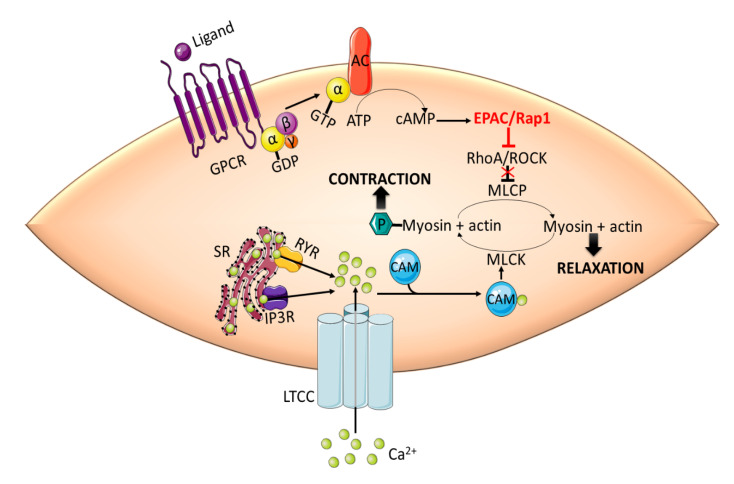
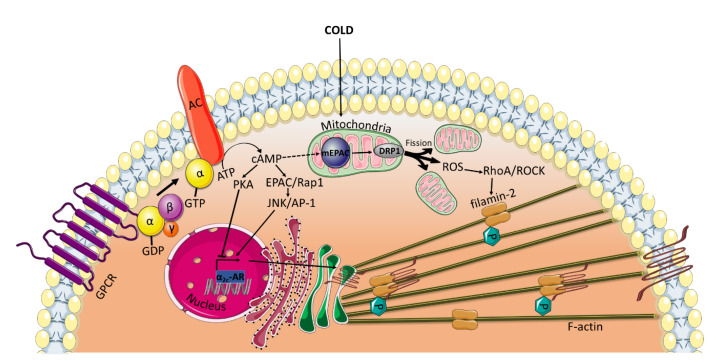
Vascular smooth muscle cells (VSMCs) are major components of blood vessels. They regulate physiological functions, such as vascular tone and blood flow. Under pathological conditions, VSMCs undergo a remodeling process known as phenotypic switching. During this process, VSMCs lose their contractility and acquire a synthetic phenotype, where they over-proliferate and migrate from the tunica media to the tunica interna, contributing to the occlusion of blood vessels. Since their discovery as effector proteins of cyclic adenosine 3',5'-monophosphate (cAMP), exchange proteins activated by cAMP (EPACs) have been shown to play vital roles in a plethora of pathways in different cell systems. While extensive research to identify the role of EPAC in the vasculature has been conducted, much remains to be explored to resolve the reported discordance in EPAC's effects. In this paper, we review the role of EPAC in VSMCs, namely its regulation of the vascular tone and phenotypic switching, with the likely involvement of reactive oxygen species (ROS) in the interplay between EPAC and its targets/effectors.
血管平滑肌细胞(VSMCs)是血管的主要组成部分。它们调节生理功能,如血管张力和血流。在病理条件下,VSMCs 经历一种称为表型转换的重塑过程。在这个过程中,VSMCs 失去收缩性并获得合成表型,过度增殖并从中膜迁移到内膜,导致血管闭塞。自被发现作为环腺苷酸 3',5'-单磷酸(cAMP)的效应蛋白以来,cAMP 激活的交换蛋白(EPAC)已被证明在不同细胞系统的众多途径中发挥重要作用。虽然已经进行了广泛的研究来确定 EPAC 在血管中的作用,但仍有许多需要探索的地方,以解决报告中 EPAC 作用的不一致性。在本文中,我们回顾了 EPAC 在 VSMCs 中的作用,即其对血管张力和表型转换的调节,以及活性氧(ROS)在 EPAC 与其靶标/效应物相互作用中的可能参与。