Department of Genetics, Evolution, Microbiology and Immunology, Institute of Biology, University of Campinas, Campinas 13083-862, Brazil.
Department of Cell Biology and Virology Research Center, Ribeirão Preto Medical School, University of São Paulo, Ribeirão Preto 14049-900, Brazil.
Viruses. 2020 Jul 21;12(7):785. doi: 10.3390/v12070785.
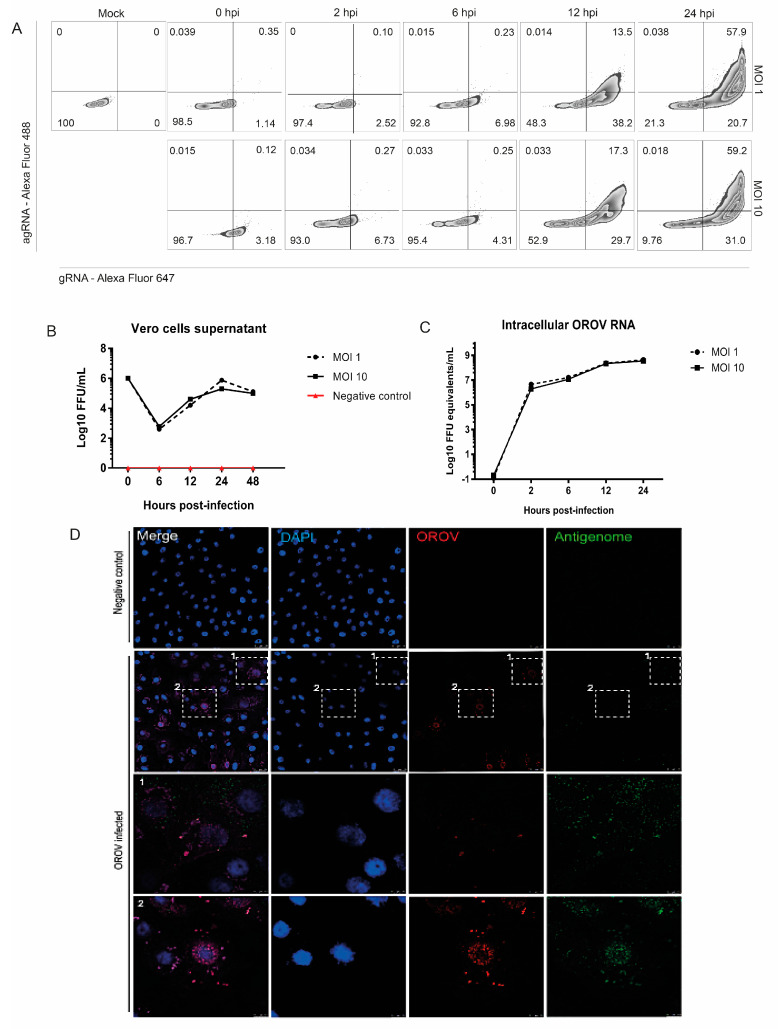
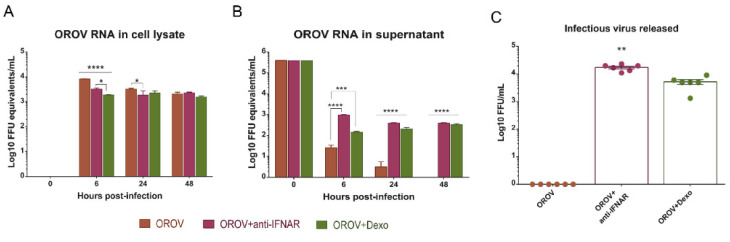
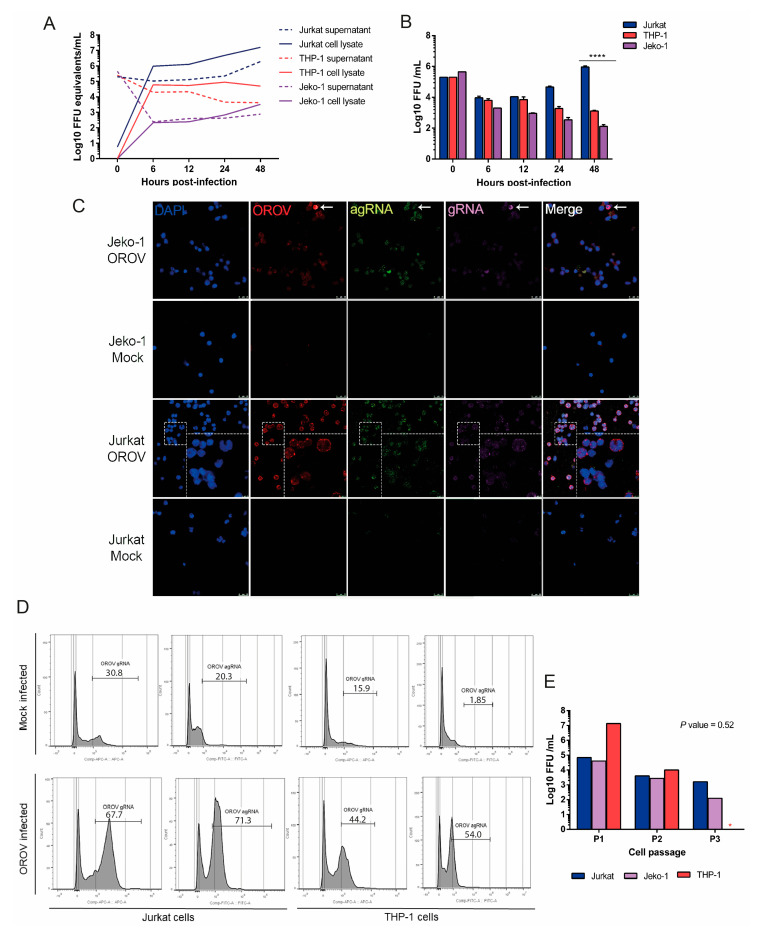
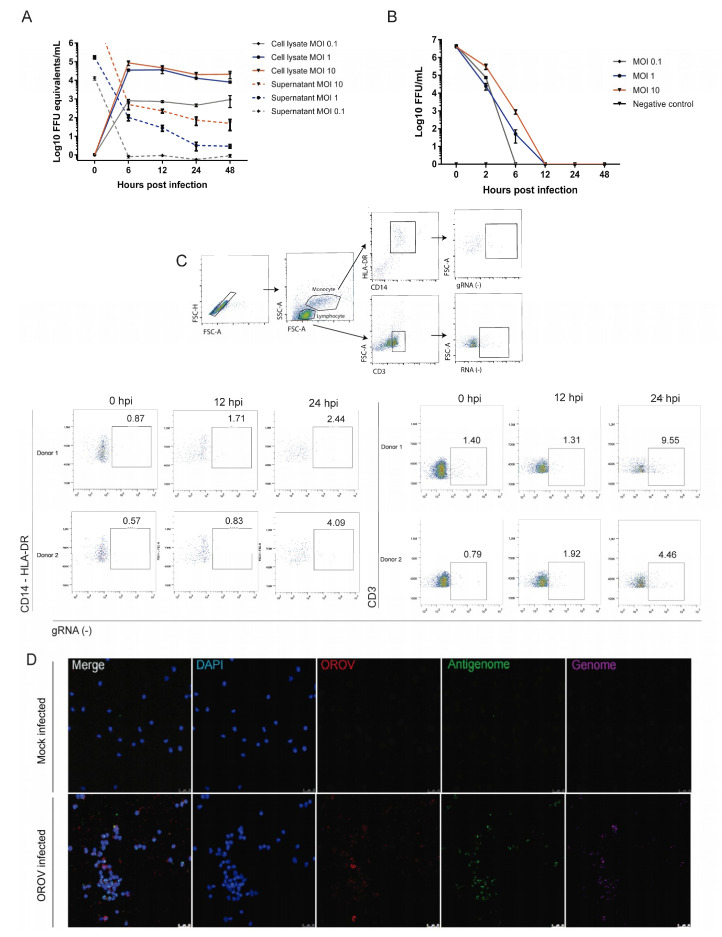
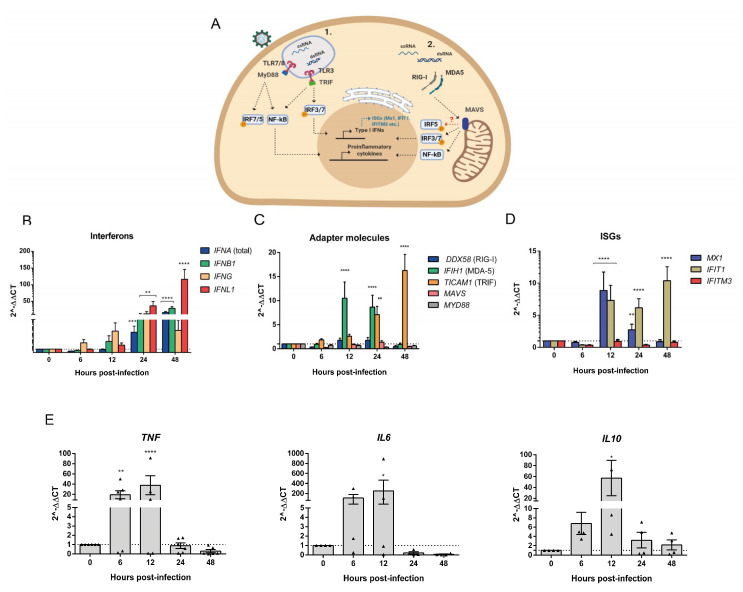
(OROV) is an emerging arbovirus with a high potential of dissemination in America. Little is known about the role of peripheral blood mononuclear cells (PBMC) response during OROV infection in humans. Thus, to evaluate human leukocytes susceptibility, permissiveness and immune response during OROV infection, we applied RNA hybridization, qRT-PCR and cell-based assays to quantify viral antigens, genome, antigenome and gene expression in different cells. First, we observed OROV replication in human leukocytes lineages as THP-1 monocytes, Jeko-1 B cells and Jurkat T cells. Interestingly, cell viability and viral particle detection are maintained in these cells, even after successive passages. PBMCs from healthy donors were susceptible but the infection was not productive, since neither antigenome nor infectious particle was found in the supernatant of infected PBMCs. In fact, only viral antigens and small quantities of OROV genome were detected at 24 hpi in lymphocytes, monocytes and CD11c cells. Finally, activation of the Interferon (IFN) response was essential to restrict OROV replication in human PBMCs. Increased expression of type I/III IFNs, ISGs and inflammatory cytokines was detected in the first 24 hpi and viral replication was re-established after blocking IFNAR or treating cells with glucocorticoid. Thus, in short, our results show OROV is able to infect and remain in low titers in human T cells, monocytes, DCs and B cells as a consequence of an effective IFN response after infection, indicating the possibility of leukocytes serving as a trojan horse in specific microenvironments during immunosuppression.
(OROV)是一种新兴的虫媒病毒,在美国具有很高的传播潜力。目前人们对人类感染 OROV 时外周血单核细胞(PBMC)反应的作用知之甚少。因此,为了评估人类白细胞在 OROV 感染过程中的易感性、允许性和免疫反应,我们应用 RNA 杂交、qRT-PCR 和基于细胞的测定法来定量不同细胞中病毒抗原、基因组、抗原基因组和基因表达。首先,我们观察到 OROV 在人类白细胞谱系中复制,如 THP-1 单核细胞、Jeko-1 B 细胞和 Jurkat T 细胞。有趣的是,即使在连续传代后,这些细胞的细胞活力和病毒粒子检测仍然得以维持。健康供体的 PBMC 易感,但感染没有产生效果,因为在感染的 PBMC 上清液中未发现抗原基因组或感染性颗粒。事实上,在淋巴细胞、单核细胞和 CD11c 细胞中,仅在感染后 24 小时检测到病毒抗原和少量 OROV 基因组。最后,干扰素(IFN)反应的激活对于限制 OROV 在人类 PBMC 中的复制至关重要。在感染后的前 24 小时内,检测到 I 型/III 型 IFN、ISGs 和炎症细胞因子的表达增加,并且在阻断 IFNAR 或用糖皮质激素处理细胞后,病毒复制得到重新建立。因此,简而言之,我们的结果表明,由于感染后有效的 IFN 反应,OROV 能够感染并保持在人类 T 细胞、单核细胞、DC 和 B 细胞中的低滴度,这表明白细胞在免疫抑制时的特定微环境中可能充当特洛伊木马。