Scachetti Gabriel C, Forato Julia, Claro Ingra M, Hua Xinyi, Salgado Bárbara B, Vieira Aline, Simeoni Camila L, Barbosa Aguyda R C, Rosa Italo L, de Souza Gabriela F, Fernandes Luana C N, de Sena Ana Carla H, Oliveira Stephanne C, Singh Carolina M L, de Lima Shirlene T, de Jesus Ronaldo, Costa Mariana A, Kato Rodrigo B, Rocha Josilene F, Santos Leandro C, Rodrigues Janete T, Cunha Marielton P, Sabino Ester C, Faria Nuno R, Weaver Scott C, Romano Camila M, Lalwani Pritesh, Proença-Módena José Luiz, de Souza William M
Laboratory of Emerging Viruses, Department of Genetics, Evolution, Microbiology and Immunology, Institute of Biology, University of Campinas, Campinas, Brazil.
Department of Microbiology, Immunology, and Molecular Genetics, College of Medicine, University of Kentucky, Lexington, KY, USA.
medRxiv. 2024 Jul 30:2024.07.27.24310296. doi: 10.1101/2024.07.27.24310296.
Oropouche virus (OROV; species ) is an arthropod-borne virus that has caused outbreaks of Oropouche fever in Central and South America since the 1950s. This study investigates virological factors contributing to the reemergence of Oropouche fever in Brazil between 2023 and 2024.
In this study, we combined OROV genomic, molecular, and serological data from Brazil from 1 January 2015 to 29 June 2024, along with and characterization. Molecular screening data included 93 patients with febrile illness between January 2023 and February 2024 from the Amazonas State. Genomic data comprised two genomic OROV sequences from patients. Serological data were obtained from neutralizing antibody tests comparing the prototype OROV strain BeAn 19991 and the 2024 epidemic strain. Epidemiological data included aggregated cases reported to the Brazilian Ministry of Health from 1 January 2014 to 29 June 2024.
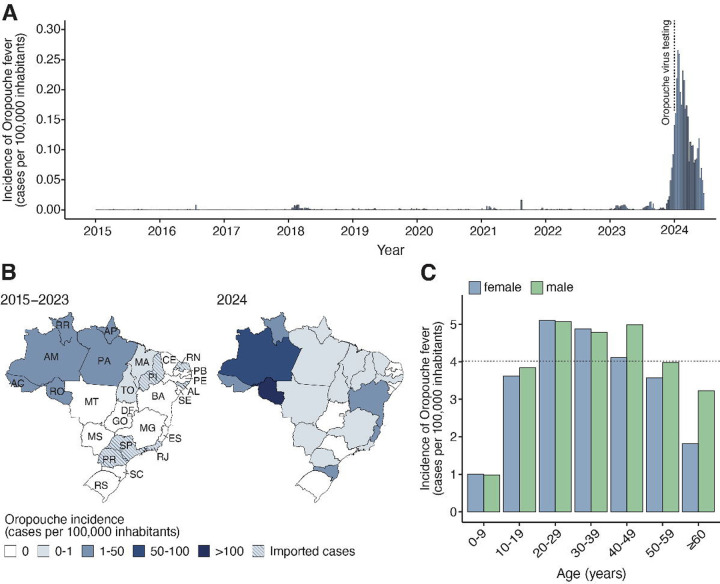
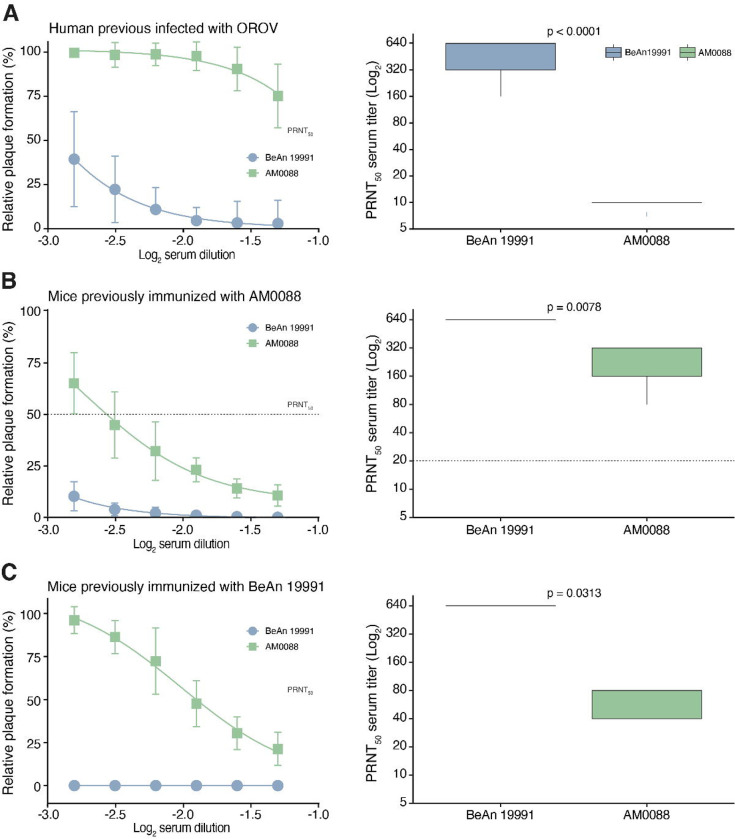
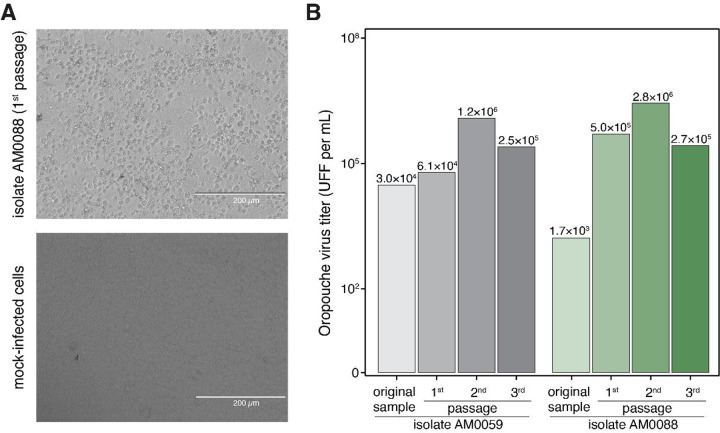
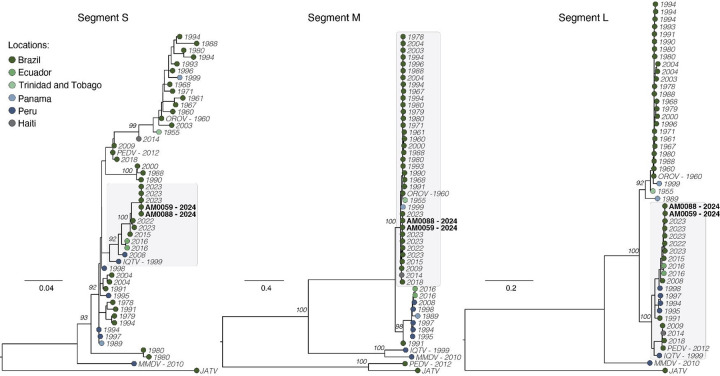
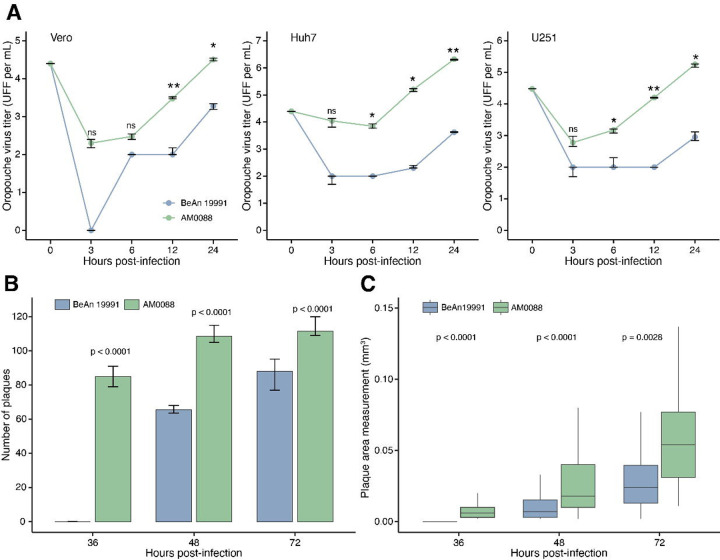
In 2024, autochthonous OROV infections were detected in previously non-endemic areas across all five Brazilian regions. Cases were reported in 19 of 27 federal units, with 83.2% (6,895 of 8,284) of infections in Northern Brazil and a nearly 200-fold increase in incidence compared to reported cases over the last decade. We detected OROV RNA in 10.8% (10 of 93) of patients with febrile illness between December 2023 and May 2024 in Amazonas. We demonstrate that the 2023-2024 epidemic was caused by a novel OROV reassortant that replicated approximately 100-fold higher titers in mammalian cells compared to the prototype strain. The 2023-2024 OROV reassortant displayed plaques earlier than the prototype, produced 1.7 times more plaques, and plaque sizes were 2.5 larger compared to the prototype. Furthermore, serum collected in 2016 from previously OROV-infected individuals showed at least a 32-fold reduction in neutralizing capacity against the reassortment strain compared to the prototype.
These findings provide a comprehensive assessment of Oropouche fever in Brazil and contribute to a better understanding of the 2023-2024 OROV reemergence. The recent increased incidence may be related to a higher replication efficiency of a new reassortant virus that also evades previous immunity.
奥罗普切病毒(OROV;种 )是一种节肢动物传播的病毒,自20世纪50年代以来在中美洲和南美洲引发了奥罗普切热疫情。本研究调查了2023年至2024年期间导致巴西奥罗普切热再次出现的病毒学因素。
在本研究中,我们整合了2015年1月1日至2024年6月29日来自巴西的OROV基因组、分子和血清学数据,以及 和 特征。分子筛查数据包括2023年1月至2024年2月来自亚马孙州的93例发热性疾病患者。基因组数据包括来自患者的两个OROV基因组序列。血清学数据来自中和抗体试验,比较了OROV原型株BeAn 19991和2024年流行株。流行病学数据包括2014年1月1日至2024年6月29日向巴西卫生部报告的汇总病例。
2024年,在巴西所有五个地区以前的非流行区均检测到本土OROV感染。在27个联邦单位中的19个报告了病例,其中巴西北部83.2%(8284例中的6895例)的感染,发病率与过去十年报告的病例相比增加了近200倍。2023年12月至2024年5月,在亚马孙州10.8%(93例中的10例)发热性疾病患者中检测到OROV RNA。我们证明,2023 - 2024年的疫情是由一种新型OROV重配体引起的,与原型株相比,该重配体在哺乳动物细胞中的复制滴度高约100倍。2023 - 2024年的OROV重配体比原型株更早出现噬斑,产生的噬斑多1.7倍,噬斑大小比原型株大2.5倍。此外,2016年从以前感染过OROV的个体收集的血清对重配株的中和能力与原型株相比至少降低了32倍。
这些发现对巴西的奥罗普切热进行了全面评估,有助于更好地理解2023 - 2024年OROV的再次出现。近期发病率的增加可能与一种新的重配病毒的更高复制效率有关,这种病毒还能逃避先前的免疫力。