Department of Pharmacology and Therapeutics, Roswell Park Comprehensive Cancer Center, Buffalo, NY 14263, USA.
Cells. 2020 Jul 16;9(7):1699. doi: 10.3390/cells9071699.
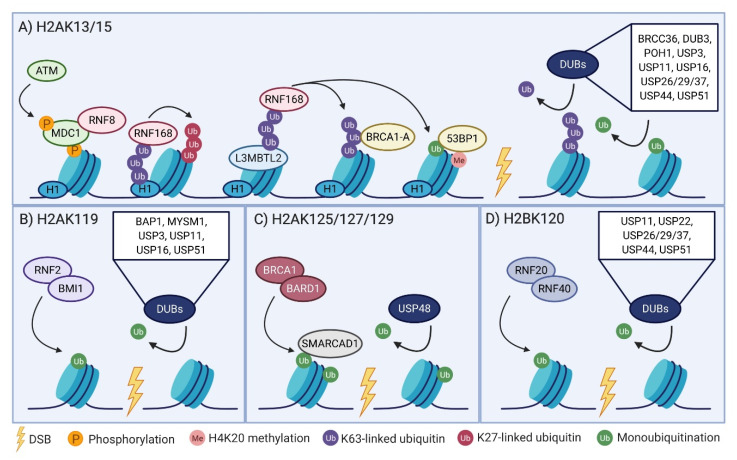
Eukaryotic cells are constantly exposed to both endogenous and exogenous stressors that promote the induction of DNA damage. Of this damage, double strand breaks (DSBs) are the most lethal and must be efficiently repaired in order to maintain genomic integrity. Repair of DSBs occurs primarily through one of two major pathways: non-homologous end joining (NHEJ) or homologous recombination (HR). The choice between these pathways is in part regulated by histone post-translational modifications (PTMs) including ubiquitination. Ubiquitinated histones not only influence transcription and chromatin architecture at sites neighboring DSBs but serve as critical recruitment platforms for repair machinery as well. The reversal of these modifications by deubiquitinating enzymes (DUBs) is increasingly being recognized in a number of cellular processes including DSB repair. In this context, DUBs ensure proper levels of ubiquitin, regulate recruitment of downstream effectors, dictate repair pathway choice, and facilitate appropriate termination of the repair response. This review outlines the current understanding of histone ubiquitination in response to DSBs, followed by a comprehensive overview of the DUBs that catalyze the removal of these marks.
真核细胞不断受到内源性和外源性应激源的影响,这些应激源会促进 DNA 损伤的诱导。在这种损伤中,双链断裂(DSBs)是最致命的,必须有效地修复,以维持基因组的完整性。DSBs 的修复主要通过两种主要途径之一进行:非同源末端连接(NHEJ)或同源重组(HR)。这些途径的选择部分受到组蛋白翻译后修饰(PTMs)的调节,包括泛素化。泛素化的组蛋白不仅影响邻近 DSBs 位点的转录和染色质结构,而且作为修复机制的关键募集平台。去泛素化酶(DUBs)对这些修饰的逆转在包括 DSB 修复在内的许多细胞过程中越来越受到重视。在这种情况下,DUBs 确保了适当水平的泛素,调节下游效应物的募集,决定修复途径的选择,并有助于修复反应的适当终止。本综述概述了 DSB 反应中组蛋白泛素化的最新认识,随后全面概述了催化这些标记去除的 DUBs。