The Interuniversity Messerli Research Institute of the University of Veterinary Medicine, Medical University of Vienna and University of Vienna, Veterinaerplatz 1, 1210 Vienna, Austria.
Institute Pathophysiology and Allergy Research, Center for Pathophysiology, Infectiology and Immunology, Division of Comparative Immunology and Oncology, Medical University of Vienna, Währinger Gürtel 18-20, 1090 Vienna, Austria.
Int J Mol Sci. 2020 Jul 16;21(14):5017. doi: 10.3390/ijms21145017.
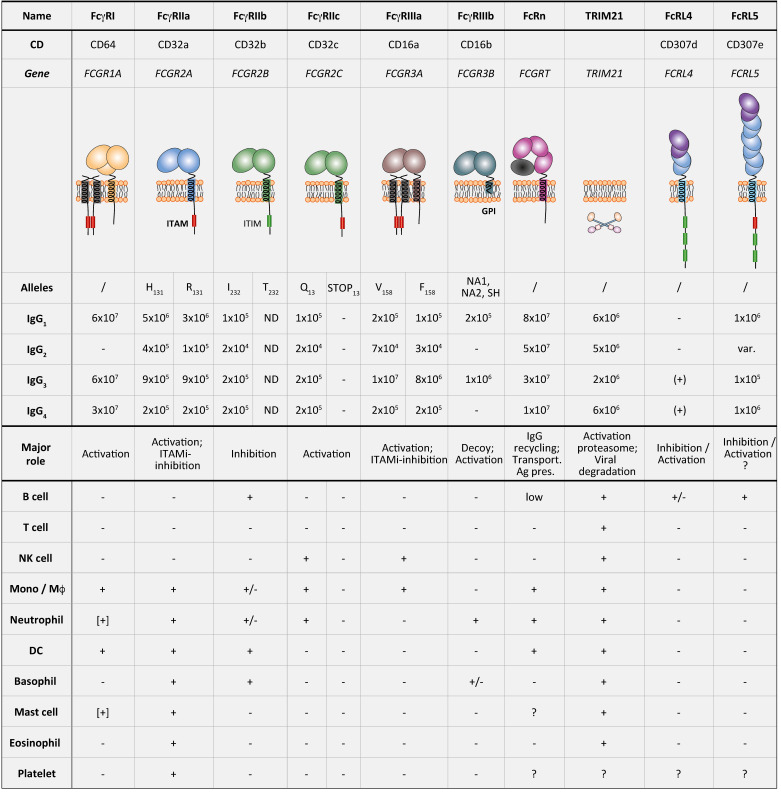
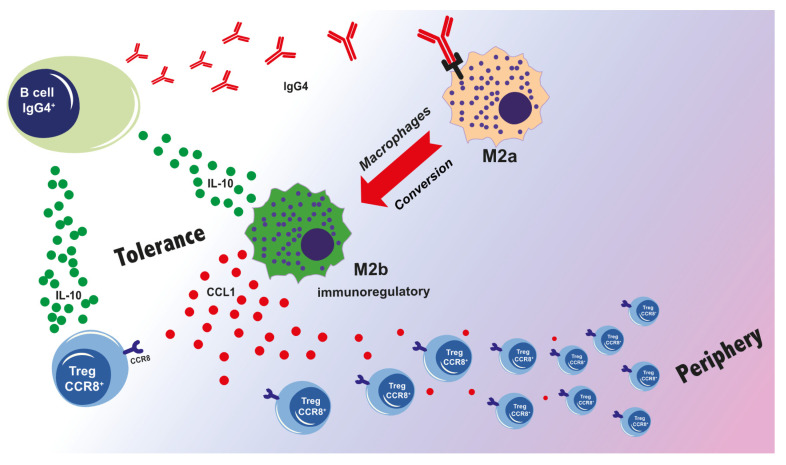
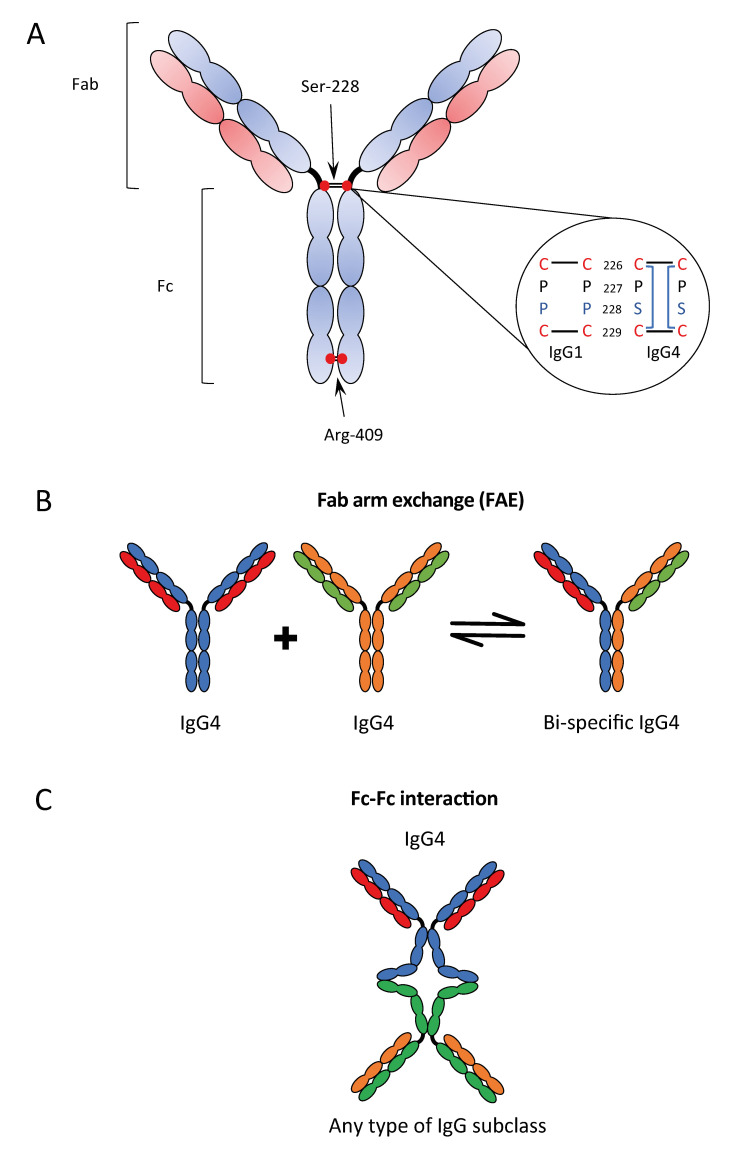
Among the four immunoglobulin G (IgG) subclasses, IgG4 is the least represented in serum of a healthy human and it is considered an "odd" antibody. The IgG4 antibody has unique structural features that affect its biological function. These include the ability to undergo antigen-binding fragment (Fab)-arm exchange, to create fragment crystallizable (Fc) - Fc binding with other IgG4 and other IgG subclass antibodies, have a unique affinity profile for Fc gamma receptors (FcγRs) and no binding to complement component C1q. Altogether, these characteristics support anti-inflammatory roles of IgG4 leading to immune tolerance. Under conditions of chronic antigenic stimulation and Th2-type inflammation, both tissue and serum IgG4 levels are increased. This review seeks to highlight how in allergen immunotherapy IgG4 can confer a protective role as a "blocking" antibody and safeguard from subsequent allergen exposure, while IgG4 can confer immunomodulatory functions to support malignancy. While Th2 conditions drive polarization of macrophages to the M2a subtype, chronic antigen stimulation drives B cell class switching to IgG4 to further support phenotypical macrophage changes towards an M2b-like state. M2b-like macrophages can secrete chemokine (C-C motif) ligand 1 (CCL1) and interleukin-10 (IL-10) to support regulatory cell recruitment and to further shape a tolerogenic microenvironment. Thereby, IgG4 have a Janus-faced role, favorable in allergy but detrimental in cancer.
在四种免疫球蛋白 G (IgG) 亚类中,IgG4 在健康人体血清中的表达最少,被认为是一种“奇特”的抗体。IgG4 抗体具有独特的结构特征,影响其生物学功能。这些特征包括能够进行抗原结合片段 (Fab)-臂交换、形成可结晶片段 (Fc)-与其他 IgG4 和其他 IgG 亚类抗体的 Fc 结合、对 Fc γ受体 (FcγRs) 具有独特的亲和力谱以及不与补体成分 C1q 结合。所有这些特征都支持 IgG4 的抗炎作用,从而导致免疫耐受。在慢性抗原刺激和 Th2 型炎症的情况下,组织和血清 IgG4 水平都会增加。本综述旨在强调在过敏原免疫治疗中,IgG4 如何作为“阻断”抗体发挥保护作用,防止随后的过敏原暴露,同时 IgG4 还可以发挥免疫调节功能,支持恶性肿瘤的发生。虽然 Th2 条件会促使巨噬细胞极化到 M2a 亚型,但慢性抗原刺激会促使 B 细胞类别转换为 IgG4,以进一步支持表型巨噬细胞向 M2b 样状态的变化。M2b 样巨噬细胞可以分泌趋化因子 (C-C 基序) 配体 1 (CCL1) 和白细胞介素-10 (IL-10),以支持调节性细胞的募集,并进一步塑造耐受微环境。因此,IgG4 具有两面性,在过敏中是有利的,但在癌症中是有害的。