Nakamura Mano, Bax Heather J, Scotto Daniele, Souri Elmira Amiri, Sollie Sam, Harris Robert J, Hammar Niklas, Walldius Goran, Winship Anna, Ghosh Sharmistha, Montes Ana, Spicer James F, Van Hemelrijck Mieke, Josephs Debra H, Lacy Katie E, Tsoka Sophia, Karagiannis Sophia N
St. John's Institute of Dermatology, School of Basic and Medical Biosciences, King's College London, London, UK.
School of Cancer and Pharmaceutical Sciences, King's College London, London, UK.
Oncoimmunology. 2019 Mar 28;8(6):e1593811. doi: 10.1080/2162402X.2019.1593811. eCollection 2019.
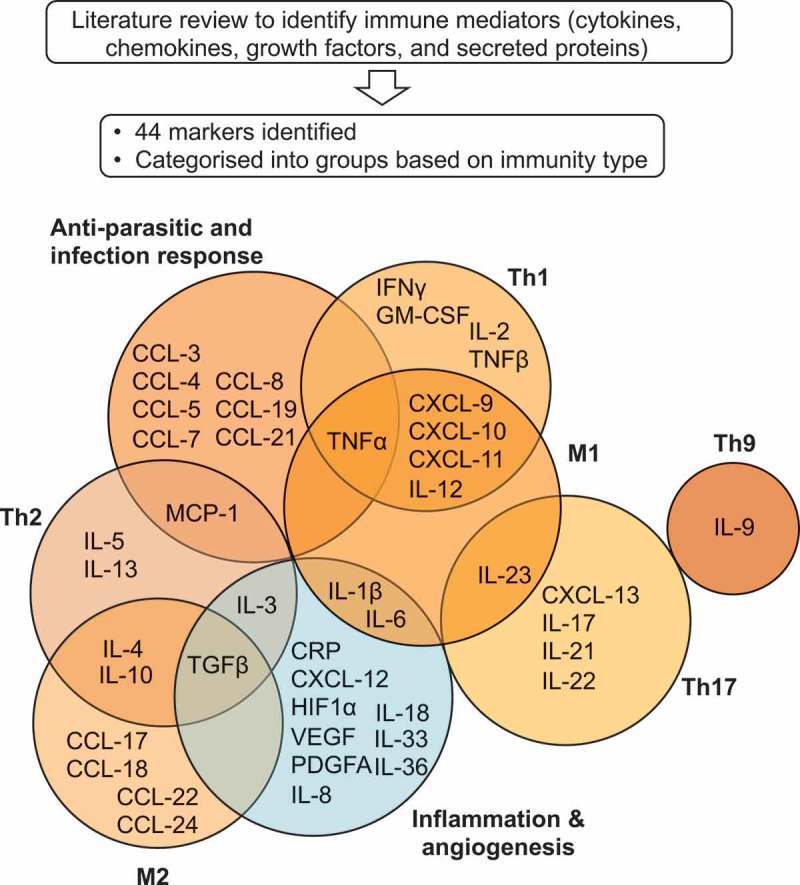
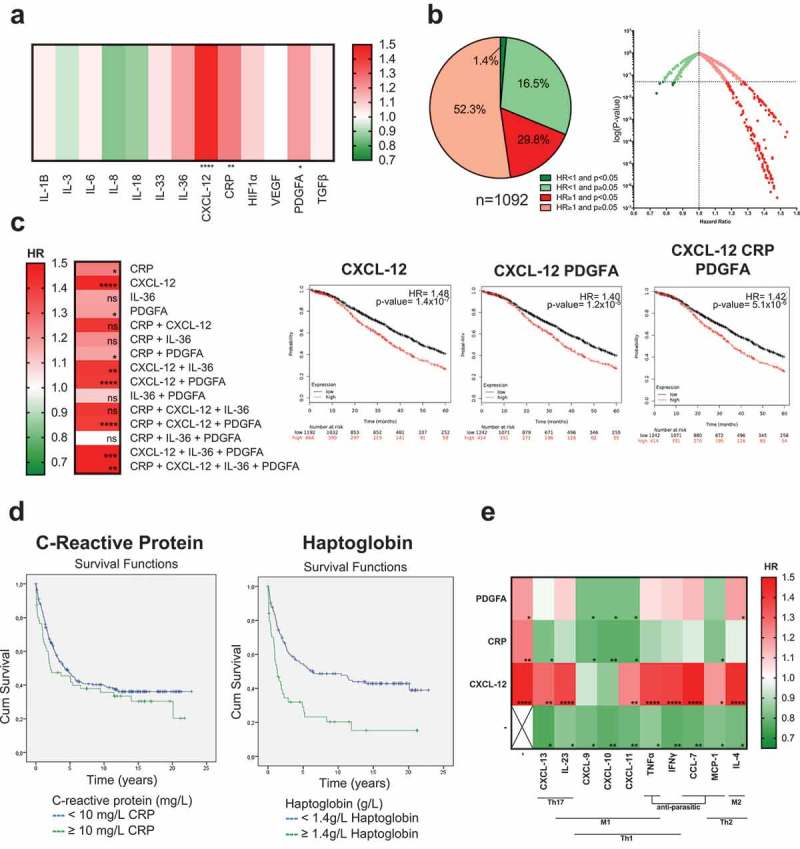
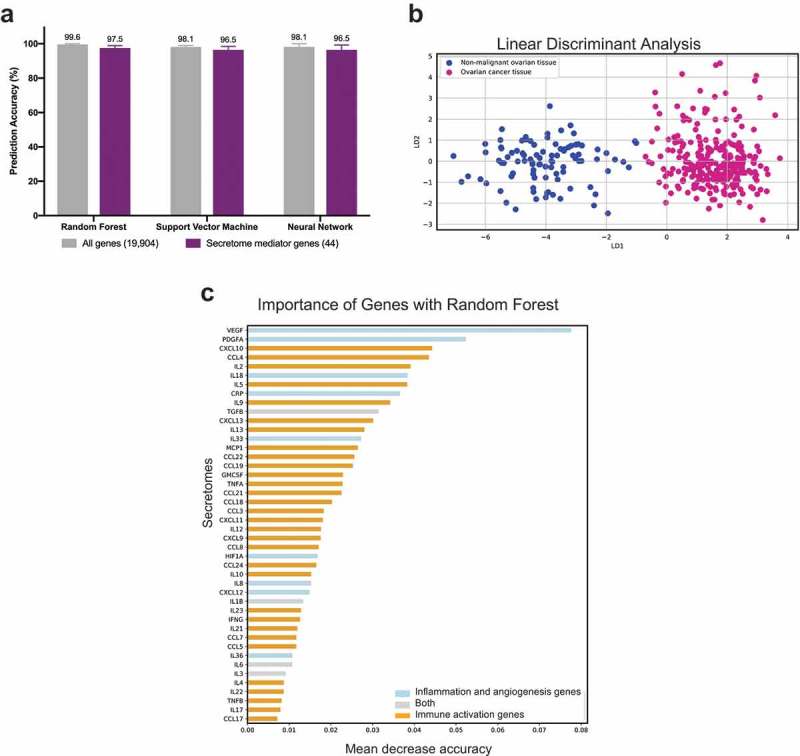
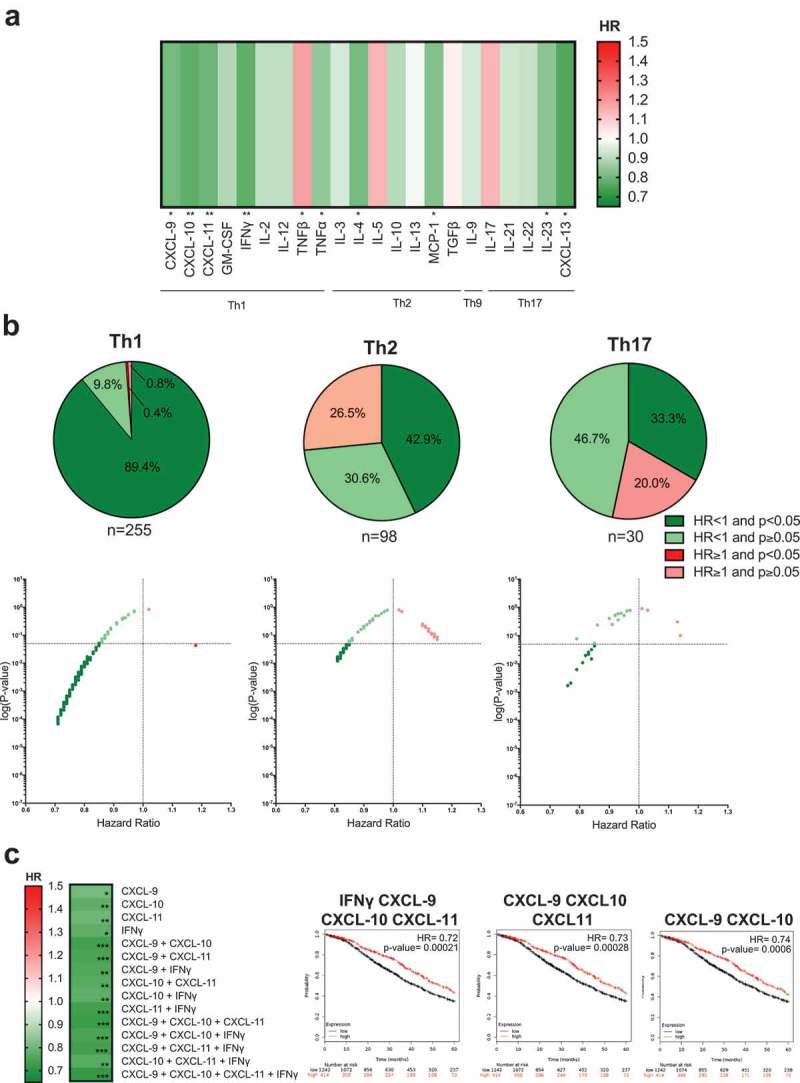
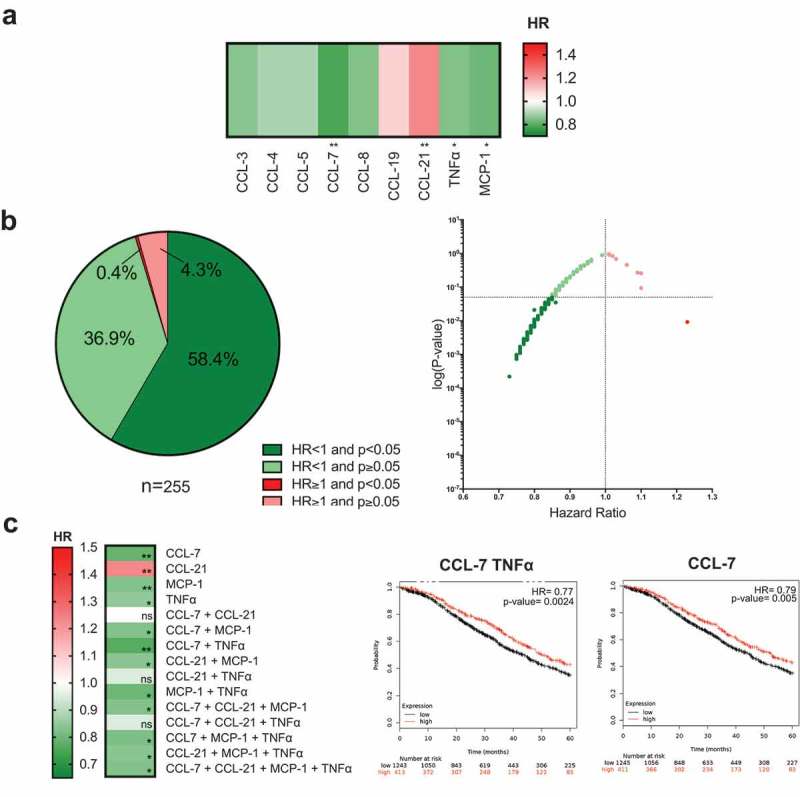
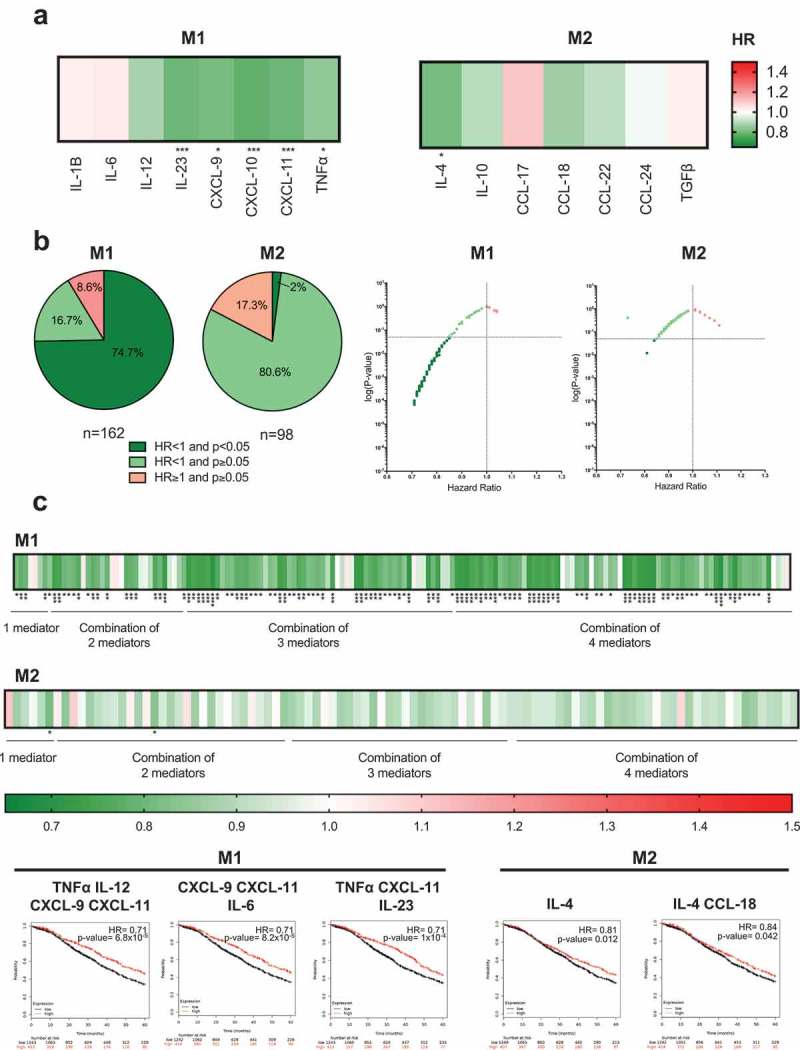
Immune and inflammatory cascades may play multiple roles in ovarian cancer. We aimed to identify relationships between expression of immune and inflammatory mediators and patient outcomes. We interrogated differential gene expression of 44 markers and marker combinations (n = 1,978) in 1,656 ovarian carcinoma patient tumors, alongside matched 5-year overall survival (OS) data in silico. Using machine learning methods, we investigated whether genomic expression of these 44 mediators can discriminate between malignant and non-malignant tissues in 839 ovarian cancer and 115 non-malignant ovary samples. We furthermore assessed inflammation markers in 289 ovarian cancer patients' sera in the Swedish Apolipoprotein MOrtality-related RISk (AMORIS) cohort. Expression of the 44 mediators could discriminate between malignant and non-malignant tissues with at least 96% accuracy. Higher expression of classical Th1, Th2, Th17, anti-parasitic/infection and M1 macrophage mediator signatures were associated with better OS. Contrastingly, inflammatory and angiogenic mediators, CXCL-12, C-reactive protein (CRP) and platelet-derived growth factor subunit A (PDGFA) were negatively associated with OS. Of the serum inflammatory markers in the AMORIS cohort, women with ovarian cancer who had elevated levels of haptoglobin (≥1.4 g/L) had a higher risk of dying from ovarian cancer compared to those with haptoglobin levels <1.4 g/L (HR = 2.09, 95% CI:1.38-3.16). Our findings indicate that elevated "classical" immune mediators, associated with response to pathogen antigen challenge, may confer immunological advantage in ovarian cancer, while inflammatory markers appear to have negative prognostic value. These highlight associations between immune protection, inflammation and clinical outcomes, and offer opportunities for patient stratification based on secretome markers.
免疫和炎症级联反应可能在卵巢癌中发挥多种作用。我们旨在确定免疫和炎症介质的表达与患者预后之间的关系。我们在计算机上研究了1656例卵巢癌患者肿瘤中44种标志物及标志物组合(n = 1978)的差异基因表达,以及匹配的5年总生存期(OS)数据。使用机器学习方法,我们调查了这44种介质的基因组表达是否能区分839例卵巢癌和115例非恶性卵巢样本中的恶性和非恶性组织。我们还在瑞典载脂蛋白M死亡率相关风险(AMORIS)队列中评估了289例卵巢癌患者血清中的炎症标志物。这44种介质的表达能够以至少96%的准确率区分恶性和非恶性组织。经典Th1、Th2、Th17、抗寄生虫/感染和M1巨噬细胞介质特征的高表达与更好的总生存期相关。相反,炎症和血管生成介质、CXCL-12、C反应蛋白(CRP)和血小板衍生生长因子亚基A(PDGFA)与总生存期呈负相关。在AMORIS队列的血清炎症标志物中,与触珠蛋白水平<1.4 g/L的卵巢癌女性相比,触珠蛋白水平升高(≥1.4 g/L)的卵巢癌女性死于卵巢癌的风险更高(HR = 2.09,95%CI:1.38 - 3.16)。我们的研究结果表明,与病原体抗原挑战反应相关的“经典”免疫介质升高可能在卵巢癌中赋予免疫优势,而炎症标志物似乎具有负面的预后价值。这些结果突出了免疫保护、炎症与临床结局之间的关联,并为基于分泌组标志物的患者分层提供了机会。