Huang Xin, Schuppan Detlef, Rojas Tovar Luis E, Zevallos Victor F, Loponen Jussi, Gänzle Michael
Department of Food and Nutrition, Faculty of Agriculture and Forestry, University of Helsinki, PL 66, FI-00014 Helsinki, Finland.
Fazer lab, Fazer Group, 01230 Vantaa, Finland.
Foods. 2020 Jul 16;9(7):943. doi: 10.3390/foods9070943.
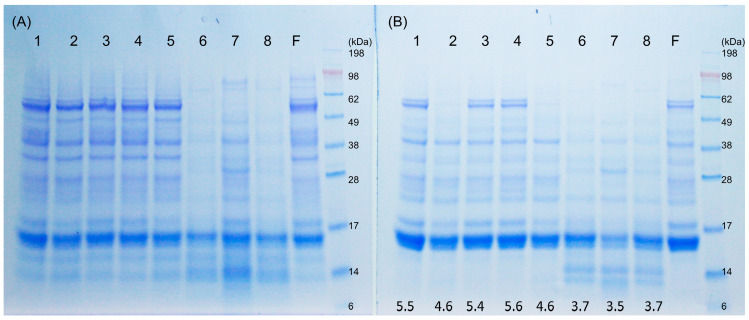
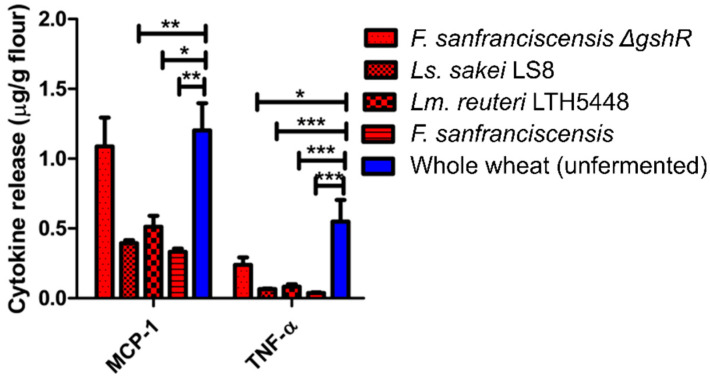
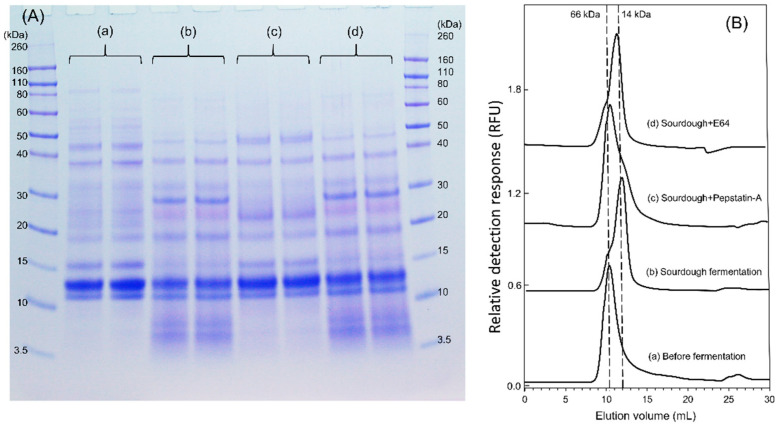
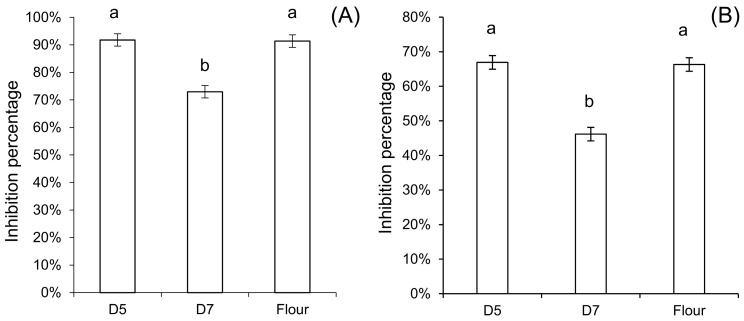
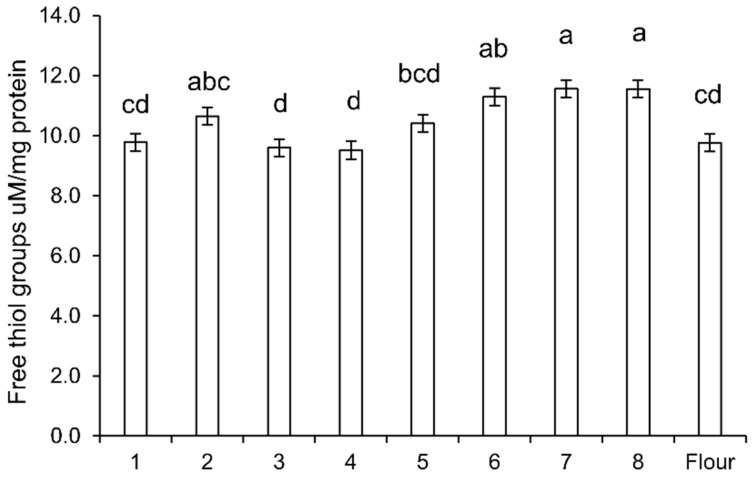
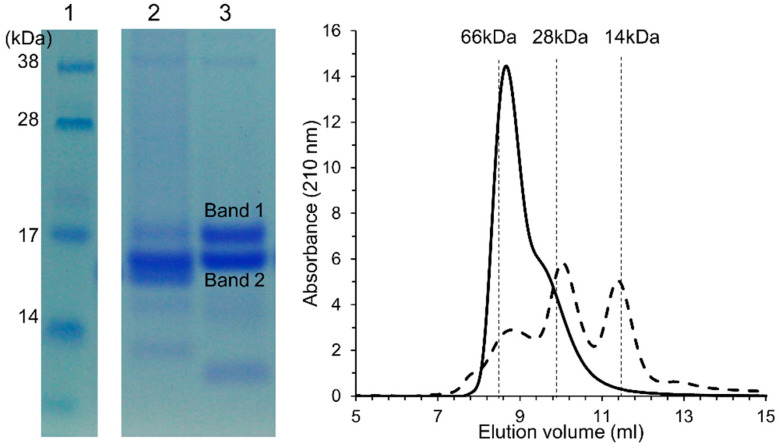
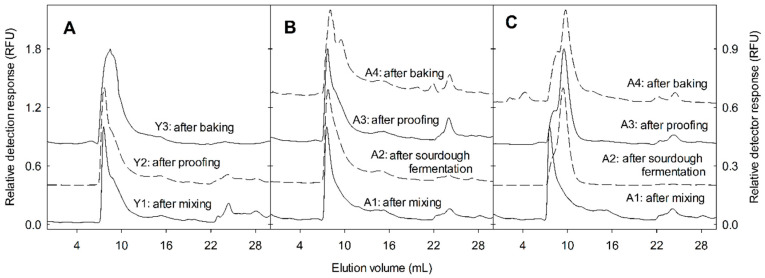
The ingestion of gluten-containing foods can cause wheat-related disorders in up to 15% of wheat consuming populations. Besides the role of gluten, α-amylase/trypsin inhibitors (ATI) have recently been identified as inducers of an innate immune response via toll-like receptor 4 in celiac disease and non-celiac wheat sensitivity. ATI are involved in plant self-defense against insects and possibly in grain development. Notably, they are largely resistant to gastrointestinal proteases and heat, and their inflammatory activity affects not only the intestine, but also peripheral organs. The aim of this study was to understand the changes of ATI throughout the sourdough and yeast-fermented bread-making processes. ATI tetramers were isolated, fluorescein-labelled, and added to a mini-dough bread-making system. When the pH decreased below 4.0 in sourdough fermentation, the ATI tetramers were degraded due to the activation of aspartic proteases, whilst in yeast fermentation, ATI tetramers remained intact. The amylase inhibitory activity after sourdough fermentation decreased significantly, while the concentration of free thiol groups increased. The glutathione reductase activity of did not contribute to the reduction of ATI tetramers. Compared to the unfermented wheat, sourdough fermentation was able to decrease the release of pro-inflammatory cytokines monocyte chemoattractant protein-1 (MCP-1) and tumor necrosis factor alpha (TNF-α) in quantitative ATI extracts added to the human monocytic cell line THP-1. The current data suggest that sourdough fermentation can degrade ATI structure and bioactivity, and point to strategies to improve product development for wheat sensitivity patients.
摄入含麸质的食物会在高达15%的食用小麦人群中引发与小麦相关的疾病。除了麸质的作用外,α-淀粉酶/胰蛋白酶抑制剂(ATI)最近被确定为通过Toll样受体4在乳糜泻和非乳糜性小麦敏感中诱导先天性免疫反应的物质。ATI参与植物对昆虫的自我防御,并可能参与谷物发育。值得注意的是,它们对胃肠道蛋白酶和热具有很大的抗性,其炎症活性不仅影响肠道,还影响外周器官。本研究的目的是了解在酸面团和酵母发酵面包制作过程中ATI的变化。分离出ATI四聚体,用荧光素标记,并添加到小型面团面包制作系统中。在酸面团发酵过程中,当pH值降至4.0以下时,由于天冬氨酸蛋白酶的激活,ATI四聚体被降解,而在酵母发酵过程中,ATI四聚体保持完整。酸面团发酵后淀粉酶抑制活性显著降低,而游离巯基浓度增加。谷胱甘肽还原酶活性对ATI四聚体的还原没有贡献。与未发酵的小麦相比,酸面团发酵能够减少添加到人类单核细胞系THP-1的定量ATI提取物中促炎细胞因子单核细胞趋化蛋白-1(MCP-1)和肿瘤坏死因子α(TNF-α)的释放。目前的数据表明,酸面团发酵可以降解ATI的结构和生物活性,并为改善小麦敏感患者的产品开发指明策略。