Division of Gastroenterology and Hepatology.
Biomedical Statistics and Informatics.
Clin Gastroenterol Hepatol. 2021 Sep;19(9):1855-1863.e1. doi: 10.1016/j.cgh.2020.07.033. Epub 2020 Jul 23.
BACKGROUND & AIMS: Campylobacter is the leading cause of bacterial gastroenteritis in the United States. We investigated the prevalence of postinfection irritable bowel syndrome (PI-IBS) in a cohort with culture-confirmed Campylobacter cases; risk factors for PI-IBS based on clinical factors; and shifts in IBS patterns postinfection in patients with pre-existing IBS.
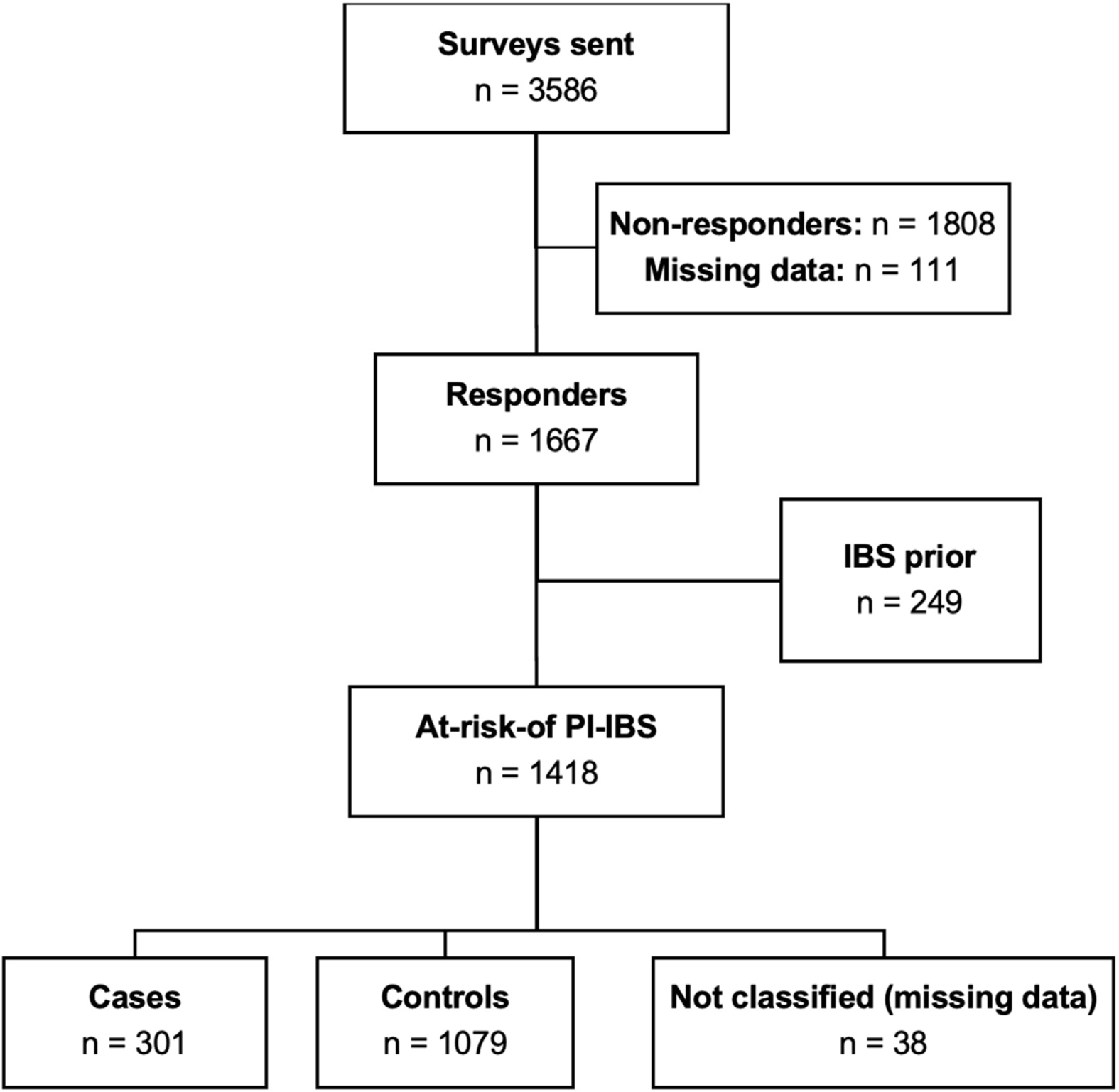
The Minnesota Department of Health collects data on symptoms and exposures upon notification of Campylobacter cases. From 2011 through 2019, we sent surveys (the Rome III and IBS symptom severity surveys) to 3586 patients 6 to 9 months after Campylobacter infection. The prevalence of PI-IBS was estimated and risk factors were assessed using multivariable logistic regression.
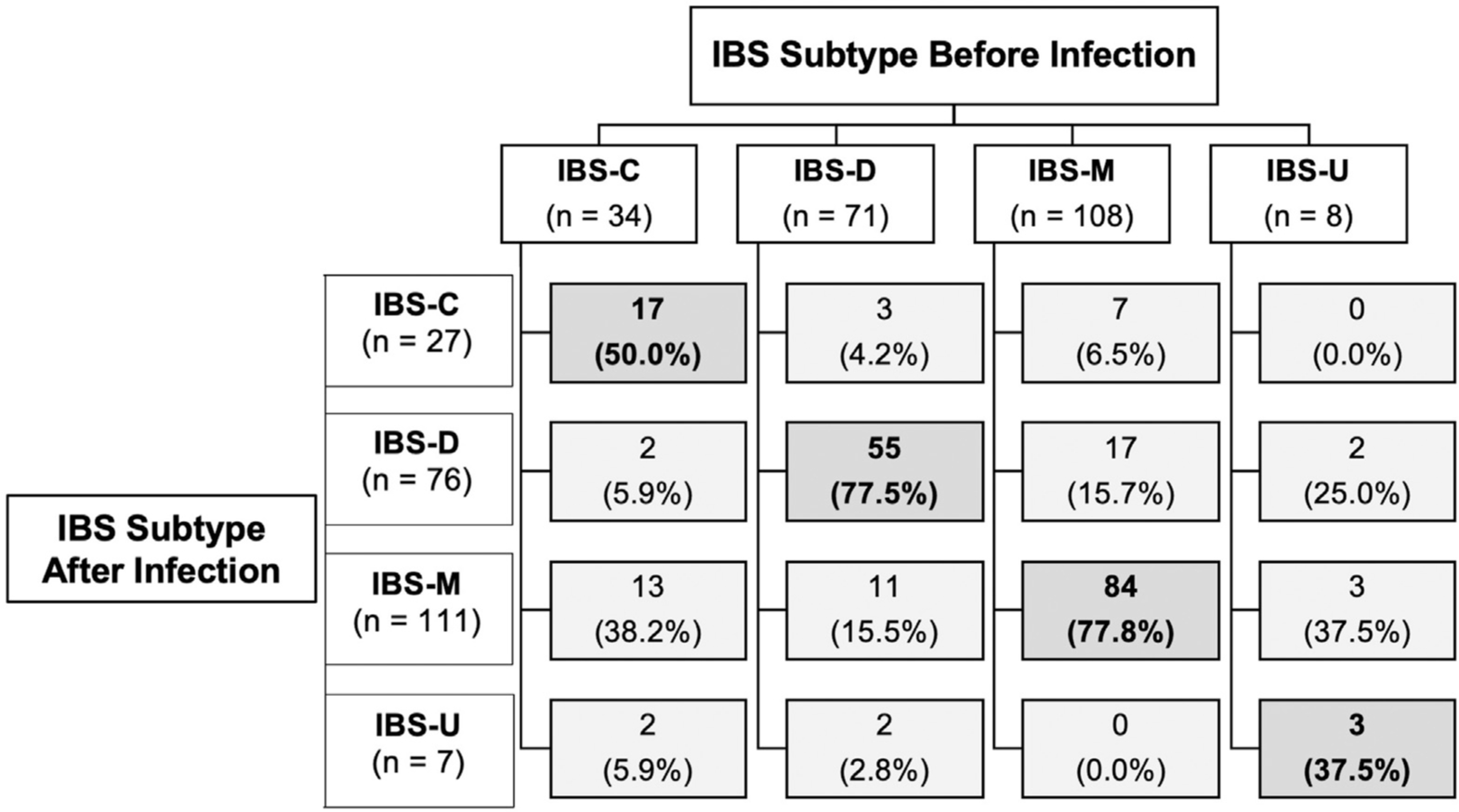
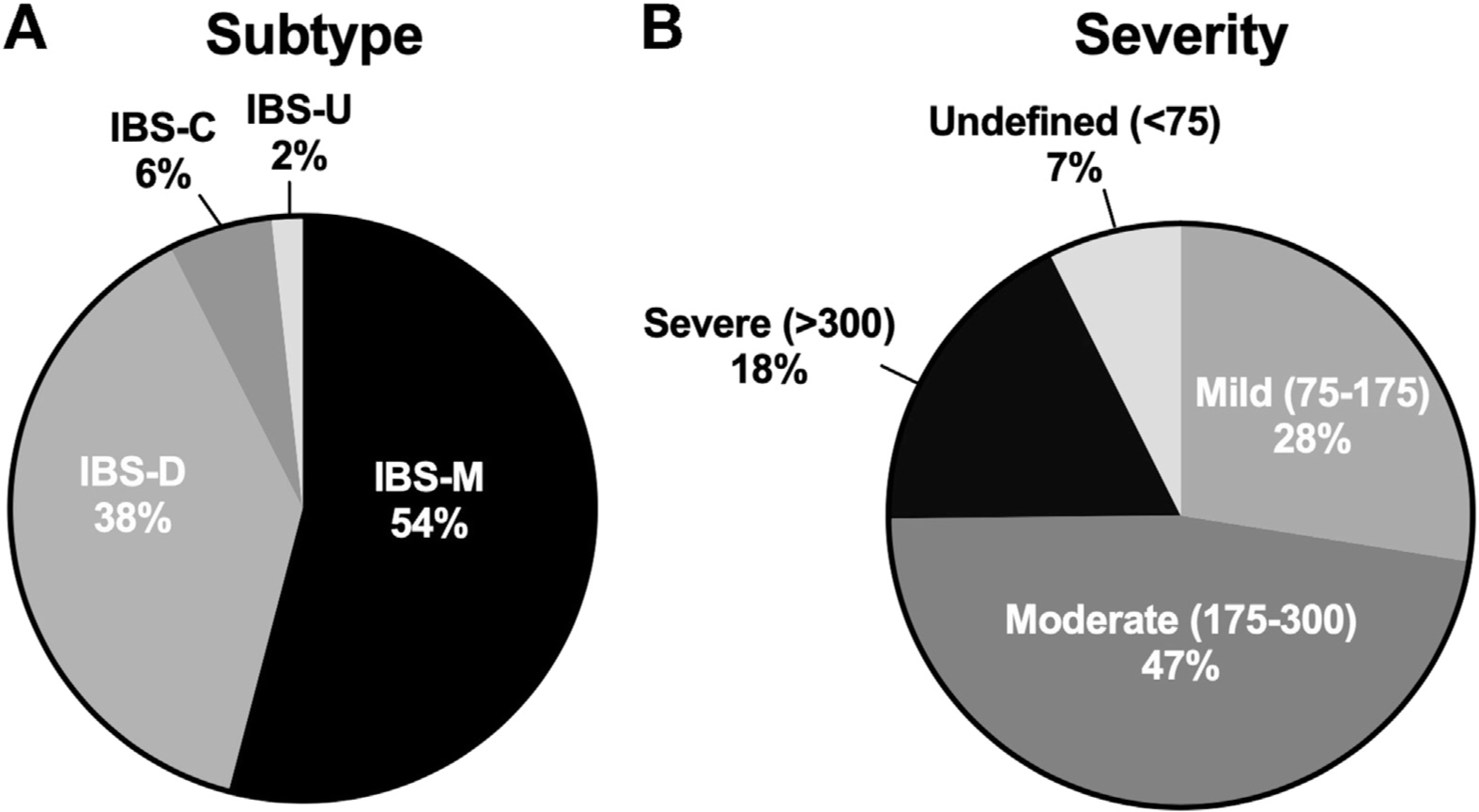
There were 1667 responders to the survey, 249 of whom had pre-existing IBS. Of the 1418 responders without pre-existing IBS, 301 (21%) subsequently developed IBS. Most of these individuals had IBS-mixed (54%), followed by IBS-diarrhea (38%), and IBS-constipation (6%). The mean IBS symptom severity score was 218 (indicating moderate severity). Female sex, younger age, bloody stools, abdominal cramps, and hospitalization during acute enteritis were associated with increased risk, whereas fever was protective for the development of PI-IBS. Antibiotic use and exposure patterns were similar between PI-IBS and control groups. Among patients with IBS-mixed or IBS-diarrhea before infection, 78% retained their subtypes after infection. In contrast, only 50% of patients with IBS-constipation retained that subtype after infection, whereas 40% transitioned to IBS-mixed. Of patients with pre-existing IBS, 38% had increased frequency of abdominal pain after Campylobacter infection.
In a cohort of patients with Campylobacter infection in Minnesota, 21% developed PI-IBS; most cases reported mixed IBS or diarrhea of moderate severity. Demographic and clinical factors during acute enterocolitis are associated with PI-IBS development. Campylobacter infection also can result in a switch of a pre-existing IBS phenotype.
空肠弯曲菌是美国细菌性肠胃炎的主要病因。本研究旨在调查经培养确诊的空肠弯曲菌感染患者中,感染后肠易激综合征(PI-IBS)的患病率;基于临床因素,分析 PI-IBS 的危险因素;以及在患有既往 IBS 的患者中,感染后 IBS 模式的变化。
明尼苏达州卫生部在接到空肠弯曲菌感染病例报告后,会收集相关症状和暴露信息。2011 年至 2019 年期间,我们向 3586 名感染后 6-9 个月的患者发送了(罗马 III 标准和 IBS 症状严重程度调查)问卷。采用多变量逻辑回归评估 PI-IBS 的患病率和危险因素。
共有 1667 名患者对调查做出了回应,其中 249 名患者患有既往 IBS。在 1418 名无既往 IBS 的应答者中,301 名(21%)随后发展为 IBS。这些患者中大多数患有 IBS-混合型(54%),其次是 IBS-腹泻型(38%)和 IBS-便秘型(6%)。IBS 症状严重程度平均得分为 218(表明中度严重程度)。女性、年龄较小、血便、腹痛和急性肠炎住院与增加 PI-IBS 的风险相关,而发热则对 PI-IBS 的发展有保护作用。PI-IBS 组和对照组的抗生素使用和暴露模式相似。在感染前患有 IBS-混合型或 IBS-腹泻型的患者中,78%在感染后仍保留其亚型。相比之下,仅有 50%的 IBS-便秘型患者在感染后保留了该亚型,而 40%的患者转变为 IBS-混合型。在患有既往 IBS 的患者中,38%的患者在空肠弯曲菌感染后腹痛频率增加。
在明尼苏达州感染空肠弯曲菌的患者队列中,21%的患者发生了 PI-IBS;大多数患者报告的 IBS 为混合性或中等严重程度的腹泻。急性肠炎期间的人口统计学和临床因素与 PI-IBS 的发生有关。空肠弯曲菌感染还可能导致既往 IBS 表型的转变。