Department of Central Laboratory, Huaian Tumor Hospital & Huaian Hospital of Huaian City, Huaian, China.
Department of General Surgery, Huaian Tumor Hospital & Huaian Hospital of Huaian City, Huaian, China.
J Cell Mol Med. 2020 Sep;24(17):10151-10165. doi: 10.1111/jcmm.15625. Epub 2020 Jul 26.
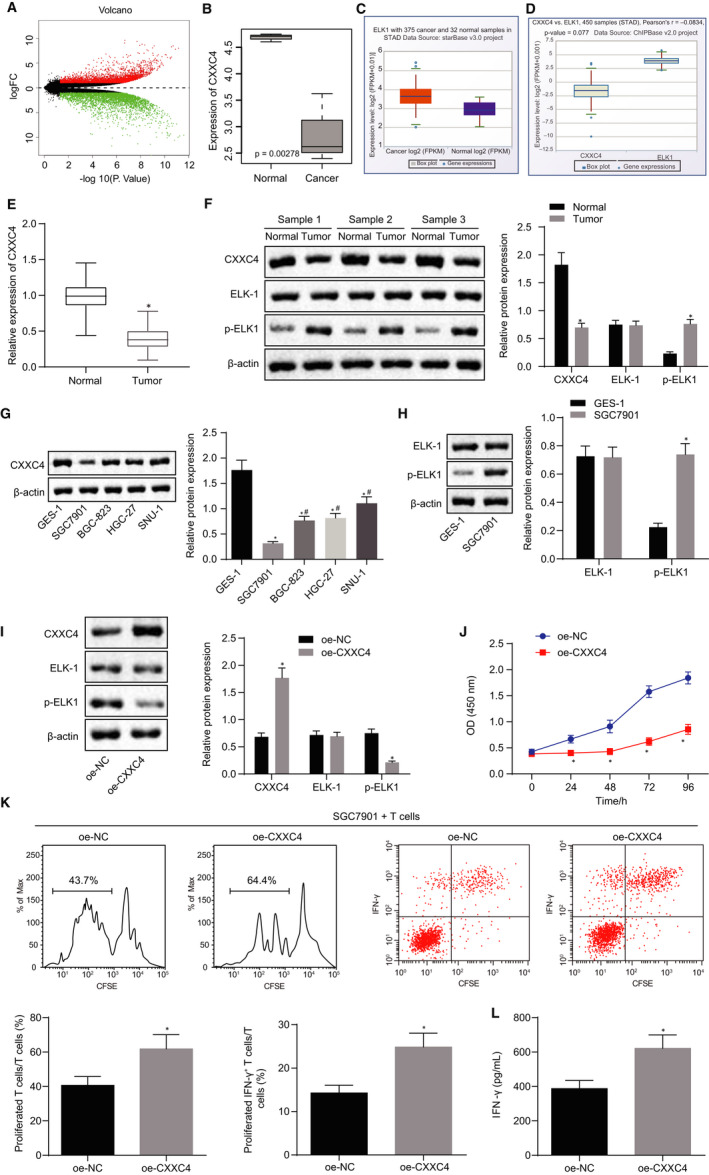
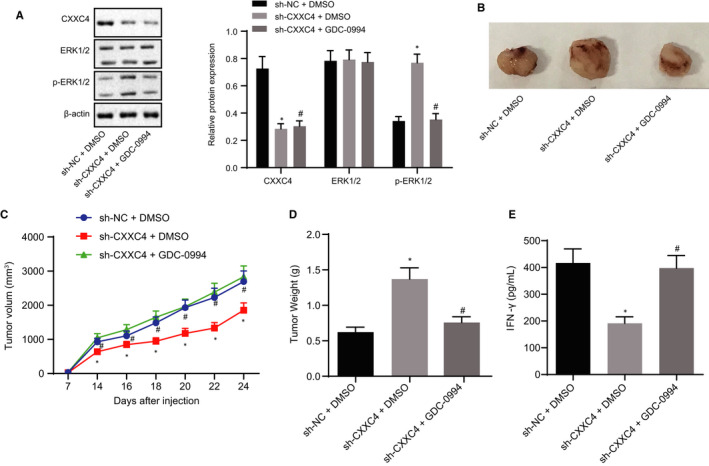
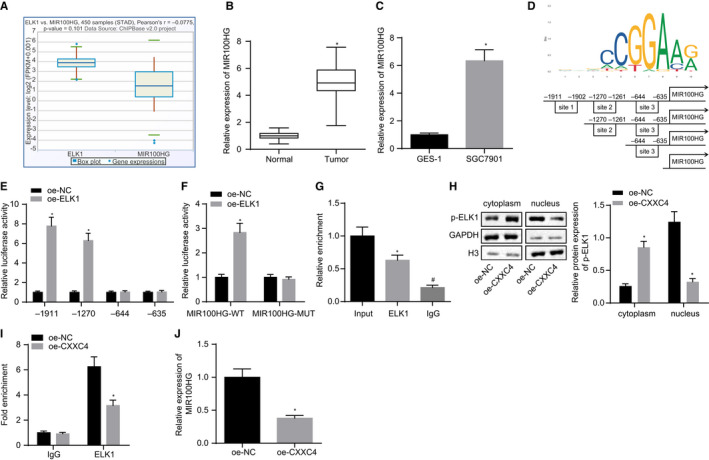
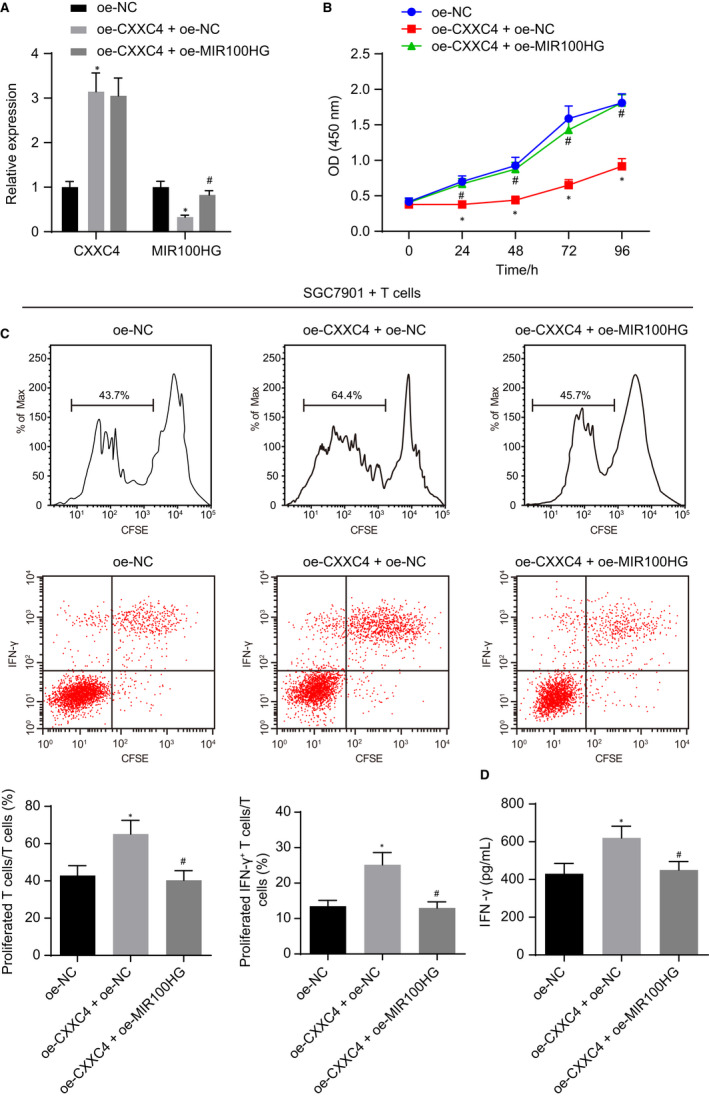
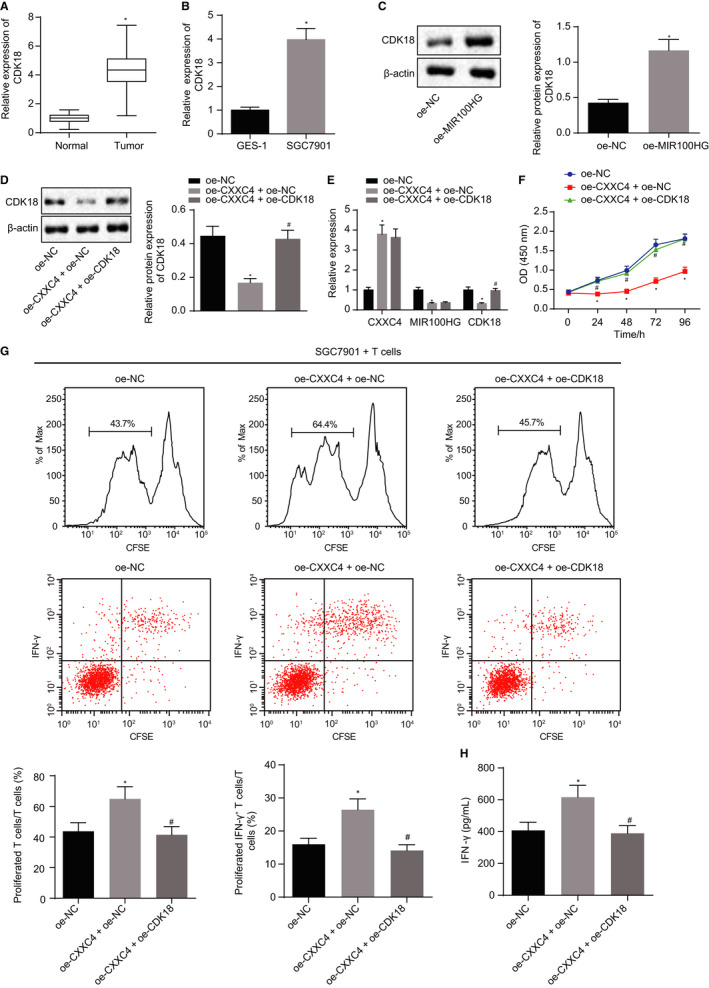
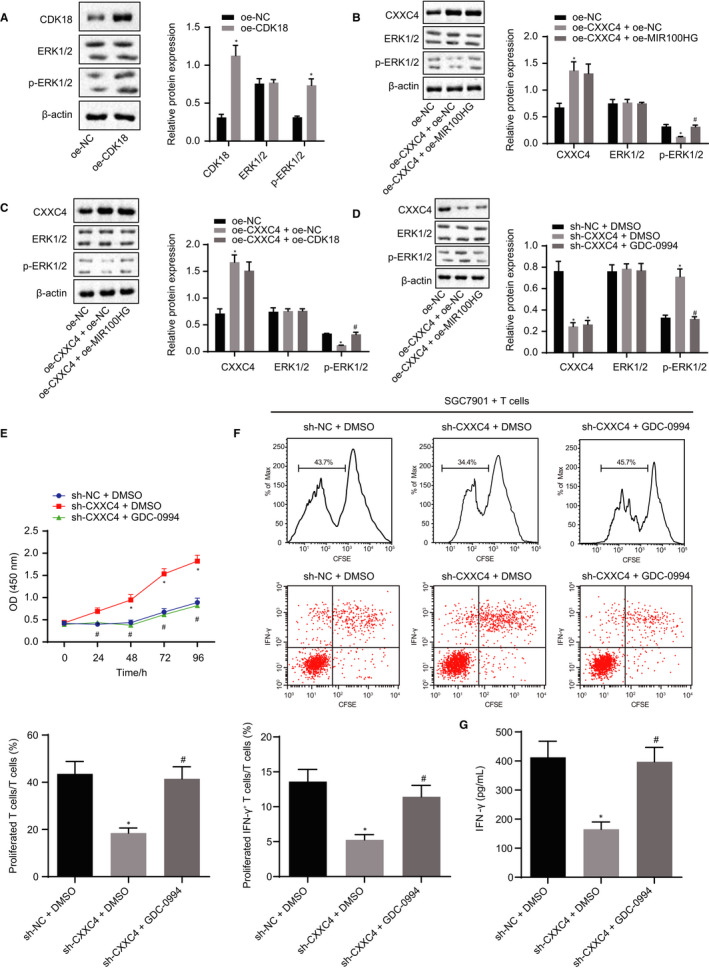
Gastric cancer, is the fourth most common tumour type yet, ranks second in terms of the prevalence of cancer-related deaths worldwide. CXXC finger protein 4 (CXXC4) has been considered as a novel cancer suppressive factor, including gastric cancer. This study attempted to investigate the possible function of CXXC4 in gastric cancer and the underlying mechanism. The binding of the ETS domain-containing protein-1 (ELK1) to the long non-coding RNA MIR100HG promoter region was identified. Then, their expression patterns in gastric cancer tissues and cells (SGC7901) were detected. A CCK-8 assay was used to detect SGC7901 cell proliferation. Subsequently, SGC7901 cells were co-cultured with CD3+ T cells, followed by measurement of CD3+ T cell proliferation, magnitude of IFN-γ+ T cell population and IFN-γ secretion. A nude mouse model was subsequently developed for in vivo validation of the in vitro results. Low CXXC4 expression was found in SGC7901 cells. Nuclear entry of ELK1 can be inhibited by suppression of the extent of ELK1 phosphorylation. Furthermore, ELK1 is able to bind the MIR100HG promoter. Overexpression of CXXC4 resulted in weakened binding of ELK1 to the MIR100HG promoter, leading to a reduced proliferative potential of SGC7901 cells, and an increase in IFN-γ secretion from CD3+ T cells. Moreover, in vivo experiments revealed that CXXC4 inhibited immune escape of gastric cancer cells through the ERK1/2 axis. Inhibition of the CXXC4/ELK1/MIR100HG pathway suppressed the immune escape of gastric cancer cells, highlighting a possible therapeutic target for the treatment of gastric cancer.
胃癌是第四大常见肿瘤类型,但在全球癌症相关死亡人数方面排名第二。CXXC 指状蛋白 4(CXXC4)已被认为是一种新型的癌症抑制因子,包括胃癌。本研究试图探讨 CXXC4 在胃癌中的可能功能及其潜在机制。鉴定了 ETS 结构域蛋白-1(ELK1)与长非编码 RNA MIR100HG 启动子区域的结合。然后,检测了胃癌组织和细胞(SGC7901)中它们的表达模式。CCK-8 测定法用于检测 SGC7901 细胞增殖。随后,将 SGC7901 细胞与 CD3+T 细胞共培养,然后测量 CD3+T 细胞增殖、IFN-γ+T 细胞群体的大小和 IFN-γ 分泌。随后建立裸鼠模型以验证体外结果。在 SGC7901 细胞中发现 CXXC4 表达水平较低。通过抑制 ELK1 磷酸化程度可以抑制 ELK1 的核内进入。此外,ELK1 能够结合 MIR100HG 启动子。CXXC4 的过表达导致 ELK1 与 MIR100HG 启动子的结合减弱,从而降低 SGC7901 细胞的增殖潜力,并增加 CD3+T 细胞中 IFN-γ 的分泌。此外,体内实验表明,CXXC4 通过 ERK1/2 轴抑制胃癌细胞的免疫逃逸。抑制 CXXC4/ELK1/MIR100HG 通路抑制了胃癌细胞的免疫逃逸,为治疗胃癌提供了一个可能的治疗靶点。