Chandler Rasheeta, Hull Shawnika, Ross Henry, Guillaume Dominique, Paul Sudeshna, Dera Nikita, Hernandez Natalie
Nell Hodgson Woodruff School of Nursing (NHWSON), Emory University, 1520 Clifton Rd., NE, Atlanta, GA, 30322-4027, USA.
George Washington University, Prevention and Community Health, 1918 F Street NW, Washington, D.C, 20052, USA.
BMC Public Health. 2020 Jul 28;20(1):1172. doi: 10.1186/s12889-020-09248-6.
Consistent use of Pre-Exposure Prophylaxis (PrEP), a biomedical intervention for HIV seronegative persons, has been shown to significantly decrease HIV acquisition. Black women are a viable population segment to consider for PrEP use as their HIV incidence is overwhelmingly higher than all other women groups.
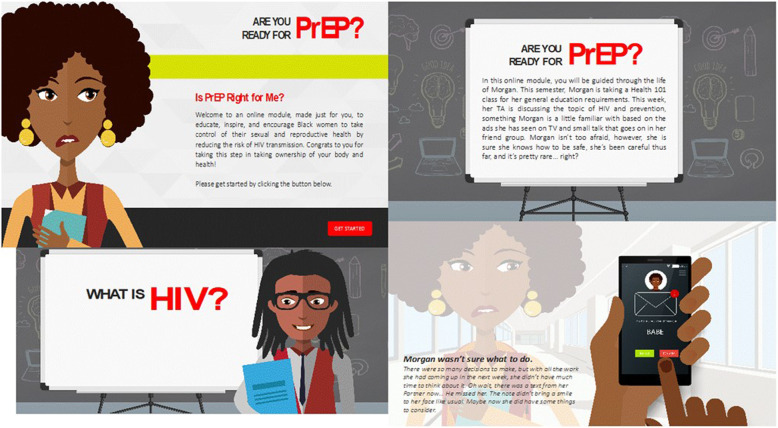
We developed and piloted a cultural- and age- appropriate PrEP education intervention to determine Black college women's: 1) perceptions of and receptivity to PrEP use; and 2) preferences for PrEP information delivery.
We recruited N = 43 Black college women. Most of our sample were sophomore and Juniors of whom identified as heterosexual (83%) and single (67%). Over 50% of young women had never been HIV tested and only 28% had been tested in the last 6 months; however, 100% of the women believed their HIV status was negative. Prior to participating in the study, most Black college women (67%) had not heard about PrEP and were unsure or apprehensive (72%) to initiate PrEP. The Black college women indicated that our educational intervention was extremely helpful (67%) for understanding and learning about PrEP. Post participating in our PrEP education module, regardless of delivery modality, participants reported being likely (62.55-70%) to initiate PrEP in the future.
Results indicate that Black college women would strongly consider PrEP when provided with basic knowledge, regardless of delivery modality. Participants also showed greater appreciation for in-person delivery and found it to be significantly more helpful and of greater quality for learning about PrEP; comprehension or perceived usefulness of PrEP-related content was relatively the same between groups. PrEP content delivery -- via in-person or online methods - is contingent on learning style and presentation.
This study has been registered under the ISRCTN Registry as of July 6, 2020. The trial registration number is ISRCTN14792715 . This study was retrospectively registered.
暴露前预防(PrEP)是一种针对HIV血清阴性者的生物医学干预措施,持续使用已被证明可显著降低HIV感染率。黑人女性是考虑使用PrEP的一个可行人群,因为她们的HIV发病率远高于所有其他女性群体。
我们开发并试点了一种适合文化和年龄的PrEP教育干预措施,以确定黑人女大学生的:1)对PrEP使用的认知和接受程度;2)对PrEP信息传递方式的偏好。
我们招募了43名黑人女大学生。我们的样本大多是大二和大三学生,其中83% 认定为异性恋,67% 为单身。超过50% 的年轻女性从未接受过HIV检测,只有28% 在过去6个月内接受过检测;然而,100% 的女性认为自己的HIV检测结果为阴性。在参与研究之前,大多数黑人女大学生(67%)没有听说过PrEP,对于开始使用PrEP不确定或感到担忧(72%)。黑人女大学生表示,我们的教育干预措施对理解和了解PrEP非常有帮助(67%)。参与我们的PrEP教育模块后,无论采用何种传递方式,参与者报告称未来很可能(62.55 - 70%)会开始使用PrEP。
结果表明,当获得基本知识时,黑人女大学生会强烈考虑使用PrEP,无论传递方式如何。参与者也对面对面传递方式表现出更高的认可度,并发现它在了解PrEP方面明显更有帮助且质量更高;不同组之间对PrEP相关内容的理解或感知有用性相对相同。PrEP内容传递——通过面对面或在线方式——取决于学习风格和呈现方式。
截至2020年7月6日,本研究已在ISRCTN注册中心注册。试验注册号为ISRCTN14792715。本研究为回顾性注册。