Key Laboratory of Shaanxi Province for Craniofacial Precision Medicine Research, Research Center of Stomatology, Xi'an Jiaotong University College of Stomatology, 98 West 5th Road, Xi'an, Shaanxi, 710004, People's Republic of China.
Department of Orthodontics, Xi'an Jiaotong University College of Stomatology, 98 West 5th Road, Xi'an, Shaanxi, 710004, People's Republic of China.
Mol Brain. 2020 Jul 28;13(1):106. doi: 10.1186/s13041-020-00645-x.
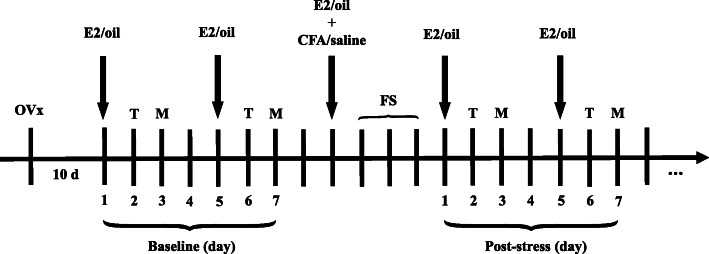
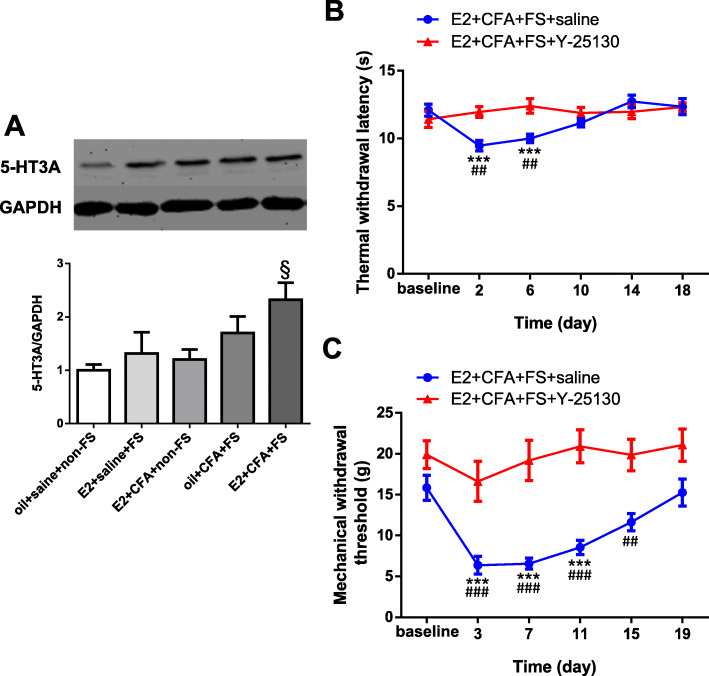
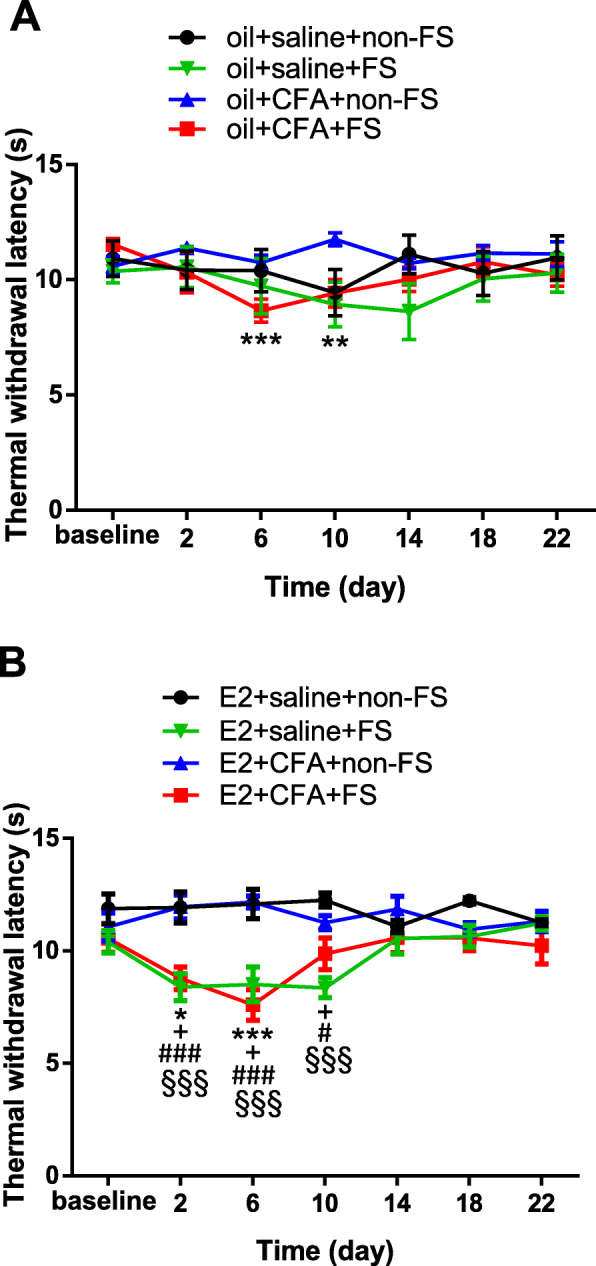
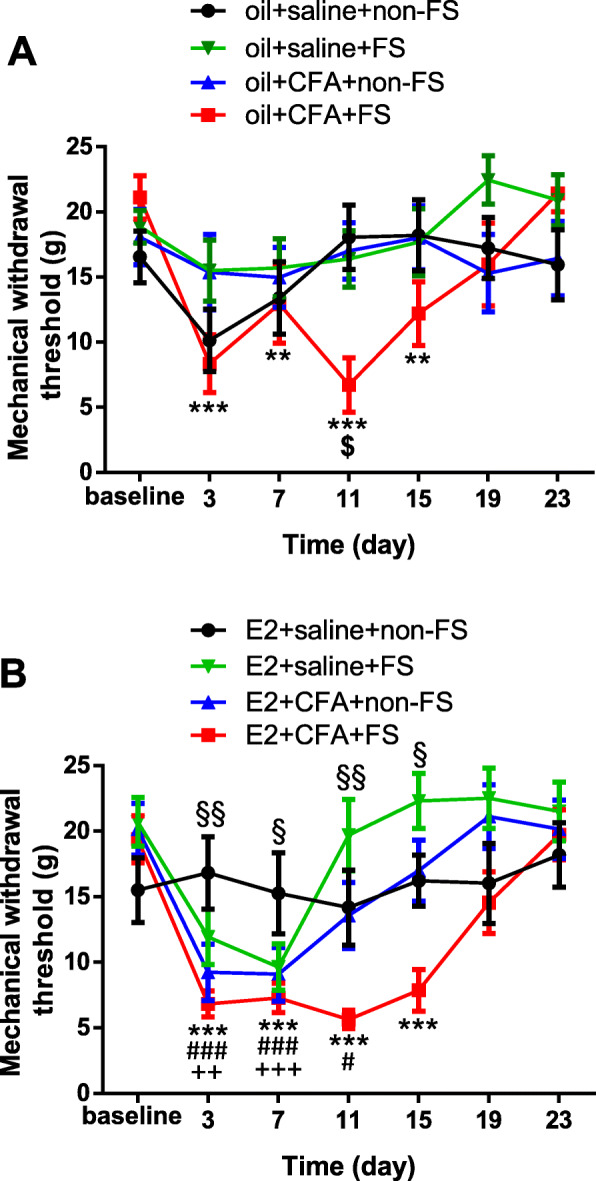
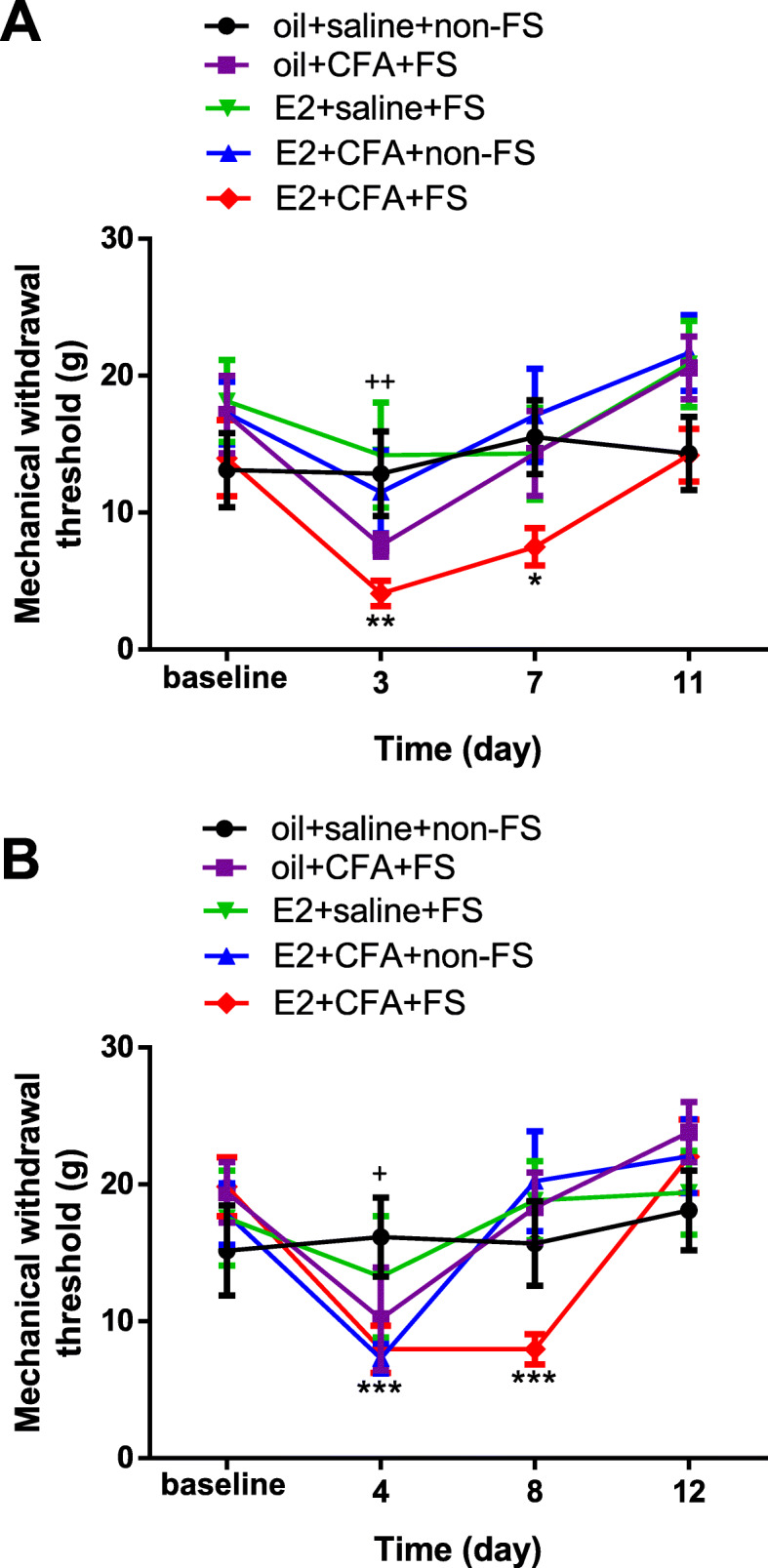
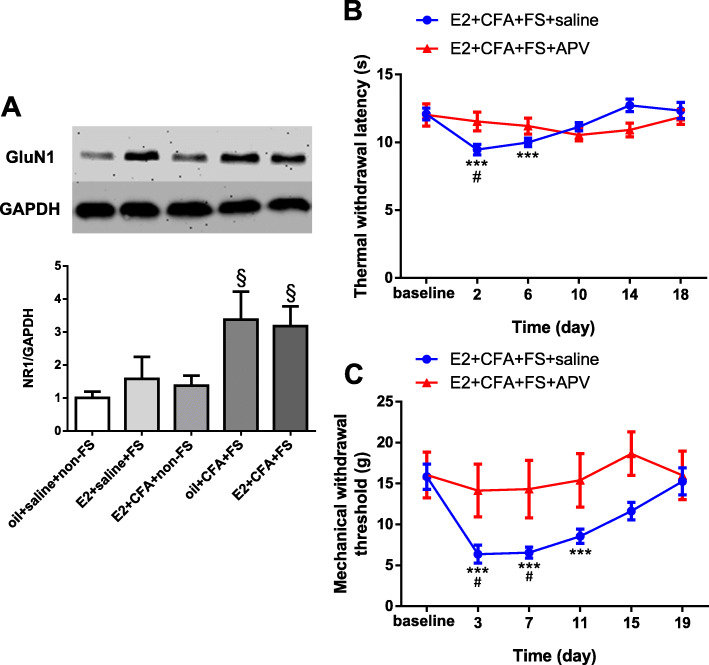
Temporomandibular disorder (TMD) is commonly comorbid with fibromyalgia syndrome (FMS). The incidence of these pain conditions is prevalent in women and prone to mental stress. Chronic pain symptoms in patients with FMS and myofascial TMD (mTMD) are severe and debilitating. In the present study, we developed a new animal model to mimic the comorbidity of TMD and FMS. In ovariectomized female rats, repeated forced swim (FS) stress induced mechanical allodynia and thermal hyperalgesia in the hindpaws of the 17β-estradiol (E2) treated rats with orofacial inflammation. Subcutaneous injection of E2, injection of complete Freund's adjuvant (CFA) into masseter muscles or FS alone did not induce somatic hyperalgesia. We also found that the somatic hyperalgesia was accompanied by upregulation of GluN1 receptor and serotonin (5-hydroxytryptamine, 5-HT) receptor expression in the dorsal horn of spinal cord at L4-L5 segments. Intrathecal injection of N-methyl-D-aspartic acid receptor (NMDAR) antagonist 2-amino-5-phosphonovaleric acid (APV) or 5-HT receptor antagonist Y-25130 blocked stress-induced wide-spreading hyperalgesia. These results suggest that NMDAR-dependent central sensitization in the spinal dorsal horn and 5-HT-dependent descending facilitation contribute to the development of wide-spreading hyperalgesia in this comorbid pain model.
颞下颌关节紊乱(TMD)通常与纤维肌痛综合征(FMS)并存。这些疼痛病症的发病率在女性中较高,且易受精神压力影响。患有 FMS 和肌筋膜 TMD(mTMD)的患者的慢性疼痛症状严重且使人虚弱。在本研究中,我们开发了一种新的动物模型来模拟 TMD 和 FMS 的共病。在去卵巢雌性大鼠中,反复强迫游泳(FS)应激会引起 17β-雌二醇(E2)处理的伴有口腔炎症的大鼠后爪机械性痛觉过敏和热痛觉过敏。E2 皮下注射、咀嚼肌内注射完全弗氏佐剂(CFA)或 FS 单独注射均不会引起躯体痛觉过敏。我们还发现,躯体痛觉过敏伴随着 L4-L5 脊髓背角中 GluN1 受体和 5-羟色胺(5-羟色胺,5-HT)受体表达的上调。鞘内注射 N-甲基-D-天冬氨酸受体(NMDAR)拮抗剂 2-氨基-5-磷戊酸(APV)或 5-HT 受体拮抗剂 Y-25130 可阻断应激诱导的广泛痛觉过敏。这些结果表明,脊髓背角中 NMDAR 依赖性中枢敏化和 5-HT 依赖性下行易化有助于这种共病疼痛模型中广泛痛觉过敏的发展。