PhD Program in Biological and Health Sciences, Universidad Autonoma Metropolitana Iztapalapa-Xochimilco- Cuajimalpa, Mexico, Calzada del Hueso 1100, Col. Villa Quietud, Mexico, D.F. 04960, Mexico.
Departament of Neurosciences, Instituto Nacional de Rehabilitacion, "Luis Guillermo Ibarra Ibarra", Secretaria de Salud, Col. Arenal de Guadalupe, Mexico, D.F. 14389, Mexico.
Curr Neuropharmacol. 2018 Jan 30;16(2):210-221. doi: 10.2174/1570159X15666170911121027.
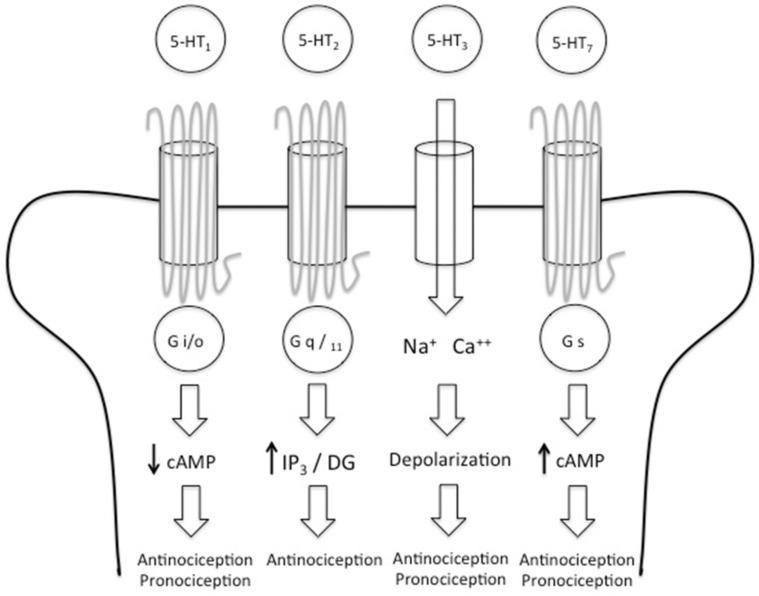
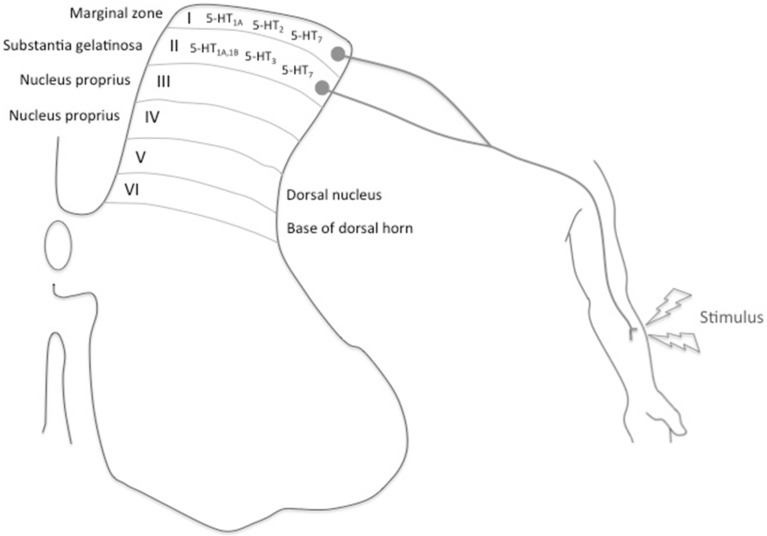
The aim of this review was to identify the mechanisms by which serotonin receptors involved at the central level are able to modulate the nociceptive response. Pain is a defense mechanism of the body that entails physiological, anatomical, neurochemical, and psychological changes, and is defined as an unpleasant sensory and emotional experience with potential risk of tissue damage, comprising the leading cause of appointments with Physicians worldwide. Treatment for this symptom has generated several neuropharmacological lines of research, due to the different types of pain and the various drugs employed to treat this condition. Serotonin [5- HydroxyTryptamine (5-HT)] is a neurotransmitter with seven families (5-HT1-5-HT7) and approximately 15 receptor subtypes. Serotonin modulates neuronal activity; however, this neurotransmitter is related with a number of physiological processes, such as cardiovascular function, gastric motility, renal function, etc. On the other hand, several researches reported that serotonin modulates nociceptive response through 5-HT1, 5-HT2, 5-HT3, and 5-HT7 receptors in the Central Nervous System (CNS).
In this review, a search was conducted on PubMed, ProQuest, EBSCO, and the Science Citation Index for studies evaluating the effects of 5-HT1, 5-HT2, 5-HT3, and 5-HT7 receptors in the CNS on the modulation of different types of pain.
We concluded that 5-HT1, 5-HT2, 5-HT3, and 5-HT7 receptors in the CNS modulate the pain, but this depends on the distribution of the receptors, dose of agonists or antagonists, administration route, pain type and duration in order to inhibit, excite, or even maintain the nociceptive response.
本综述的目的是确定中枢水平涉及的 5-羟色胺受体调节痛觉反应的机制。疼痛是身体的一种防御机制,涉及生理、解剖、神经化学和心理变化,被定义为一种不愉快的感觉和情绪体验,可能有组织损伤的风险,是全球医生预约的主要原因。由于疼痛的不同类型和用于治疗这种疾病的各种药物,这种症状的治疗已经产生了几种神经药理学研究。5-羟色胺[5-羟色胺(5-HT)]是一种神经递质,有七种家族(5-HT1-5-HT7)和大约 15 种受体亚型。5-羟色胺调节神经元活动;然而,这种神经递质与许多生理过程有关,如心血管功能、胃动力、肾功能等。另一方面,有几项研究报告称,5-羟色胺通过中枢神经系统(CNS)中的 5-HT1、5-HT2、5-HT3 和 5-HT7 受体调节痛觉反应。
在这项综述中,我们在 PubMed、ProQuest、EBSCO 和科学引文索引上搜索了评估中枢神经系统中 5-HT1、5-HT2、5-HT3 和 5-HT7 受体对不同类型疼痛调节作用的研究。
我们得出结论,中枢神经系统中的 5-HT1、5-HT2、5-HT3 和 5-HT7 受体调节疼痛,但这取决于受体的分布、激动剂或拮抗剂的剂量、给药途径、疼痛类型和持续时间,以抑制、兴奋甚至维持痛觉反应。