Department of Physiology, Development and Neuroscience, University of Cambridge, Downing Street, Cambridge, CB2 4BG, UK.
Wellcome Trust-Medical Research Council Cambridge Stem Cell Institute, University of Cambridge, Jeffrey Cheah Biomedical Centre, Puddicombe Way, Cambridge Biomedical Campus, Cambridge, CB2 0AW, UK.
Nat Commun. 2020 Jul 28;11(1):3760. doi: 10.1038/s41467-020-17575-w.
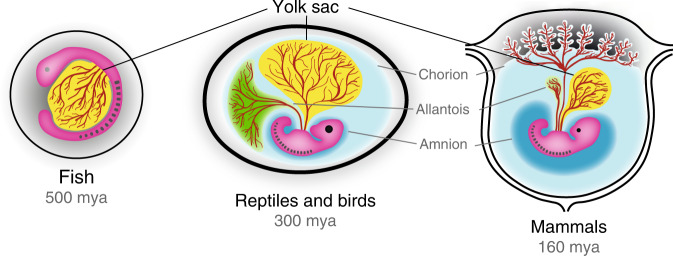
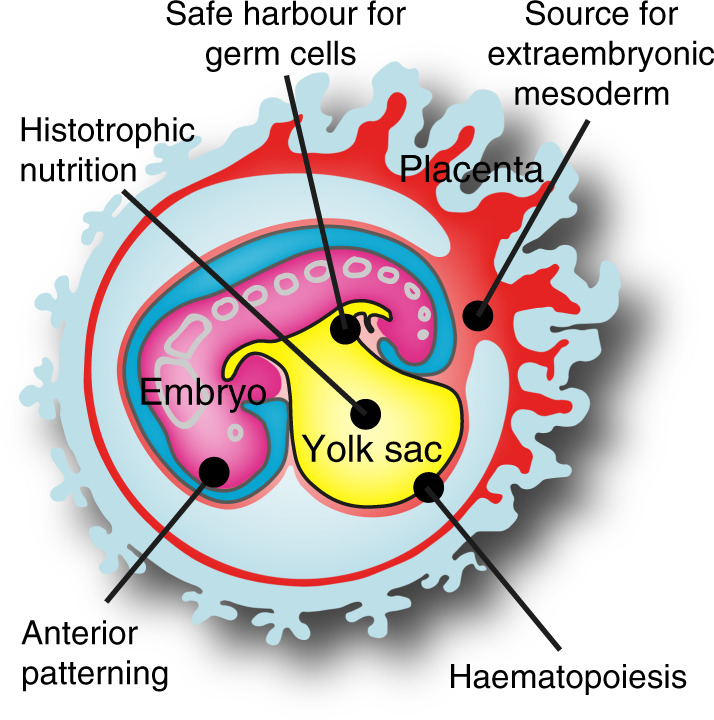
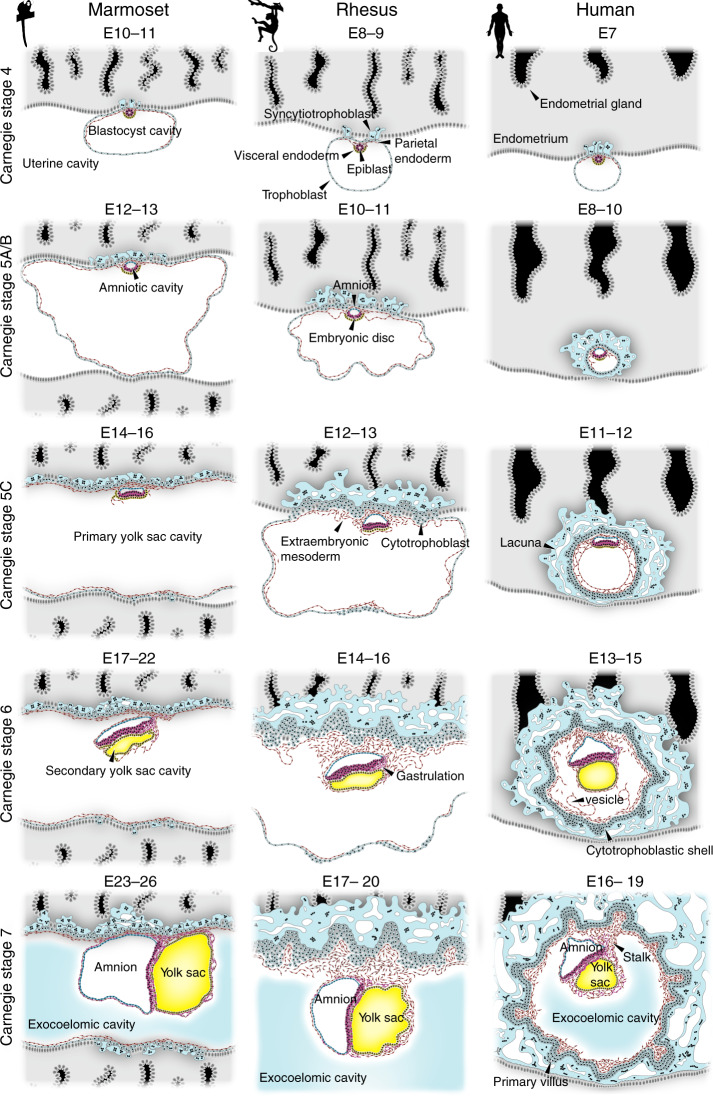
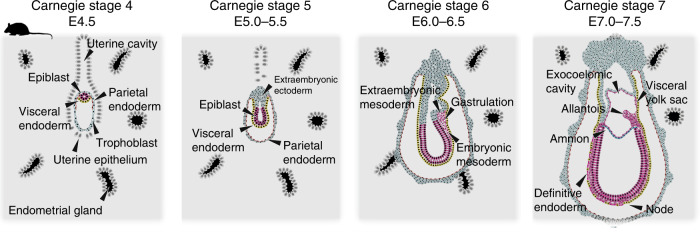
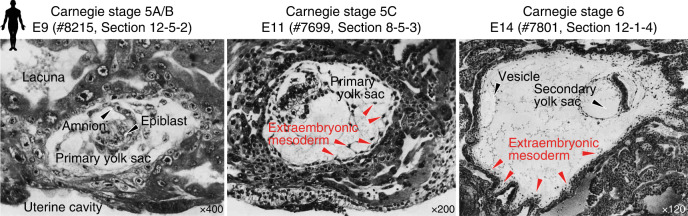
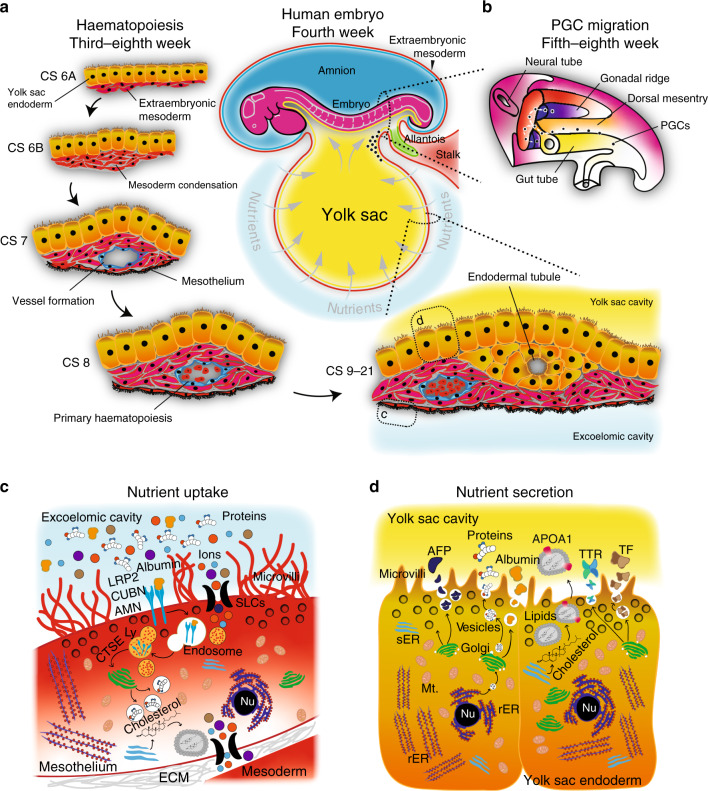
Human embryogenesis is hallmarked by two phases of yolk sac development. The primate hypoblast gives rise to a transient primary yolk sac, which is rapidly superseded by a secondary yolk sac during gastrulation. Moreover, primate embryos form extraembryonic mesoderm prior to gastrulation, in contrast to mouse. The function of the primary yolk sac and the origin of extraembryonic mesoderm remain unclear. Here, we hypothesise that the hypoblast-derived primary yolk sac serves as a source for early extraembryonic mesoderm, which is supplemented with mesoderm from the gastrulating embryo. We discuss the intricate relationship between the yolk sac and the primate embryo and highlight the pivotal role of the yolk sac as a multifunctional hub for haematopoiesis, germ cell development and nutritional supply.
人类胚胎发生以卵黄囊发育的两个阶段为标志。类原肠胚下胚层产生短暂的初级卵黄囊,在原肠胚形成过程中迅速被次级卵黄囊取代。此外,与小鼠不同,灵长类胚胎在原肠胚形成前形成胚外中胚层。初级卵黄囊的功能和胚外中胚层的起源尚不清楚。在这里,我们假设原肠胚下胚层衍生的初级卵黄囊是早期胚外中胚层的来源,胚外中胚层补充来自原肠胚形成的胚胎。我们讨论了卵黄囊与灵长类胚胎之间复杂的关系,并强调了卵黄囊作为造血、生殖细胞发育和营养供应多功能中心的关键作用。