Department of Internal Medicine, Korea University College of Medicine, Anam Hospital, 73, Inchon-ro, Seongbuk-gu, Seoul, 02841, Korea.
Department of Biomedical Science, Graduate School of Medicine, Korea University, Seoul, Korea.
Sci Rep. 2020 Jul 28;10(1):12641. doi: 10.1038/s41598-020-69616-5.
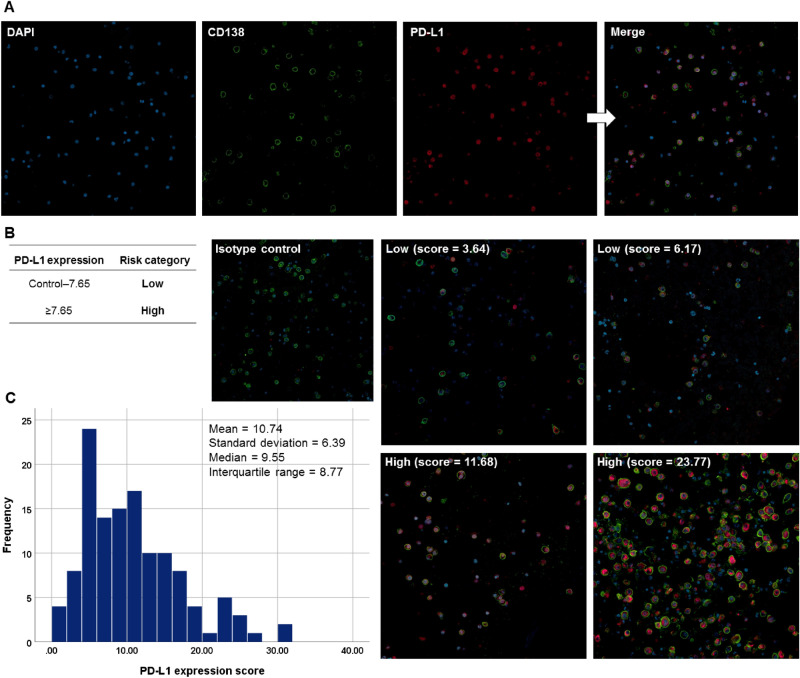
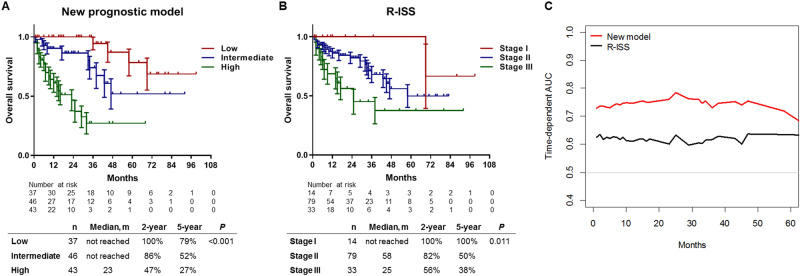
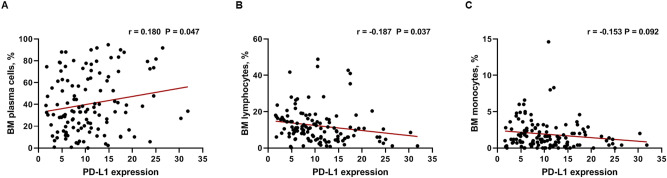
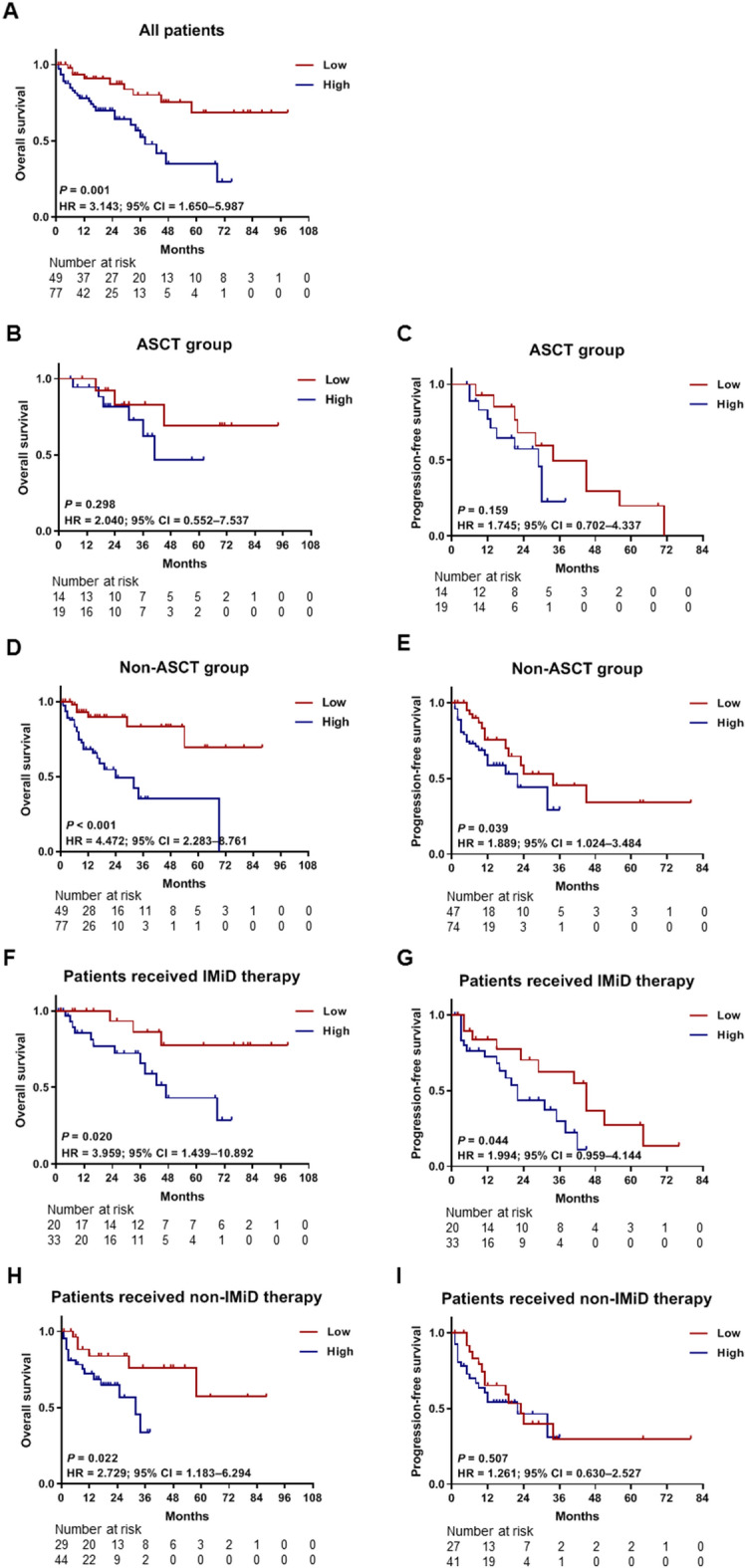
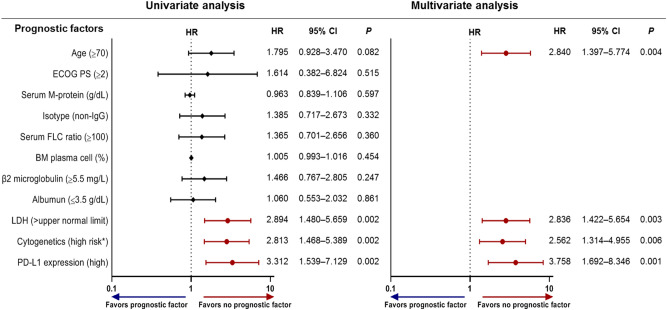
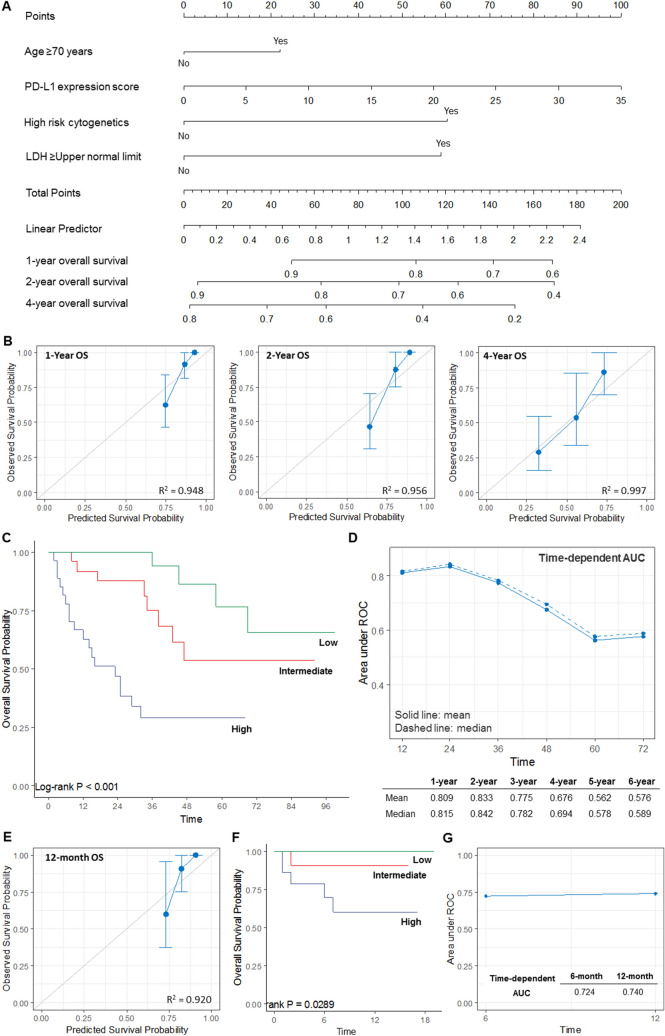
PD-L1 expression is associated with poor prognosis, although this relationship is unclear in bone marrow-derived haematologic malignancies, including multiple myeloma. We aimed to determine whether PD-L1 expression could predict the prognosis of newly diagnosed multiple myeloma (NDMM). We evaluated 126 NDMM patients (83, retrospectively; 43, prospectively) who underwent bone marrow examinations. Bone marrow aspirates were analysed for PD-L1 expression, categorized as low or high expression, using quantitative immunofluorescence. High PD-L1 expression could independently predict poor overall survival (OS) (95% CI = 1.692-8.346) in multivariate analysis. On subgroup analysis, high PD-L1 expression was associated with poor OS (95% CI = 2.283-8.761) and progression-free survival (95% CI = 1.024-3.484) in patients who did not undergo autologous stem cell transplantation (ASCT) compared with those who did. High PD-L1 expression was associated with poor OS despite frontline treatments with or without immunomodulators. Thus, PD-L1 expression can be a useful prognosis predictor in NDMM patients, whereas ASCT may be used in patients with high PD-L1 expression. We developed a prognostic nomogram and found that a combination of PD-L1 expression in bone marrow plasma cells and clinical parameters (age, cytogenetics, and lactate dehydrogenase) effectively predicted NDMM prognosis. We believe that our nomogram can help identify high-risk patients and select appropriate treatments.
PD-L1 表达与预后不良相关,尽管这种关系在骨髓源性血液恶性肿瘤中尚不清楚,包括多发性骨髓瘤。我们旨在确定 PD-L1 表达是否可以预测新诊断的多发性骨髓瘤(NDMM)的预后。我们评估了 126 例接受骨髓检查的 NDMM 患者(83 例回顾性,43 例前瞻性)。使用定量免疫荧光法,将骨髓抽吸物分析为低表达或高表达。多变量分析表明,高 PD-L1 表达可独立预测总生存期(OS)不良(95%CI=1.692-8.346)。亚组分析显示,与接受自体干细胞移植(ASCT)的患者相比,未接受 ASCT 的患者中高 PD-L1 表达与 OS 不良(95%CI=2.283-8.761)和无进展生存期(95%CI=1.024-3.484)相关。尽管进行了一线治疗,包括免疫调节剂,高 PD-L1 表达仍与 OS 不良相关。因此,PD-L1 表达可作为 NDMM 患者的有用预后预测指标,而 ASCT 可能适用于高 PD-L1 表达的患者。我们开发了一个预后列线图,并发现骨髓浆细胞中 PD-L1 表达与临床参数(年龄、细胞遗传学和乳酸脱氢酶)的组合可有效预测 NDMM 的预后。我们相信我们的列线图可以帮助识别高危患者并选择合适的治疗方法。