Li Fang, Wang Xianfang, Yang Lingling
Department of Respiratory Medicine, People's Hospital of Rizhao, Rizhao, Shandong 276500, P.R. China.
Oncol Lett. 2020 Aug;20(2):1931-1937. doi: 10.3892/ol.2020.11715. Epub 2020 Jun 9.
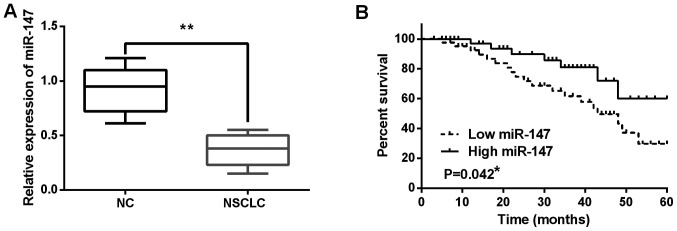
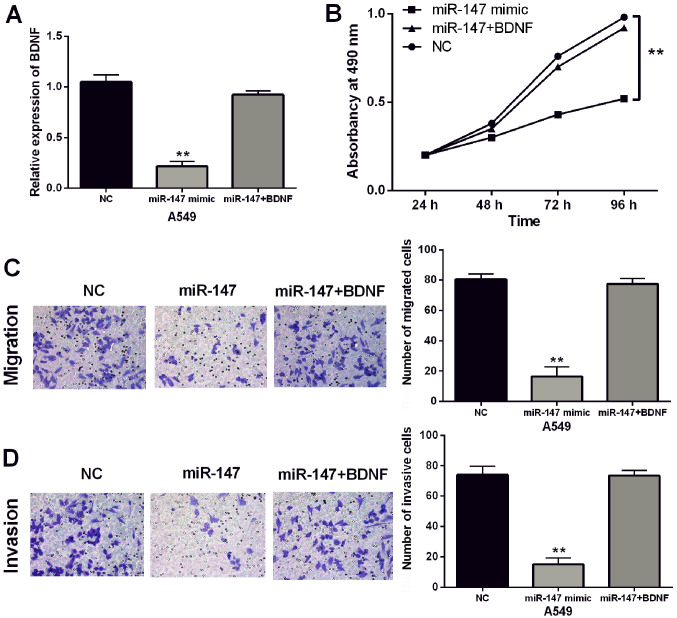
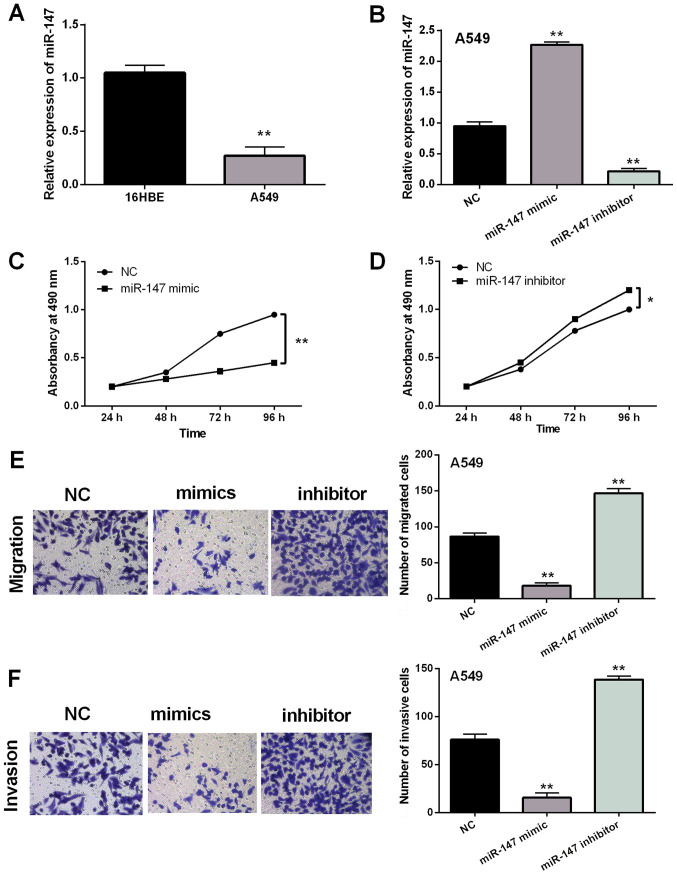
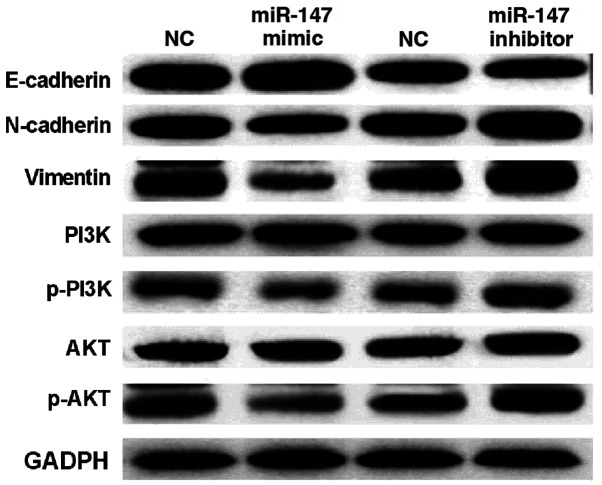
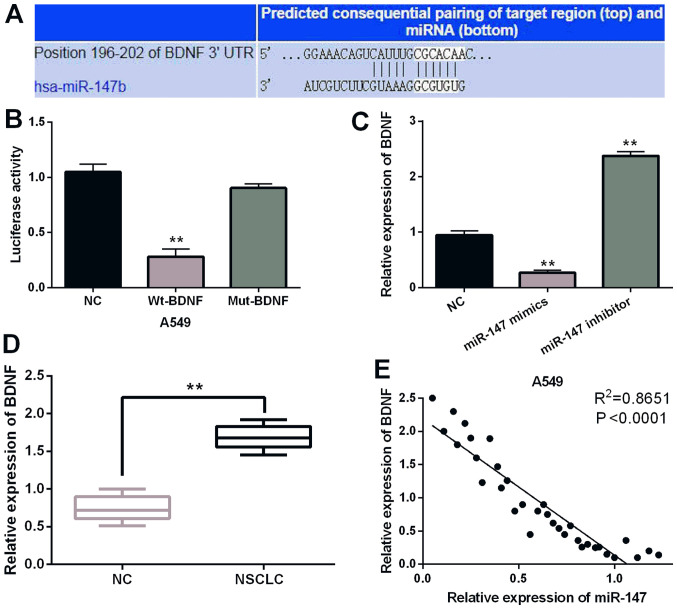
Lung cancer is one of the most common cancers that threaten human life and health. Recently, microRNAs (miRNAs) have been shown to play a unique role in many malignancies. Although the dysregulation of miR-147 has been detected in non-small cell lung cancer (NSCLC), the biological function of miR-147 is still unknown in NSCLC. The expression of miR-147 was observed by real-time quantitative polymerase chain reaction (RT-qPCR). Methyl thiazolyl tetrazolium (MTT) and Transwell assays were used to investigate the function of miR-147 in NSCLC. Target genes of miR-147 were verified using dual luciferase reporter assay. Western blot analysis was used to explore the PI3K/AKT pathway. The expression of miR-147 was decreased in NSCLC tissues, which was associated with poor prognosis in NSCLC patients. Furthermore, overexpression of miR-147 inhibited the viability and metastasis of NSCLC cells. In addition, miR-147 inhibited epithelial-mesenchymal transition (EMT) and inactivated the PI3K/AKT pathway in NSCLC. Furthermore, miR-147 directly targets brain-derived neurotrophic factor (BDNF) and negatively regulates BDNF expression in NSCLC. Upregulation of BDNF attenuated the inhibitory effect of miR-147 in NSCLC. In conclusion, miR-147 inhibits cell proliferation, migration and invasion in NSCLC through suppressing BDNF expression.
肺癌是威胁人类生命健康的最常见癌症之一。最近,微小RNA(miRNA)已被证明在许多恶性肿瘤中发挥独特作用。尽管在非小细胞肺癌(NSCLC)中已检测到miR-147失调,但其在NSCLC中的生物学功能仍不清楚。通过实时定量聚合酶链反应(RT-qPCR)观察miR-147的表达。采用甲基噻唑基四氮唑(MTT)和Transwell实验研究miR-147在NSCLC中的功能。使用双荧光素酶报告基因检测验证miR-147的靶基因。采用蛋白质免疫印迹分析来探究PI3K/AKT信号通路。NSCLC组织中miR-147的表达降低,这与NSCLC患者的不良预后相关。此外,miR-147的过表达抑制了NSCLC细胞的活力和转移。此外,miR-147抑制上皮-间质转化(EMT)并使NSCLC中的PI3K/AKT信号通路失活。此外,miR-147直接靶向脑源性神经营养因子(BDNF)并负向调节NSCLC中BDNF的表达。BDNF的上调减弱了miR-147对NSCLC的抑制作用。总之,miR-147通过抑制BDNF表达来抑制NSCLC中的细胞增殖、迁移和侵袭。