Xia Huan, Li Yang, Lv Xiaohong
Department of Respiratory Medicine, The First Hospital of Jilin University, Chaoyang, Changchun, Jilin 130021, P.R. China.
Int J Oncol. 2016 Oct;49(4):1325-33. doi: 10.3892/ijo.2016.3628. Epub 2016 Jul 25.
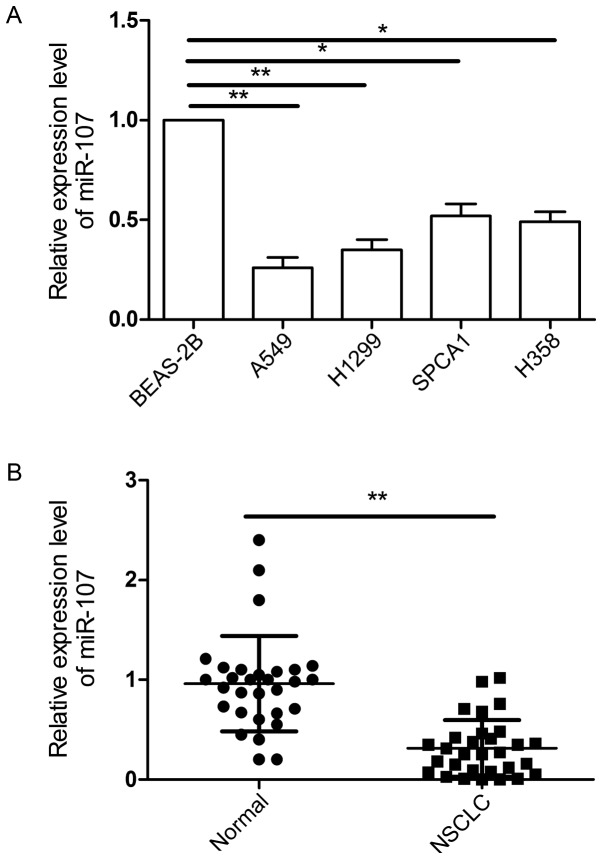
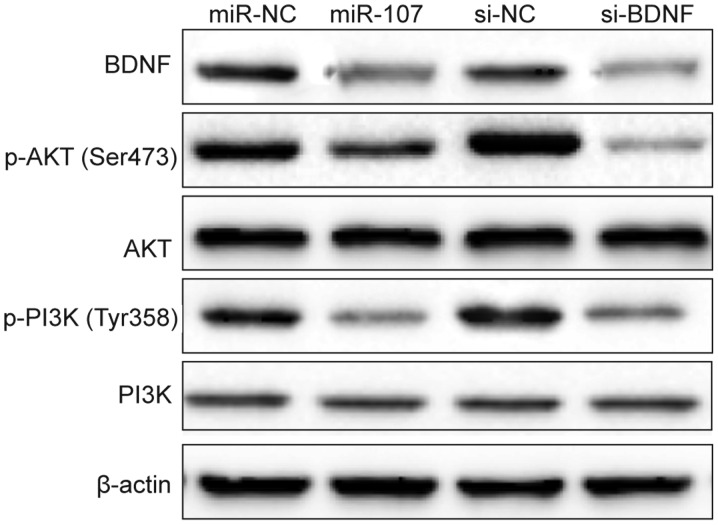
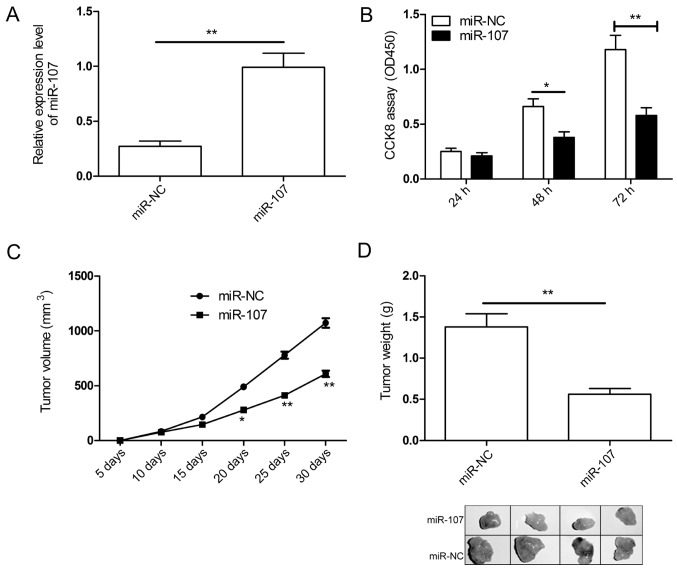
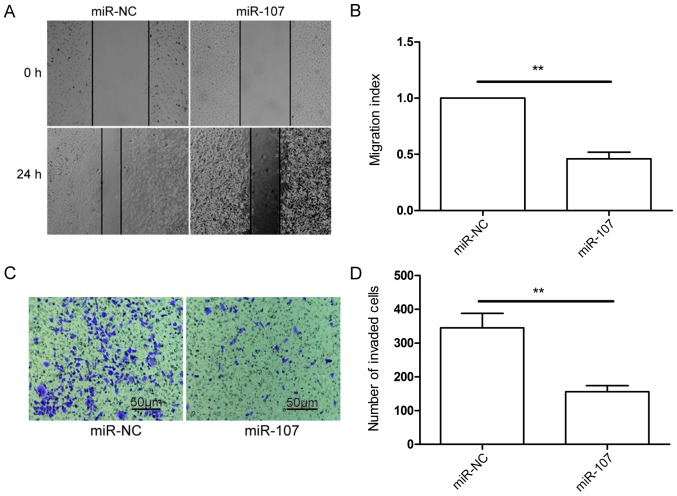
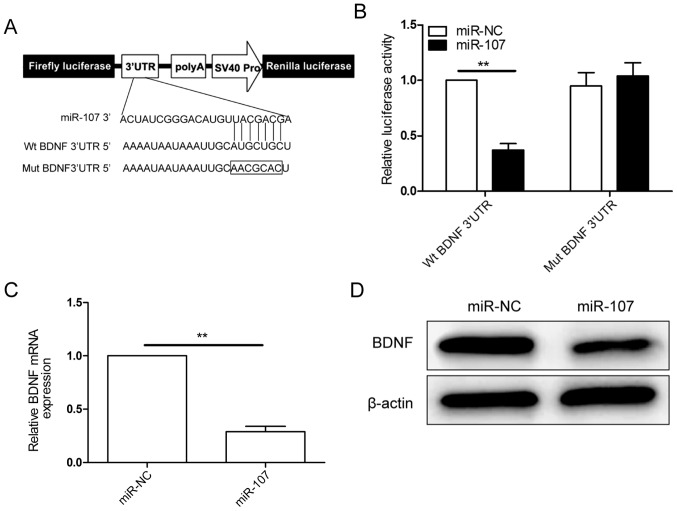
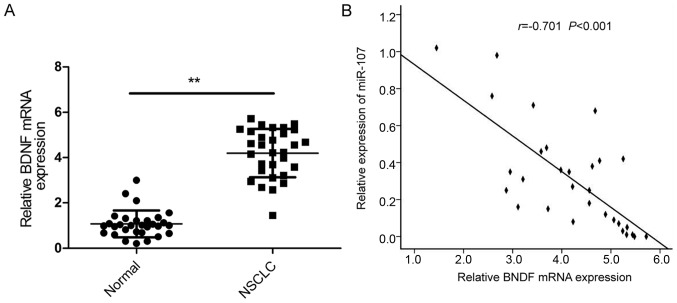
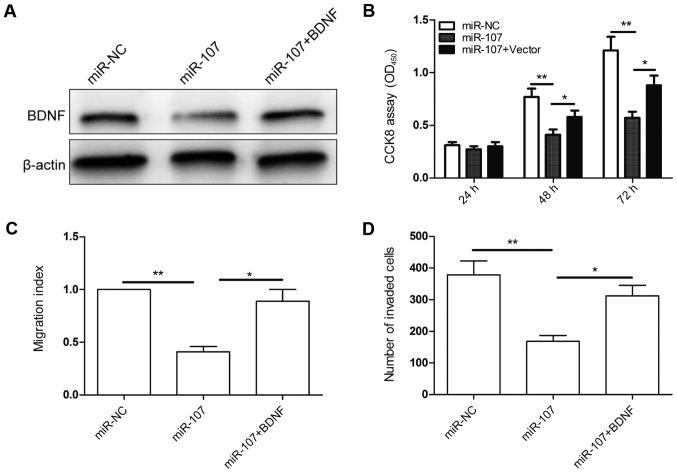
Abnormal expression of microRNA-107 (miR-107) was found in non-small cell lung cancer (NSCLC). However, little is known about its role and molecular mechanism in NSCLC progression and metastasis. Therefore, the aims of this study were to clarify the potential role of miR-107 and molecular mechanism in NSCLC progression and metastasis. Quantitative real-time polymerase chain reaction assay showed that miR-107 expression levels were significantly decreased in NSCLC tissue and cell lines. Low miR-107 levels in tumor tissue correlated with advanced TNM stage and lymph node metastasis. Function assays showed that overexpression of miR-107 suppressed cell proliferation, migration and invasion in A549 cells in vitro, and inhibited NSCLC tumor growth in vivo. Further mechanism assays suggested the brain-derived neurotrophic factor (BDNF) was identified as a target gene of miR-107 in NSCLC cells. In addition, BDNF expression was upregulated, and inversely correlated with miR-107 in NSCLC tissues. Enforced overexpression of BDNF effectively reversed the tumor suppressive functions of miR-107 on NSCLC proliferation, migration and invasion. miR-107 overexpression or downregulation of BDNF was able to inhibit activation of PI3K/AKT signaling pathway. Taken together, our findings present the first evidence that miR-107 could suppress NSCLC metastasis by targeting BDNF and indirectly regulating PI3K/AKT signaling pathway, which might lead to a potential therapeutic strategy focusing on miR-107 and BDNF for human NSCLC.
在非小细胞肺癌(NSCLC)中发现了微小RNA-107(miR-107)的异常表达。然而,其在NSCLC进展和转移中的作用及分子机制尚不清楚。因此,本研究旨在阐明miR-107在NSCLC进展和转移中的潜在作用及分子机制。定量实时聚合酶链反应分析表明,NSCLC组织和细胞系中miR-107表达水平显著降低。肿瘤组织中低水平的miR-107与晚期TNM分期和淋巴结转移相关。功能分析表明,miR-107的过表达在体外抑制了A549细胞的增殖、迁移和侵袭,并在体内抑制了NSCLC肿瘤生长。进一步的机制分析表明,脑源性神经营养因子(BDNF)被确定为NSCLC细胞中miR-107的靶基因。此外,BDNF表达上调,且在NSCLC组织中与miR-107呈负相关。BDNF的强制过表达有效地逆转了miR-107对NSCLC增殖、迁移和侵袭的肿瘤抑制作用。miR-107的过表达或BDNF的下调能够抑制PI3K/AKT信号通路的激活。综上所述,我们的研究结果首次证明,miR-107可通过靶向BDNF并间接调节PI3K/AKT信号通路来抑制NSCLC转移,这可能会导致一种针对人类NSCLC的以miR-107和BDNF为靶点的潜在治疗策略。