Kramer Marianne C, Janssen Kevin A, Palos Kyle, Nelson Andrew D L, Vandivier Lee E, Garcia Benjamin A, Lyons Eric, Beilstein Mark A, Gregory Brian D
Department of Biology University of Pennsylvania Philadelphia PA USA.
Cell and Molecular Biology Graduate Group Perelman School of Medicine University of Pennsylvania Philadelphia PA USA.
Plant Direct. 2020 Jul 24;4(7):e00239. doi: 10.1002/pld3.239. eCollection 2020 Jul.
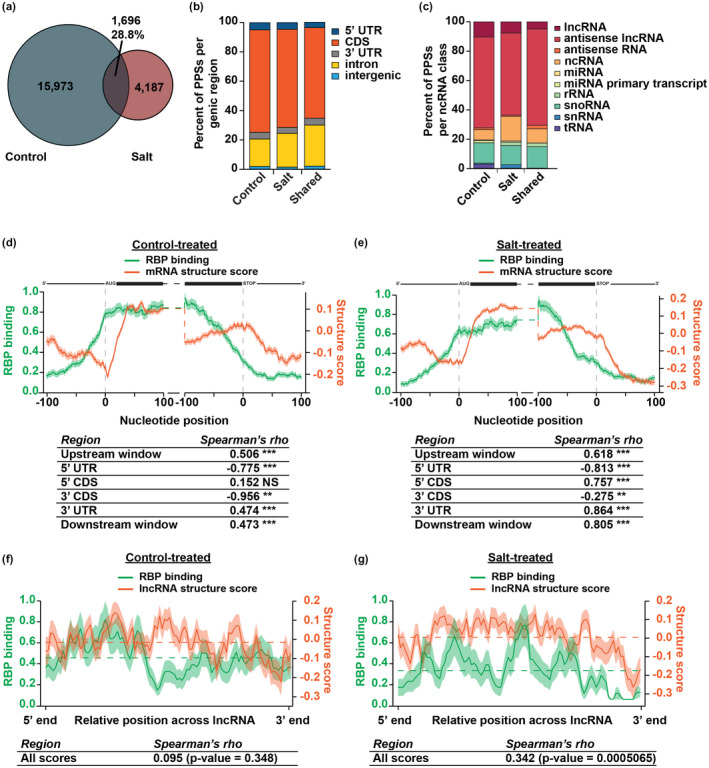
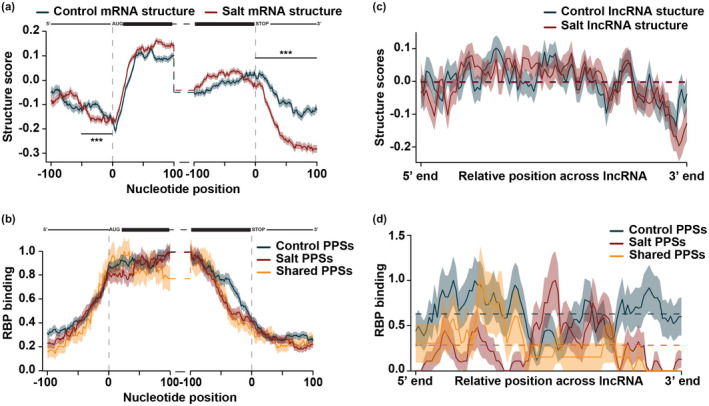
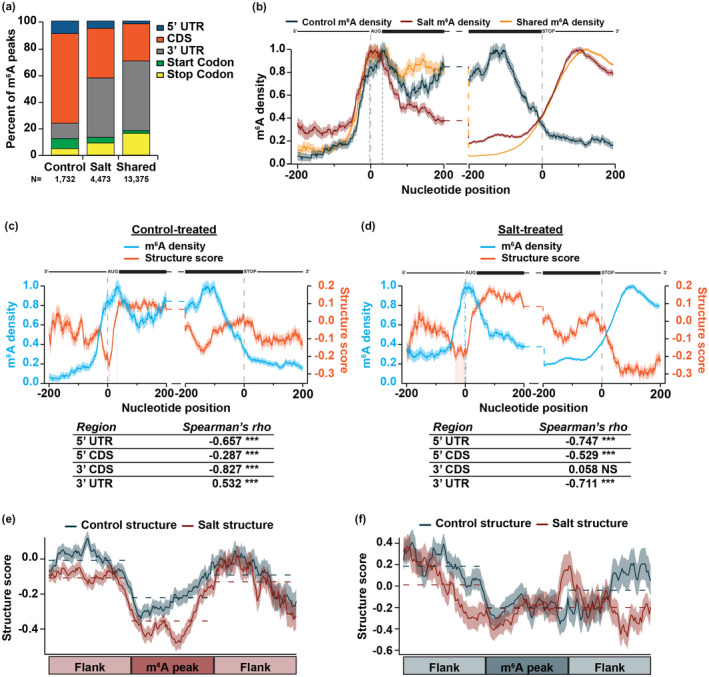
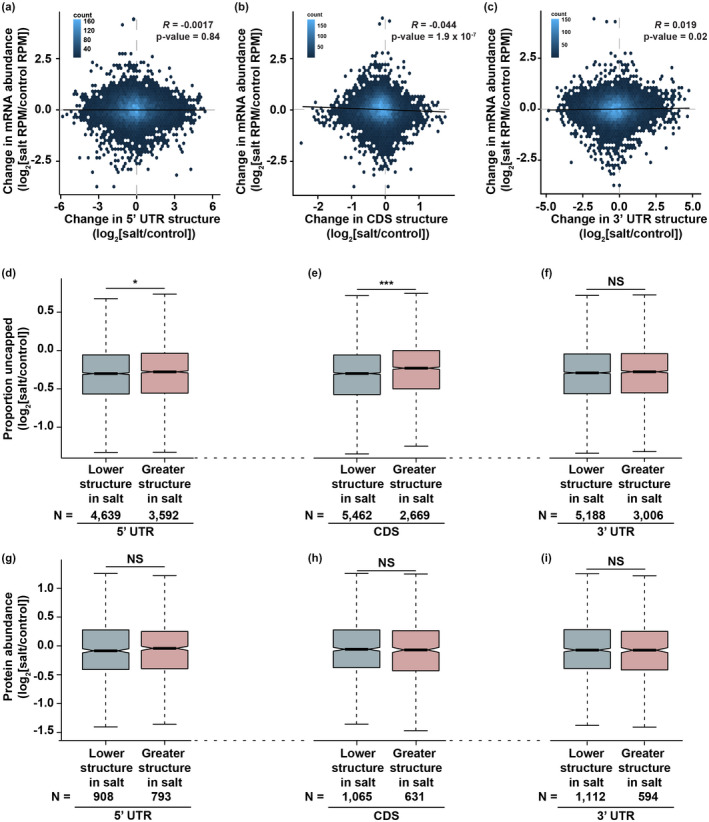
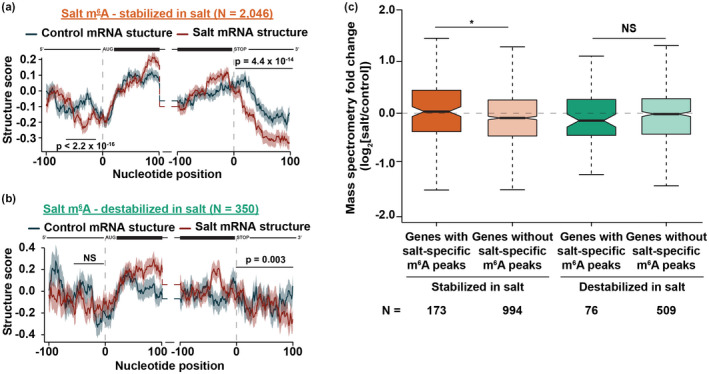
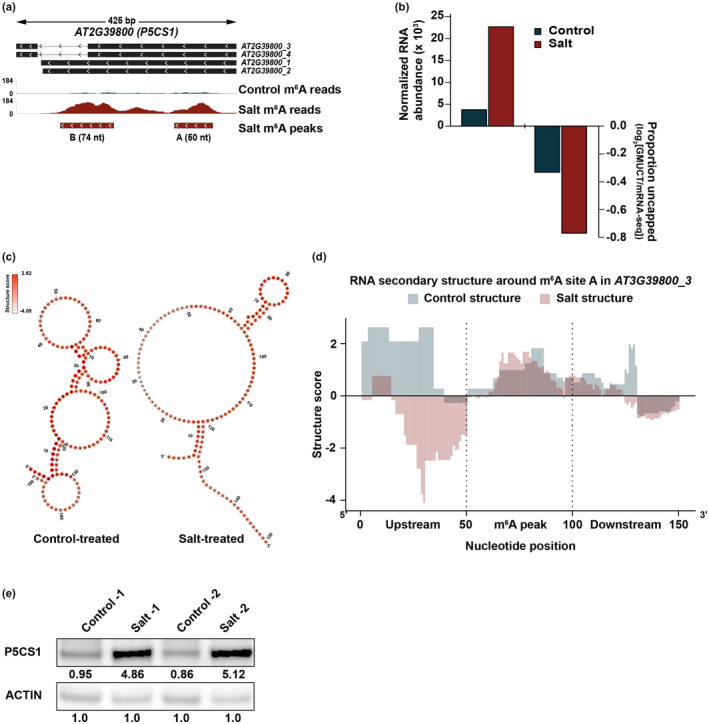
After transcription, a messenger RNA (mRNA) is further post-transcriptionally regulated by several features including RNA secondary structure and covalent RNA modifications (specifically N-methyladenosine, mA). Both RNA secondary structure and mA have been demonstrated to regulate mRNA stability and translation and have been independently linked to plant responses to soil salinity levels. However, the effect of mA on regulating RNA secondary structure and the combinatorial interplay between these two RNA features during salt stress response has yet to be studied. Here, we globally identify RNA-protein interactions and RNA secondary structure during systemic salt stress. This analysis reveals that RNA secondary structure changes significantly during salt stress, and that it is independent of global changes in RNA-protein interactions. Conversely, we find that mA is anti-correlated with RNA secondary structure in a condition-dependent manner, with salt-specific mA correlated with a decrease in mRNA secondary structure during salt stress. Taken together, we suggest that salt-specific mA deposition and the associated loss of RNA secondary structure results in increases in mRNA stability for transcripts encoding abiotic stress response proteins and ultimately increases in protein levels from these stabilized transcripts. In total, our comprehensive analyses reveal important post-transcriptional regulatory mechanisms involved in plant long-term salt stress response and adaptation.
转录后,信使核糖核酸(mRNA)会受到多种转录后调控,包括RNA二级结构和共价RNA修饰(特别是N-甲基腺苷,mA)。RNA二级结构和mA均已被证明可调节mRNA稳定性和翻译,并且各自都与植物对土壤盐分水平的响应有关。然而,mA对RNA二级结构的调节作用以及在盐胁迫响应过程中这两种RNA特征之间的组合相互作用尚未得到研究。在此,我们全面鉴定了系统性盐胁迫期间的RNA-蛋白质相互作用和RNA二级结构。该分析表明,盐胁迫期间RNA二级结构发生显著变化,且这种变化独立于RNA-蛋白质相互作用的全局变化。相反,我们发现mA与RNA二级结构呈条件依赖性的负相关,盐特异性mA与盐胁迫期间mRNA二级结构的减少相关。综上所述,我们认为盐特异性mA沉积以及相关的RNA二级结构丧失导致编码非生物胁迫响应蛋白的转录本的mRNA稳定性增加,并最终使这些稳定转录本的蛋白质水平提高。总之,我们的综合分析揭示了植物长期盐胁迫响应和适应过程中涉及的重要转录后调控机制。