Scheetz Marc H, Konig Maximilian F, Robinson Philip C, Sparks Jeffrey A, Kim Alfred H J
Midwestern University and Midwestern University Pharmacometrics Center of Excellence, Downers Grove, Illinois, and Northwestern Memorial Hospital, Chicago, Illinois.
Johns Hopkins University School of Medicine, Baltimore, Maryland.
ACR Open Rheumatol. 2020 Aug;2(8):491-495. doi: 10.1002/acr2.11164. Epub 2020 Jul 29.
The recent hydroxychloroquine (HCQ) shortage due to use in coronavirus disease 2019 (COVID-19) has forced some rheumatic disease patients to choose between continuing their current dose of HCQ but exhaust their supply early or ration it in order to prolong its use. Blood HCQ concentrations are directly correlated with disease activity in rheumatic diseases such as systemic lupus erythematosus. We sought to model how changes in HCQ dosage will best maintain sufficient blood HCQ concentrations for the longest period of time in order to avoid potential future flares.
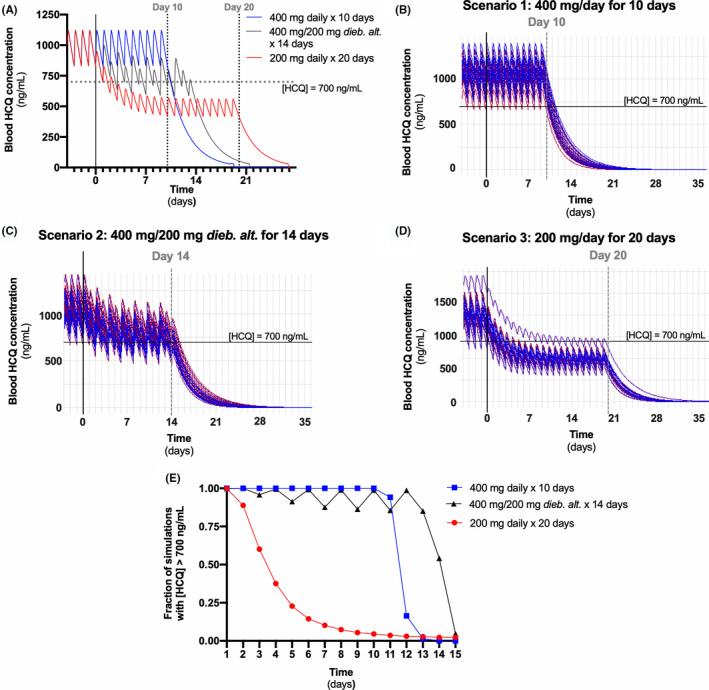
A one-compartment pharmacokinetic model was used to predict mean blood HCQ concentrations. Monte Carlo simulations with 10-fold inflated model parameter variance was utilized to assess the impact of variability.
Maintenance of 400 mg/d resulted in mean therapeutic whole-blood HCQ concentrations that exceeded 700 ng/ml for 10.5 days, whereas HCQ rationing by reducing the dose by half resulted in the mean concentration remaining above 700 ng/ml for 2.4 days (net gain = 8 days). Variability analysis demonstrates that results may differ at the individual level, dependent on baseline blood HCQ concentrations.
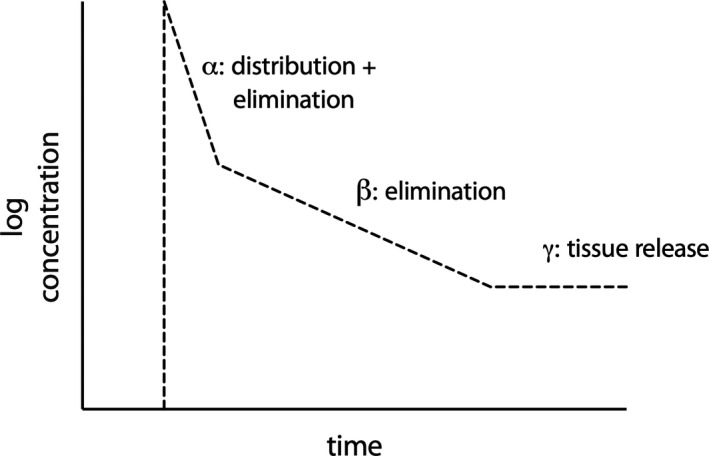
Although mean blood concentrations exceed 700 ng/ml for a longer time if patients maintain their full dose of HCQ, more information is needed to fully understand the elimination of HCQ at the patient level, particularly the contribution of tissue stores of HCQ transiting back into the blood.
近期由于2019冠状病毒病(COVID-19)治疗中使用羟氯喹(HCQ)导致该药短缺,迫使一些风湿性疾病患者在继续使用当前剂量的HCQ但提前耗尽药物供应,或者定量使用以延长药物使用时间之间做出选择。血液中HCQ浓度与系统性红斑狼疮等风湿性疾病的疾病活动直接相关。我们试图建立模型,以确定HCQ剂量的变化如何能在最长时间内最佳地维持足够的血液HCQ浓度,从而避免未来可能出现的病情复发。
采用单室药代动力学模型预测血液中HCQ的平均浓度。利用模型参数方差增大10倍的蒙特卡洛模拟来评估变异性的影响。
维持400mg/d的剂量可使全血中HCQ的平均治疗浓度超过700ng/ml的时间达10.5天,而将剂量减半进行HCQ定量使用时,平均浓度保持在700ng/ml以上的时间为2.4天(净增加8天)。变异性分析表明,个体水平的结果可能因基线血液HCQ浓度而异。
虽然如果患者维持HCQ的全剂量,血液平均浓度超过700ng/ml的时间会更长,但仍需要更多信息来全面了解患者体内HCQ的消除情况,特别是HCQ组织储存重新进入血液的贡献。