National Centre for Biological Sciences (TIFR), GKVK Campus, Bangalore, Karnataka, 560065, India.
The University of Trans-Disciplinary Health Sciences and Technology (TDU), #74/2, Jarakabande Kaval, Post Attur, Via Yelahanka, Bangalore, Karnataka, 560064, India.
Sci Rep. 2020 Jul 29;10(1):12658. doi: 10.1038/s41598-020-69452-7.
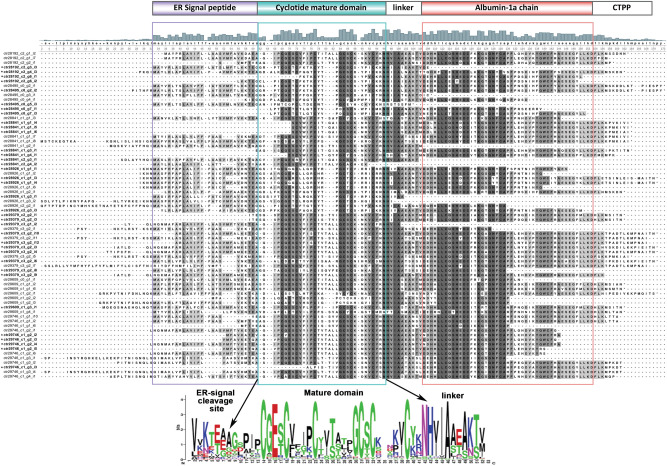
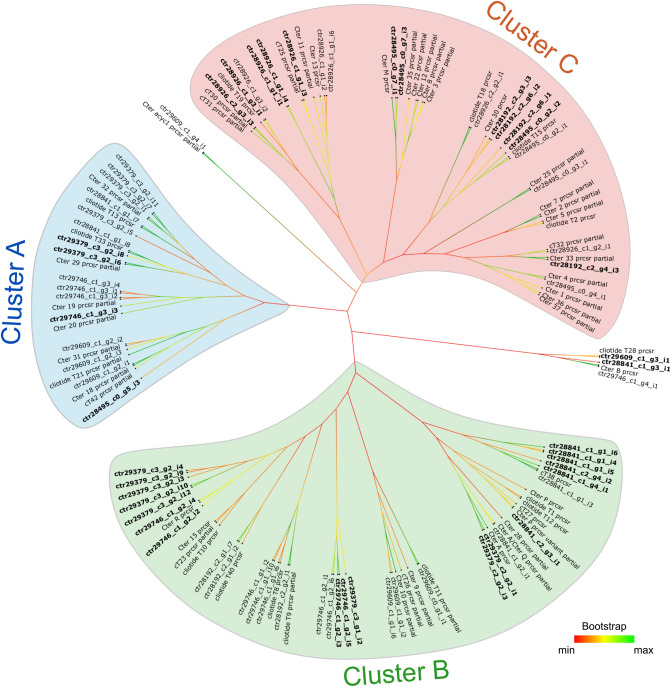
Clitoria ternatea a perennial climber of the Fabaceae family, is well known for its agricultural and medical applications. It is also currently the only known member of the Fabaceae family that produces abundant amounts of the ultra-stable macrocyclic peptides, cyclotides, across all tissues. Cyclotides are a class of gene-encoded, disulphide-rich, macrocyclic peptides (26-37 residues) acting as defensive metabolites in several plant species. Previous transcriptomic studies have demonstrated the genetic origin of cyclotides from the Fabaceae plant family to be embedded in the albumin-1 genes, unlike its counterparts in other plant families. However, the complete mechanism of its biosynthesis and the repertoire of enzymes involved in cyclotide folding and processing remains to be understood. In this study, using RNA-Seq data and de novo transcriptome assembly of Clitoria ternatea, we have identified 71 precursor genes of cyclotides. Out of 71 unique cyclotide precursor genes obtained, 51 sequences display unique cyclotide domains, of which 26 are novel cyclotide sequences, arising from four individual tissues. MALDI-TOF mass spectrometry analysis of fractions from different tissue extracts, coupled with precursor protein sequences obtained from transcriptomic data, established the cyclotide diversity in this plant species. Special focus in this study has also been on identifying possible enzymes responsible for proper folding and processing of cyclotides in the cell. Transcriptomic mining for oxidative folding enzymes such as protein-disulphide isomerases (PDI), ER oxidoreductin-1 (ERO1) and peptidylprolyl cis-trans isomerases (PPIases)/cyclophilins, and their levels of expression are also reported. In particular, it was observed that the CtPDI genes formed plant-specific clusters among PDI genes as compared to those from other plant species. Collectively, this work provides insights into the biogenesis of the medicinally important cyclotides and establishes the expression of certain key enzymes participating in peptide biosynthesis. Also, several novel cyclotide sequences are reported and precursor sequences are analysed in detail. In the absence of a published reference genome, a comprehensive transcriptomics approach was adopted to provide an overview of diverse properties and constituents of C. ternatea.
三叶蝴蝶豆是豆科多年生攀援植物,具有广泛的农业和医学应用。它也是目前唯一已知的豆科植物,能够在所有组织中产生大量超稳定的大环肽环肽。环肽是一类基因编码的富含二硫键的大环肽(26-37 个残基),作为几种植物物种的防御代谢物。以前的转录组学研究表明,豆科植物中环肽的遗传起源嵌入在白蛋白-1 基因中,与其他植物家族中的环肽不同。然而,其生物合成的完整机制以及参与环肽折叠和加工的酶谱仍有待了解。在这项研究中,我们使用 RNA-Seq 数据和三叶蝴蝶豆的从头转录组组装,鉴定了 71 个环肽前体基因。在获得的 71 个独特的环肽前体基因中,有 51 个序列显示出独特的环肽结构域,其中 26 个是新的环肽序列,来自四个不同的组织。不同组织提取物的馏分的 MALDI-TOF 质谱分析,结合从转录组数据获得的前体蛋白序列,确定了该植物物种中环肽的多样性。本研究特别关注鉴定可能负责细胞中环肽正确折叠和加工的酶。对氧化折叠酶(如蛋白二硫键异构酶(PDI)、内质网氧化还原酶-1(ERO1)和肽脯氨酰顺反异构酶(PPIase)/亲环素)进行转录组挖掘,并报告了它们的表达水平。特别是,与其他植物物种相比,观察到 CtPDI 基因在 PDI 基因中形成了植物特异性簇。总之,这项工作提供了对药用重要环肽生物发生的深入了解,并建立了参与肽生物合成的某些关键酶的表达。此外,还报告了几个新的环肽序列,并详细分析了前体序列。在没有已发表的参考基因组的情况下,采用了全面的转录组学方法来概述三叶蝴蝶豆的各种特性和成分。