Rurek Michał
Department of Molecular and Cellular Biology, Institute of Molecular Biology and Biotechnology, Faculty of Biology, Adam Mickiewicz University, Poznań, Poland.
Acta Biochim Pol. 2025 Jul 16;72:14609. doi: 10.3389/abp.2025.14609. eCollection 2025.
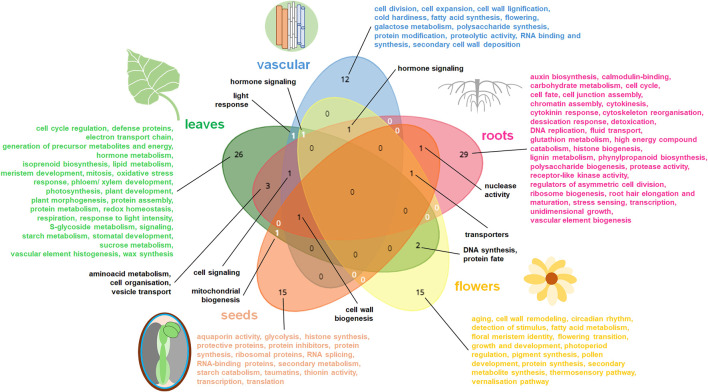
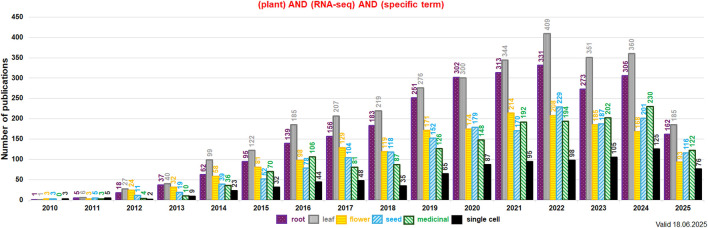
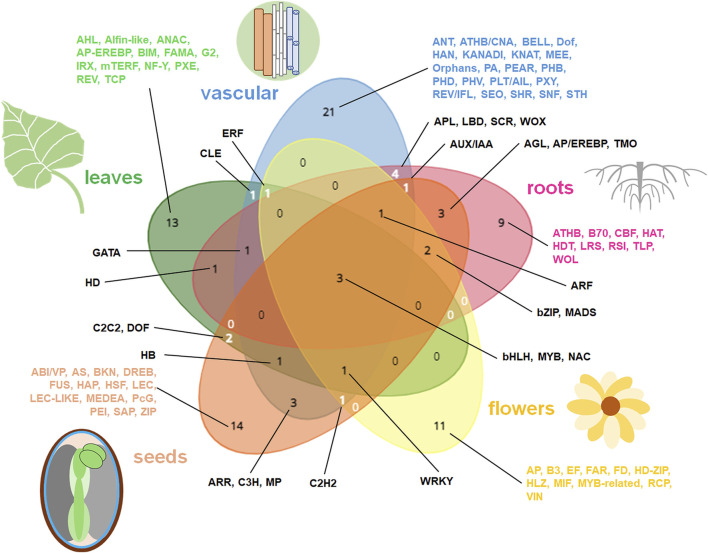
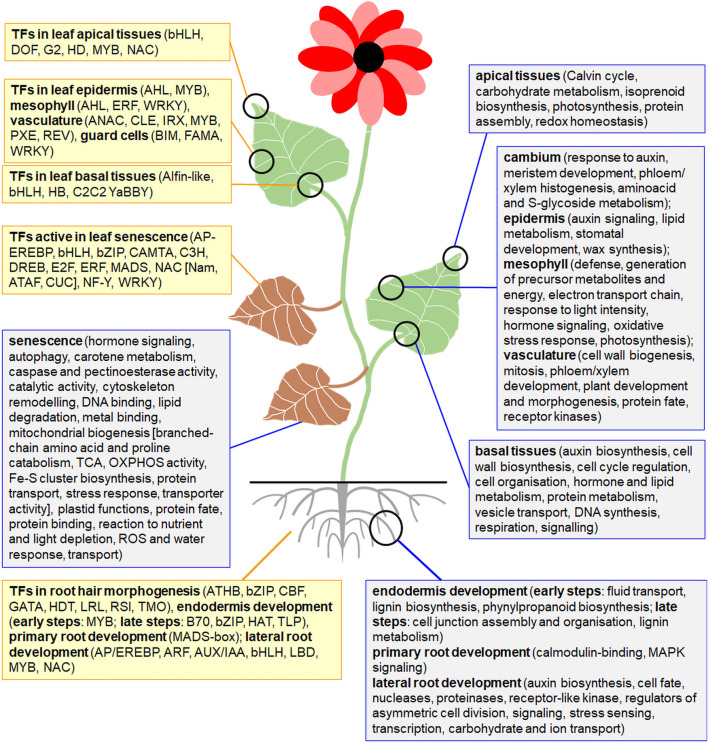
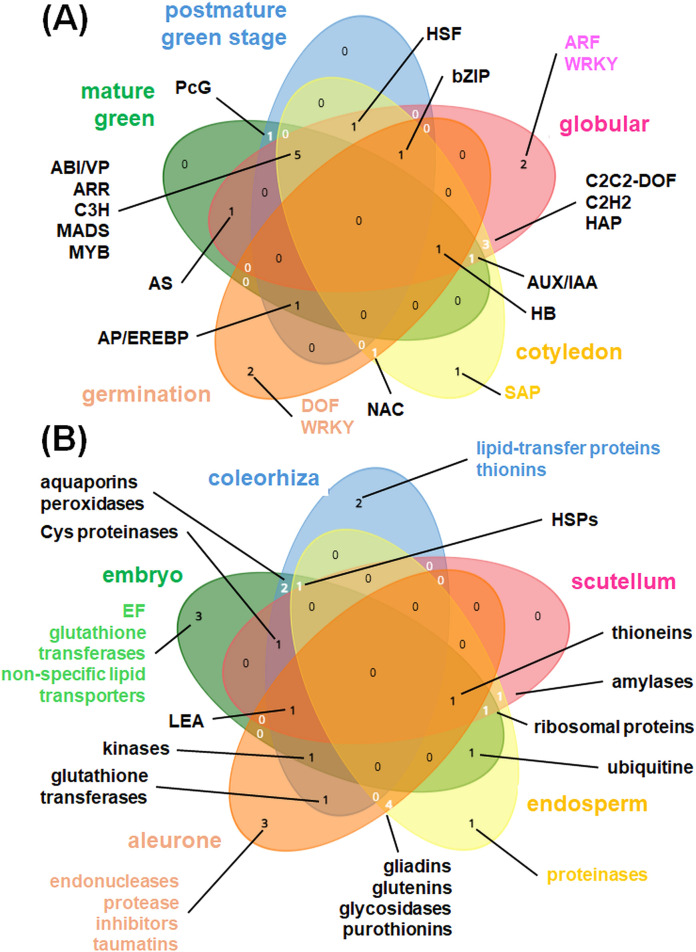
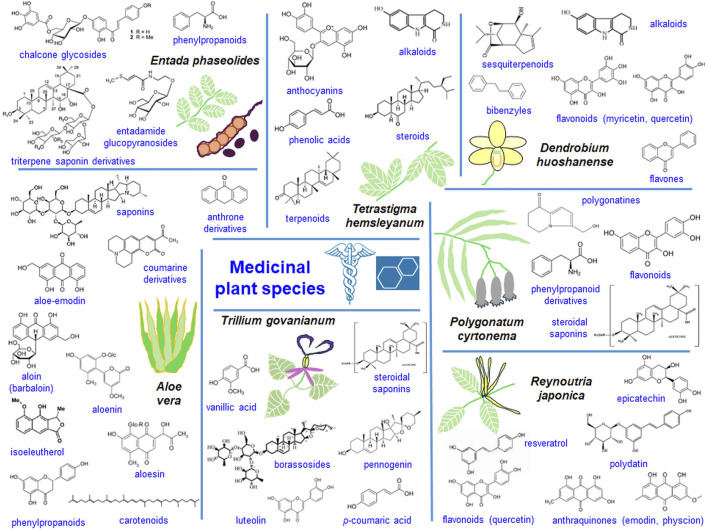
Plant transcriptomes comprise nuclear and organellar (mitochondrial and plastid) transcripts expressed by nuclear and organellar genomes, respectively. They are spatiotemporally shaped during development. The aim of this review was to summarize the most relevant transcriptomic responses in various plant organs and tissues in the developmental context. The dynamicity of organ- or tissue-specific transcriptomic responses was discussed based on the complexity and diversity of the recently characterized plant genomes and transcriptomes. Data were taken from high-throughput studies on numerous species, including model, crop and medicinal plant species. Vascular element transcriptomes as well as the root, leaf, flower and seed transcriptomes were exhaustively characterized. Transcriptomic alterations within various tissue and organ-specific transcriptomes employed various gene classes depending on the species, a given organ/tissue and the developmental stage. The specificity of organ-specific transcriptomes related to the over-representation of certain gene families and a plethora of transcription factors was focused. In addition, transcriptomes of medicinal plant species were characterized. The perspectives of medicinal plant species to synthesize valuable secondary metabolites (including quinones, carotenoids, phytoestrogens, terpenoids, steroids, flavonoids, phenolic derivatives, polysaccharides, glycosides, anthocyanins and macrocyclic peptides) were described based on organ transcriptomic patterns. Future research should be broadened by investigation of transcriptomes from field grown plants. Also, the potential of biomedical plants should be better revealed by genetic engineering and genome editing in further biotechnological applications.
植物转录组分别由核基因组和细胞器基因组(线粒体和质体)表达的核转录本和细胞器转录本组成。它们在发育过程中受到时空塑造。本综述的目的是在发育背景下总结各种植物器官和组织中最相关的转录组反应。基于最近表征的植物基因组和转录组的复杂性和多样性,讨论了器官或组织特异性转录组反应的动态性。数据来自对众多物种的高通量研究,包括模式植物、作物和药用植物物种。详尽地描述了维管元件转录组以及根、叶、花和种子转录组。不同组织和器官特异性转录组内的转录组变化根据物种、特定器官/组织和发育阶段采用了各种基因类别。重点关注了与某些基因家族和大量转录因子的过度表达相关的器官特异性转录组的特异性。此外,还对药用植物物种的转录组进行了表征。基于器官转录组模式描述了药用植物物种合成有价值的次生代谢产物(包括醌类、类胡萝卜素、植物雌激素、萜类、甾体、黄酮类、酚类衍生物、多糖、糖苷、花青素和大环肽)的前景。未来的研究应通过对田间种植植物的转录组进行研究来拓宽范围。此外,在进一步的生物技术应用中,应通过基因工程和基因组编辑更好地揭示生物医学植物的潜力。