Russell Alicia H, Truman Andrew W
Department of Molecular Microbiology, John Innes Centre, Norwich NR4 7UH, UK.
Comput Struct Biotechnol J. 2020 Jun 25;18:1838-1851. doi: 10.1016/j.csbj.2020.06.032. eCollection 2020.
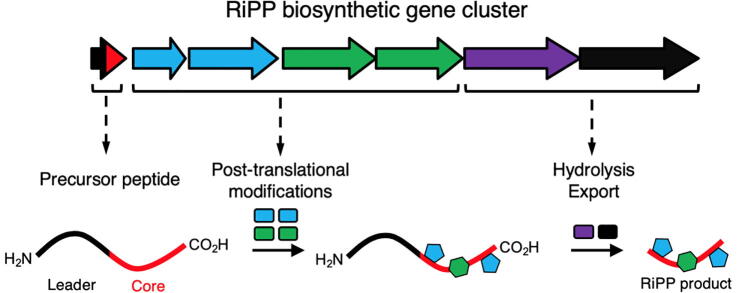
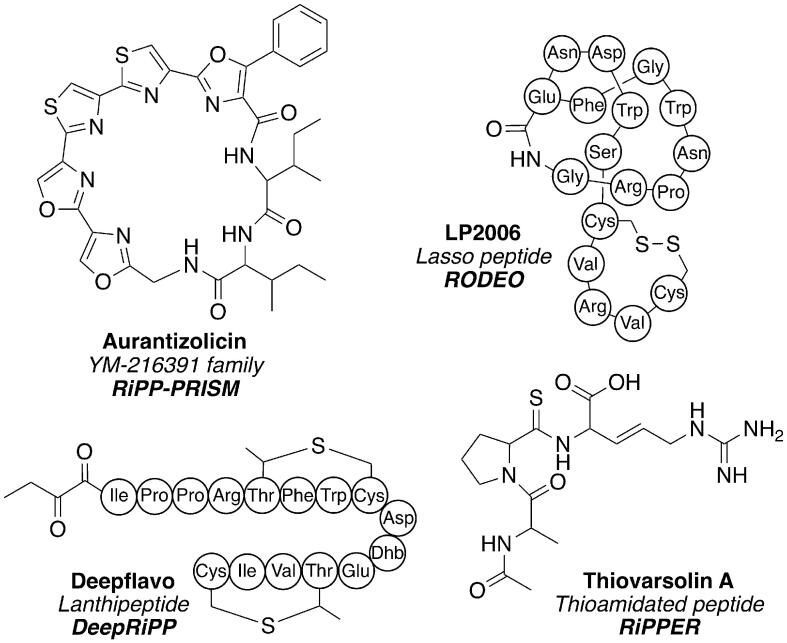
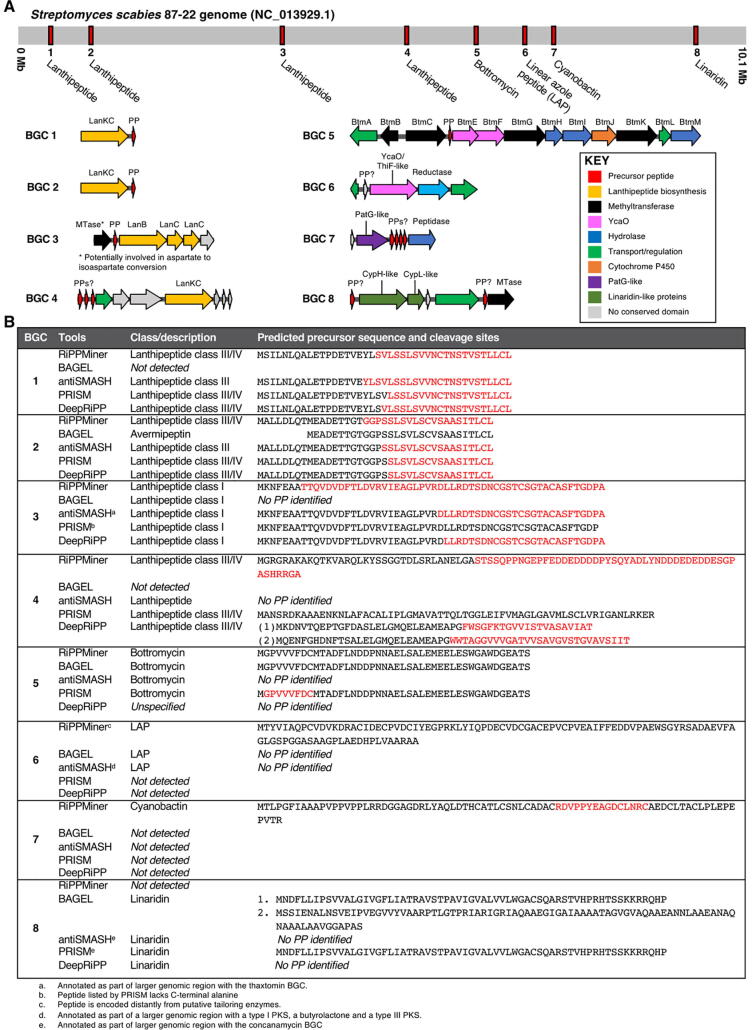
Genome mining is a computational method for the automatic detection and annotation of biosynthetic gene clusters (BGCs) from genomic data. This approach has been increasingly utilised in natural product (NP) discovery due to the large amount of sequencing data that is now available. Ribosomally synthesised and post-translationally modified peptides (RiPPs) are a class of structurally complex NP with diverse bioactivities. RiPPs have recently been shown to occupy a much larger expanse of genomic and chemical space than previously appreciated, indicating that annotation of RiPP BGCs in genomes may have been overlooked in the past. This review provides an overview of the genome mining tools that have been specifically developed to aid in the discovery of RiPP BGCs, which have been built from an increasing knowledgebase of RiPP structures and biosynthesis. Given these recent advances, the application of targeted genome mining has great potential to accelerate the discovery of important molecules such as antimicrobial and anticancer agents whilst increasing our understanding about how these compounds are biosynthesised in nature.
基因组挖掘是一种从基因组数据中自动检测和注释生物合成基因簇(BGC)的计算方法。由于现在可获得大量测序数据,这种方法在天然产物(NP)发现中得到了越来越多的应用。核糖体合成和翻译后修饰肽(RiPPs)是一类具有多种生物活性的结构复杂的NP。最近研究表明,RiPPs所占据的基因组和化学空间比之前认为的要大得多,这表明过去可能忽视了基因组中RiPP BGC的注释。本综述概述了专门为帮助发现RiPP BGC而开发的基因组挖掘工具,这些工具是基于不断增加的RiPP结构和生物合成知识库构建的。鉴于这些最新进展,靶向基因组挖掘的应用具有巨大潜力,可加速发现抗菌和抗癌药物等重要分子,同时增进我们对这些化合物在自然界中生物合成方式的理解。