Nguyen Phuong, Okeke Emmanuel, Clay Michael, Haydar Dalia, Justice Julie, O'Reilly Carla, Pruett-Miller Shondra, Papizan James, Moore Jennifer, Zhou Sheng, Throm Robert, Krenciute Giedre, Gottschalk Stephen, DeRenzo Christopher
Department of Bone Marrow Transplantation and Cellular Therapy, St. Jude Children's Research Hospital, Memphis, TN 38105, USA.
Department of Pathology, St. Jude Children's Research Hospital, Memphis, TN 38105, USA.
Mol Ther Oncolytics. 2020 Jun 23;18:202-214. doi: 10.1016/j.omto.2020.06.018. eCollection 2020 Sep 25.
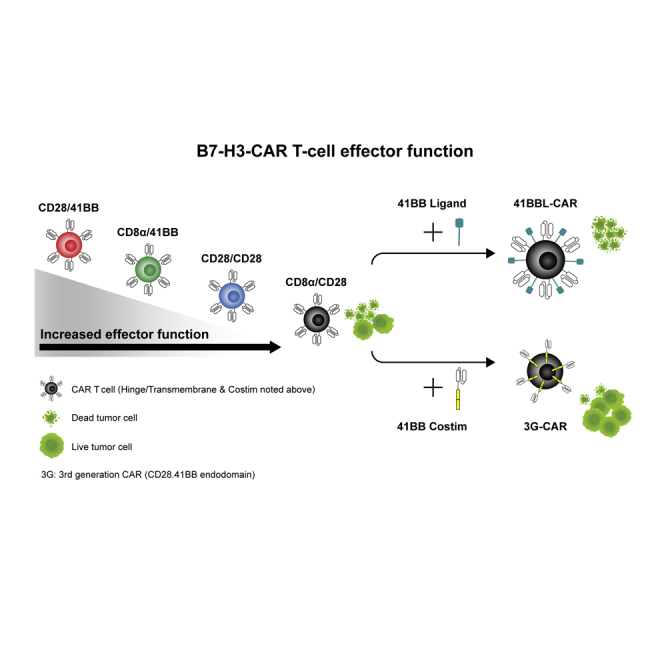
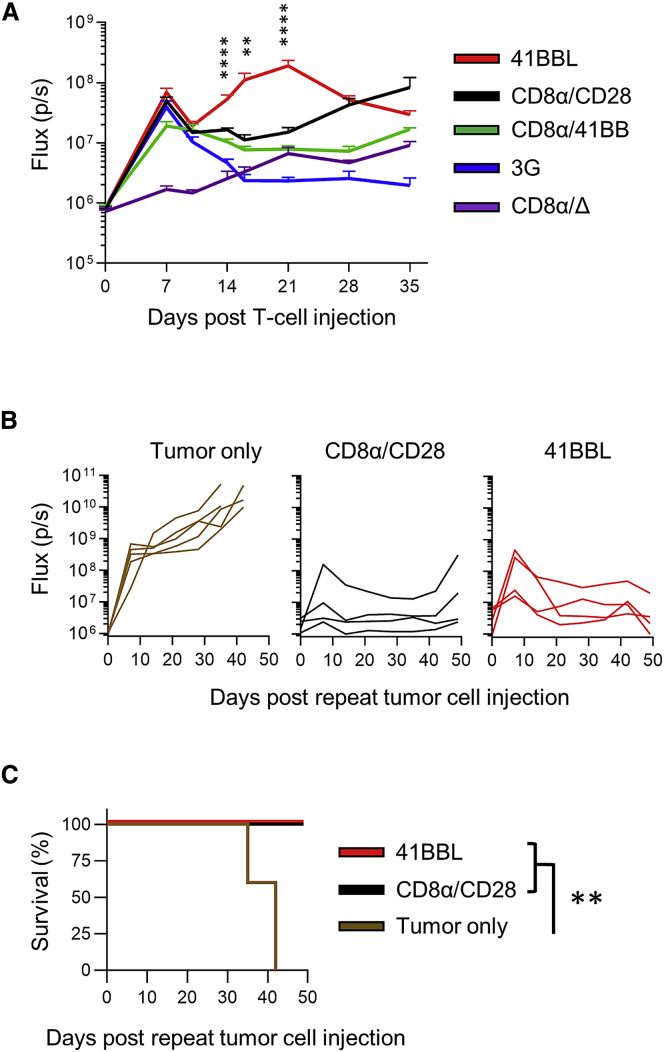
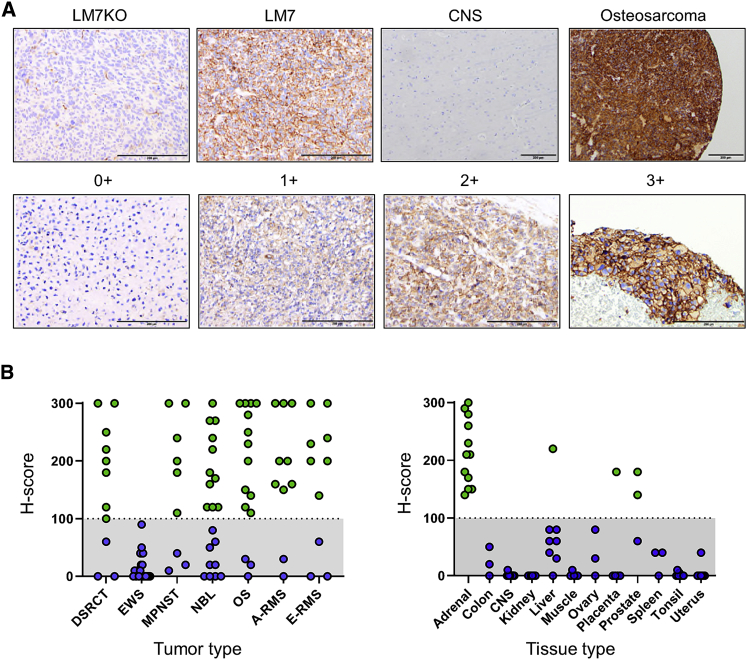
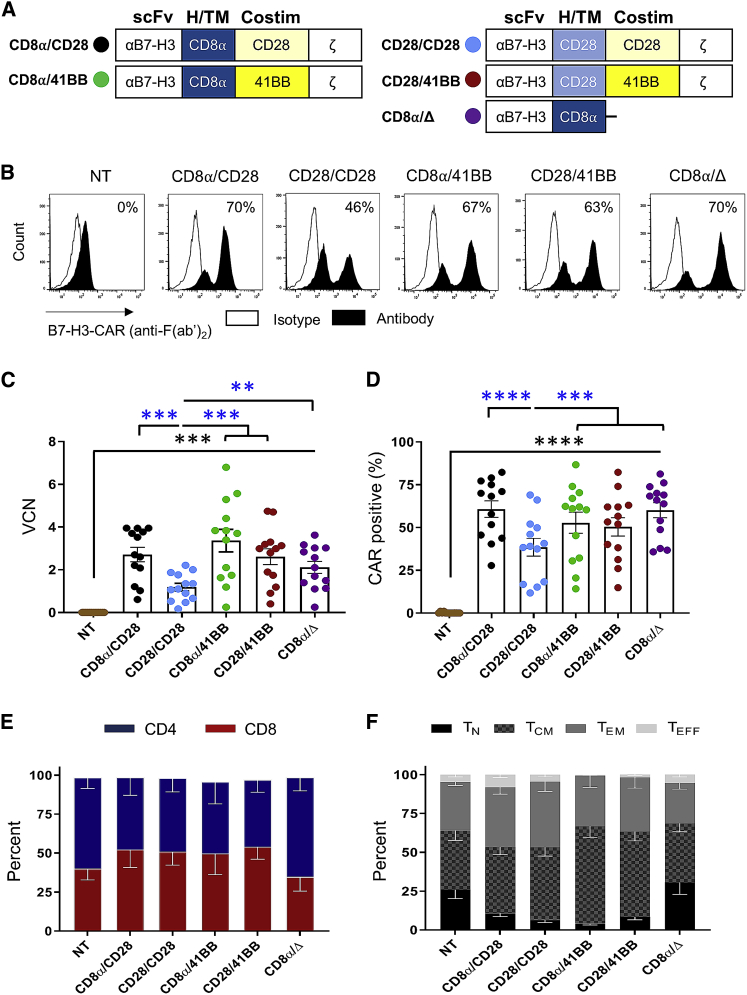
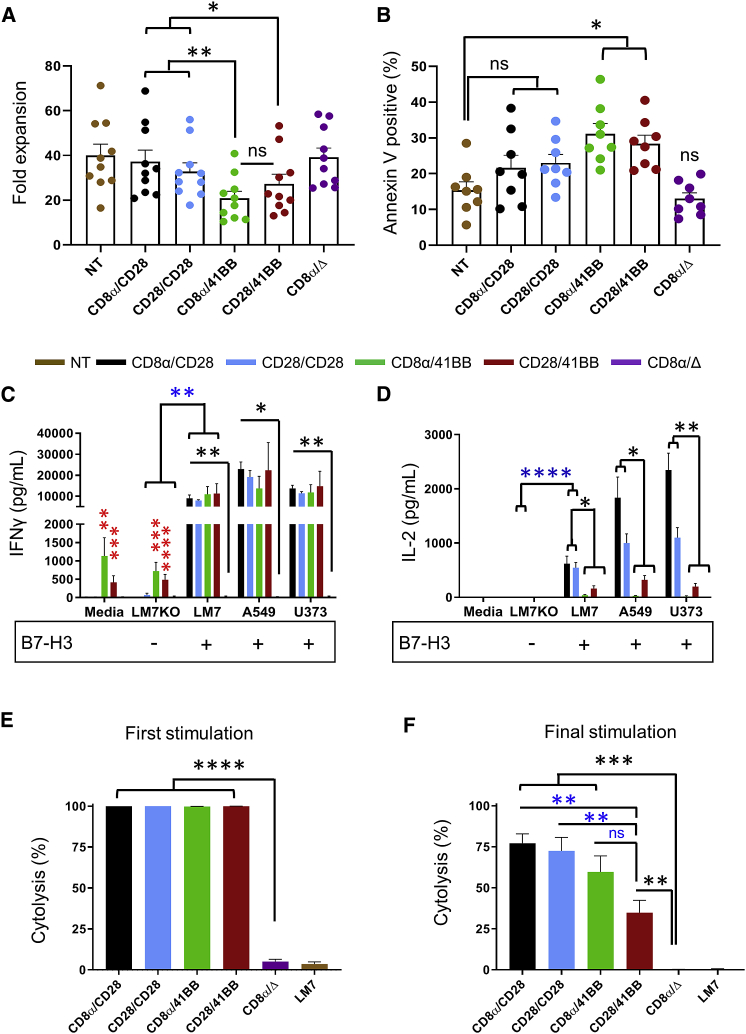
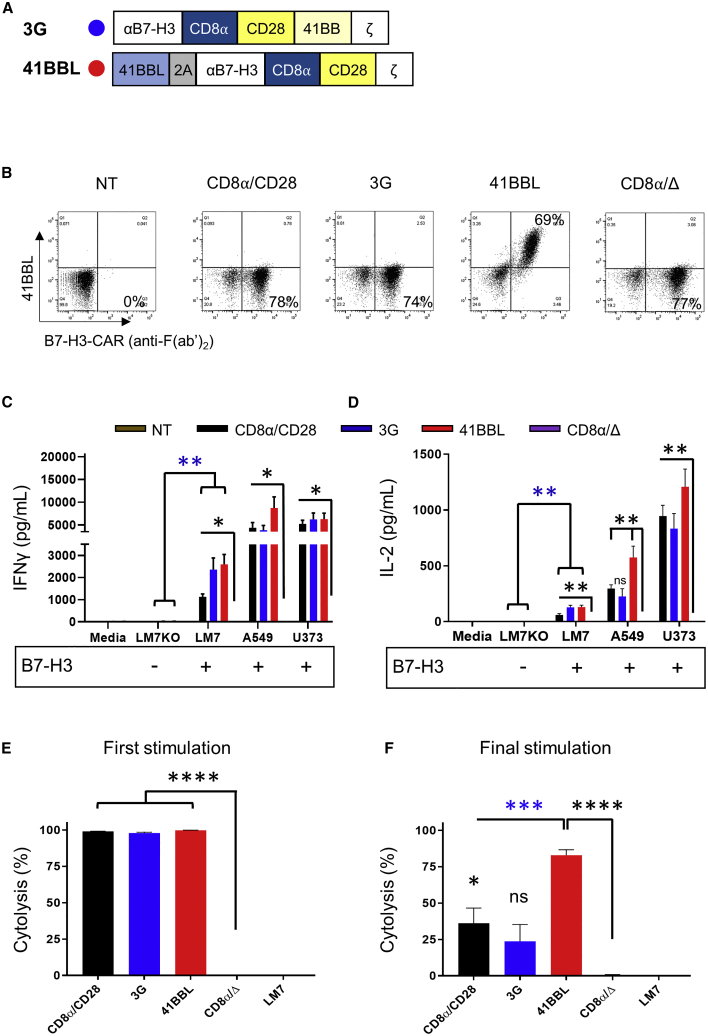
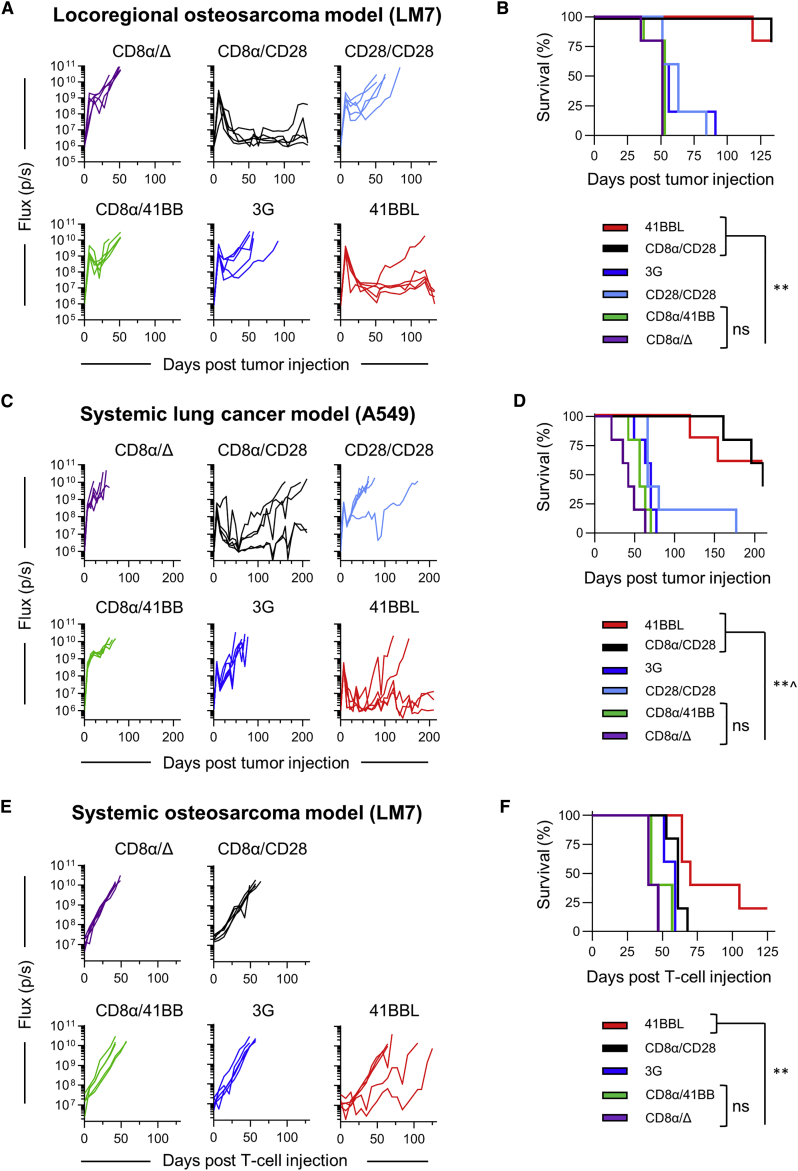
B7-H3 is actively being explored as an immunotherapy target for pediatric patients with solid tumors using monoclonal antibodies or T cells expressing chimeric antigen receptors (CARs). B7-H3-CARs containing a 41BB costimulatory domain are currently favored by several groups based on preclinical studies. In this study, we initially performed a detailed analysis of T cells expressing B7-H3-CARs with different hinge/transmembrane (CD8α versus CD28) and CD28 or 41BB costimulatory domains (CD8α/CD28, CD8α/41BB, CD28/CD28, CD28/41BB). Only subtle differences in effector function were observed between CAR T cell populations . However, CD8α/CD28-CAR T cells consistently outperformed other CAR T cell populations in three animal models, resulting in a significant survival advantage. We next explored whether adding 41BB signaling to CD8α/CD28-CAR T cells would further enhance effector function. Surprisingly, incorporating 41BB signaling into the CAR endodomain had detrimental effects, while expressing 41BBL on the surface of CD8α/CD28-CAR T cells enhanced their ability to kill tumor cells in repeat stimulation assays. Furthermore, 41BBL expression enhanced CD8α/CD28-CAR T cell expansion and improved antitumor activity in one of four evaluated models. Thus, our study highlights the intricate interplay between CAR hinge/transmembrane and costimulatory domains. Based on our study, we selected CD8α/CD28-CAR T cells expressing 41BBL for early phase clinical testing.
B7-H3正作为实体瘤儿科患者的免疫治疗靶点而被积极探索,所采用的方法是使用单克隆抗体或表达嵌合抗原受体(CAR)的T细胞。基于临床前研究,目前几个研究团队都倾向于使用含有4-1BB共刺激域的B7-H3-CAR。在本研究中,我们首先对表达B7-H3-CAR的T细胞进行了详细分析,这些T细胞具有不同的铰链区/跨膜区(CD8α与CD28)以及CD28或4-1BB共刺激域(CD8α/CD28、CD8α/4-1BB、CD28/CD28、CD28/4-1BB)。在CAR T细胞群体之间仅观察到效应器功能的细微差异。然而,在三种动物模型中,CD8α/CD28-CAR T细胞始终优于其他CAR T细胞群体,从而带来显著的生存优势。接下来,我们探究了向CD8α/CD28-CAR T细胞添加4-1BB信号是否会进一步增强效应器功能。令人惊讶的是,将4-1BB信号纳入CAR胞内结构域会产生有害影响,而在CD8α/CD28-CAR T细胞表面表达4-1BBL可增强其在重复刺激试验中杀伤肿瘤细胞的能力。此外,在四个评估模型中的一个模型中,4-1BBL表达增强了CD8α/CD28-CAR T细胞的扩增并改善了抗肿瘤活性。因此,我们的研究突出了CAR铰链区/跨膜区与共刺激域之间复杂的相互作用。基于我们的研究,我们选择了表达4-1BBL的CD8α/CD28-CAR T细胞进行早期临床试验。