Yan Jia-Bao, Lai Chien-Cheng, Jhu Jin-Wei, Gongol Brendan, Marin Traci L, Lin Shih-Chieh, Chiu Hsiang-Yi, Yen Chia-Jui, Wang Liang-Yi, Peng I-Chen
Department of Life Sciences, National Cheng Kung University, Tainan City 701, Taiwan.
Department of Medicine, University of California, San Diego, San Diego, CA 92093, USA.
Mol Ther Oncolytics. 2020 Jun 24;18:282-294. doi: 10.1016/j.omto.2020.06.010. eCollection 2020 Sep 25.
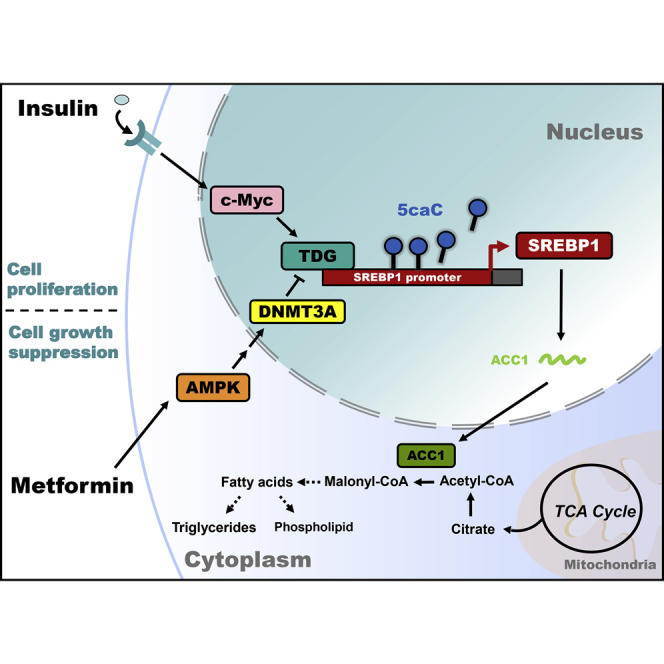
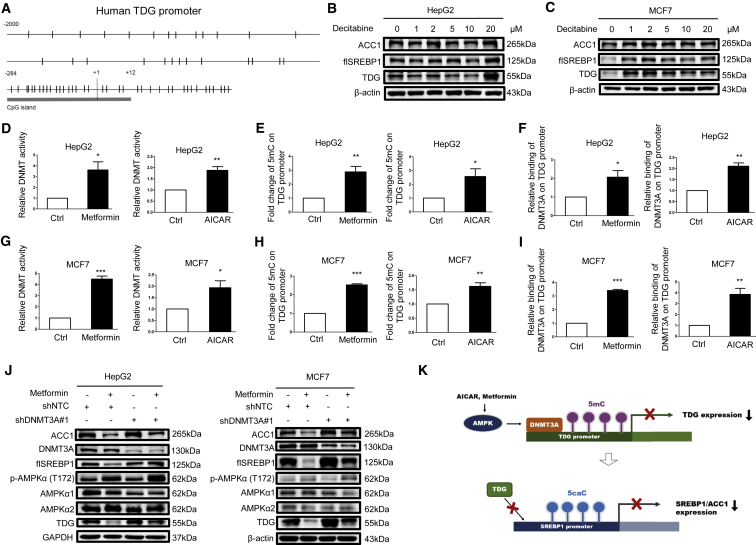
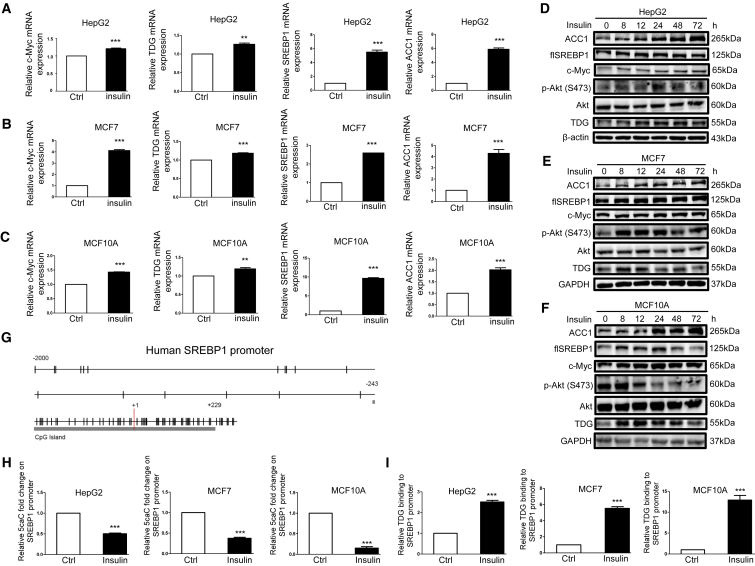
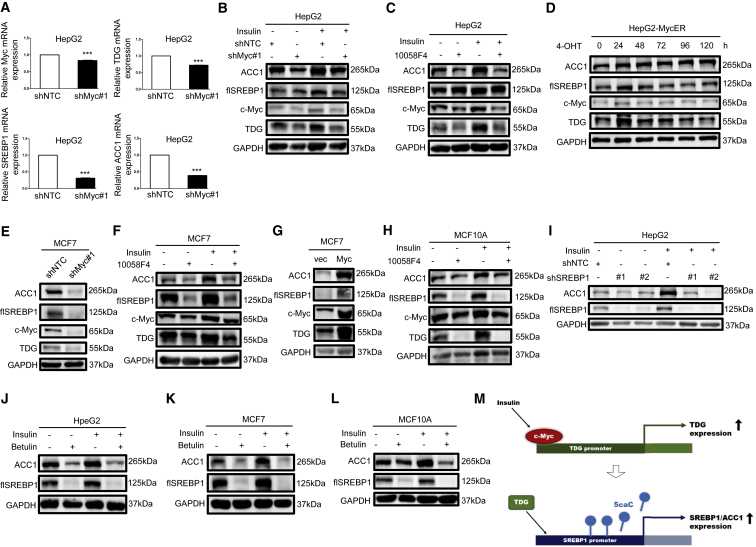
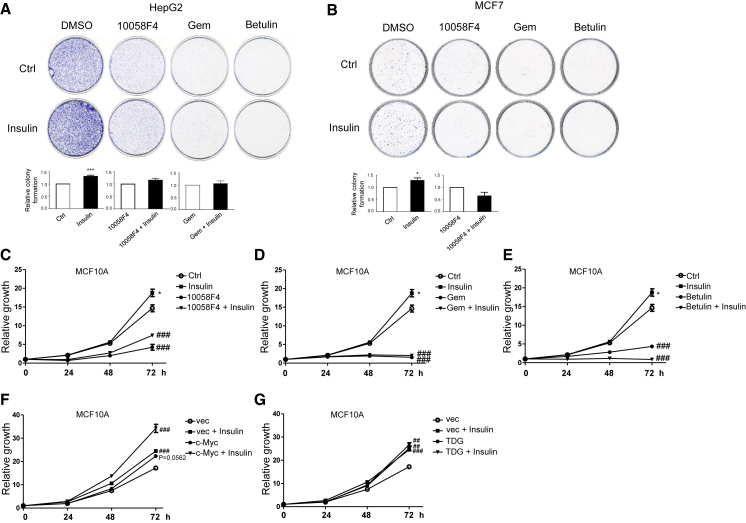
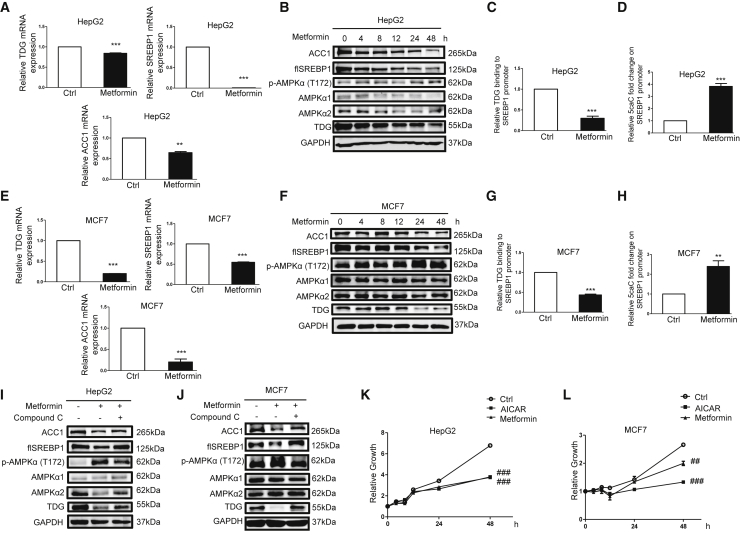
Type 2 diabetes mellitus (T2DM) is a frequent comorbidity of cancer. Hyperinsulinemia secondary to T2DM promotes cancer progression, whereas antidiabetic agents, such as metformin, have anticancer effects. However, the detailed mechanism for insulin and metformin-regulated cancer cell proliferation remains unclear. This study identified a mechanism by which insulin upregulated the expression of c-Myc, sterol regulatory element-binding protein 1 (SREBP1), and acetyl-coenzyme A (CoA) carboxylase 1 (ACC1), which are important regulators of lipogenesis and cell proliferation. Thymine DNA glycosylase (TDG), a DNA demethylase, was transactivated by c-Myc upon insulin treatment, thereby decreasing 5-carboxylcytosine (5caC) abundance in the SREBP1 promoter. On the other hand, metformin-activated AMP-activated protein kinase (AMPK) increased DNA methyltransferase 3A (DNMT3A) activity to increase 5-methylcytosine (5mC) abundance in the TDG promoter. This resulted in decreased TDG expression and enhanced 5caC abundance in the SREBP1 promoter. These findings demonstrate that c-Myc activates, whereas AMPK inhibits, TDG-mediated DNA demethylation of the SREBP1 promoter in insulin-promoted and metformin-suppressed cancer progression, respectively. This study indicates that TDG is an epigenetic-based therapeutic target for cancers associated with T2DM.
2型糖尿病(T2DM)是癌症常见的合并症。T2DM继发的高胰岛素血症促进癌症进展,而抗糖尿病药物,如二甲双胍,具有抗癌作用。然而,胰岛素和二甲双胍调节癌细胞增殖的详细机制仍不清楚。本研究确定了一种机制,胰岛素通过该机制上调c-Myc、固醇调节元件结合蛋白1(SREBP1)和乙酰辅酶A(CoA)羧化酶1(ACC1)的表达,这些都是脂肪生成和细胞增殖的重要调节因子。胸腺嘧啶DNA糖基化酶(TDG)是一种DNA去甲基化酶,在胰岛素处理后被c-Myc反式激活,从而降低SREBP1启动子中5-羧基胞嘧啶(5caC)的丰度。另一方面,二甲双胍激活的AMP激活蛋白激酶(AMPK)增加DNA甲基转移酶3A(DNMT3A)的活性,以增加TDG启动子中5-甲基胞嘧啶(5mC)的丰度。这导致TDG表达降低,SREBP1启动子中5caC丰度增加。这些发现表明,在胰岛素促进和二甲双胍抑制的癌症进展中,c-Myc分别激活而AMPK抑制TDG介导的SREBP1启动子的DNA去甲基化。本研究表明,TDG是与T2DM相关癌症的基于表观遗传学的治疗靶点。