Department of Emergency Medicine, School of Medicine, Kyungpook National University, Daegu, Korea.
Division of Infectious Diseases, Department of Internal Medicine, School of Medicine, Kyungpook National University, Daegu, Korea.
Infect Control Hosp Epidemiol. 2021 Jan;42(1):18-24. doi: 10.1017/ice.2020.376. Epub 2020 Jul 30.
We report our experience with an emergency room (ER) shutdown related to an accidental exposure to a patient with coronavirus disease 2019 (COVID-19) who had not been isolated.
A 635-bed, tertiary-care hospital in Daegu, South Korea.
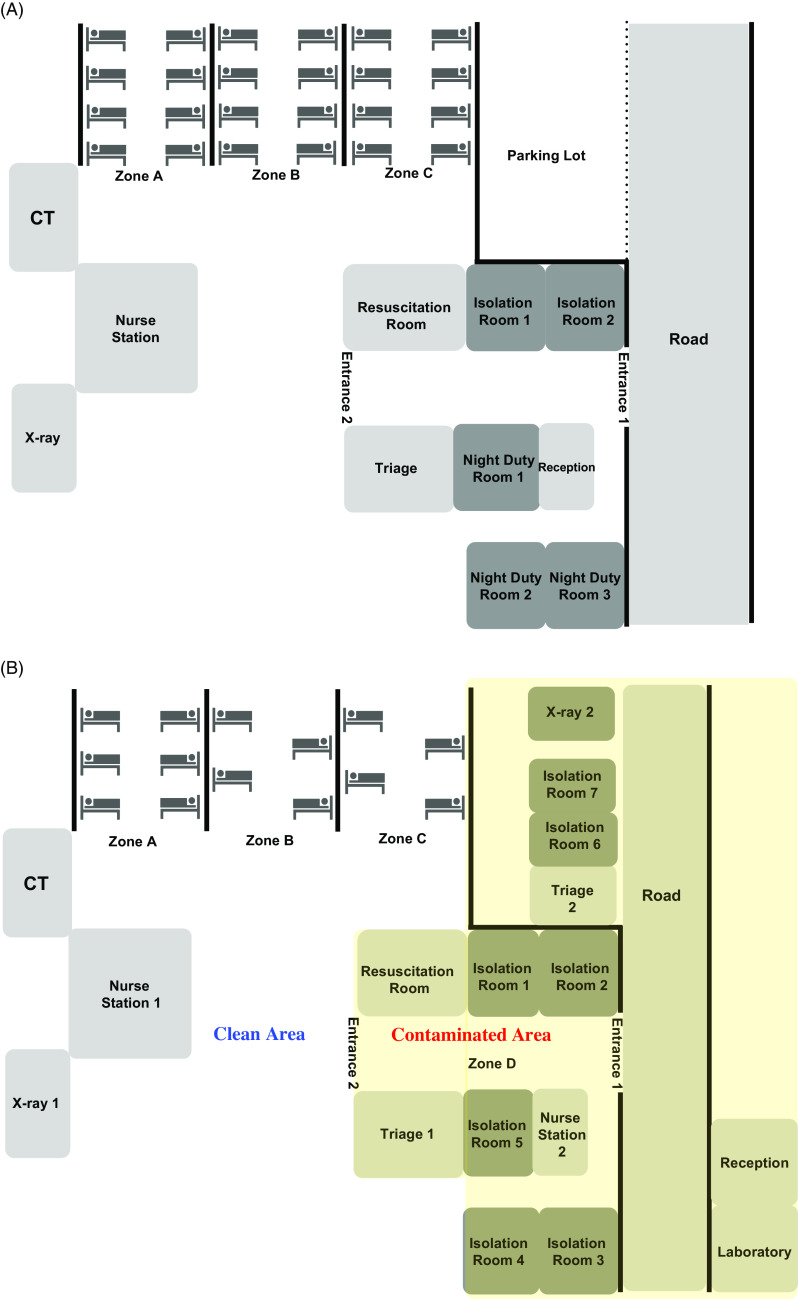
To prevent nosocomial transmission of the disease, we subsequently isolated patients with suspected symptoms, relevant radiographic findings, or epidemiology. Severe acute respiratory coronavirus 2 (SARS-CoV-2) reverse-transcriptase polymerase chain reaction assays (RT-PCR) were performed for most patients requiring hospitalization. A universal mask policy and comprehensive use of personal protective equipment (PPE) were implemented. We analyzed effects of these interventions.
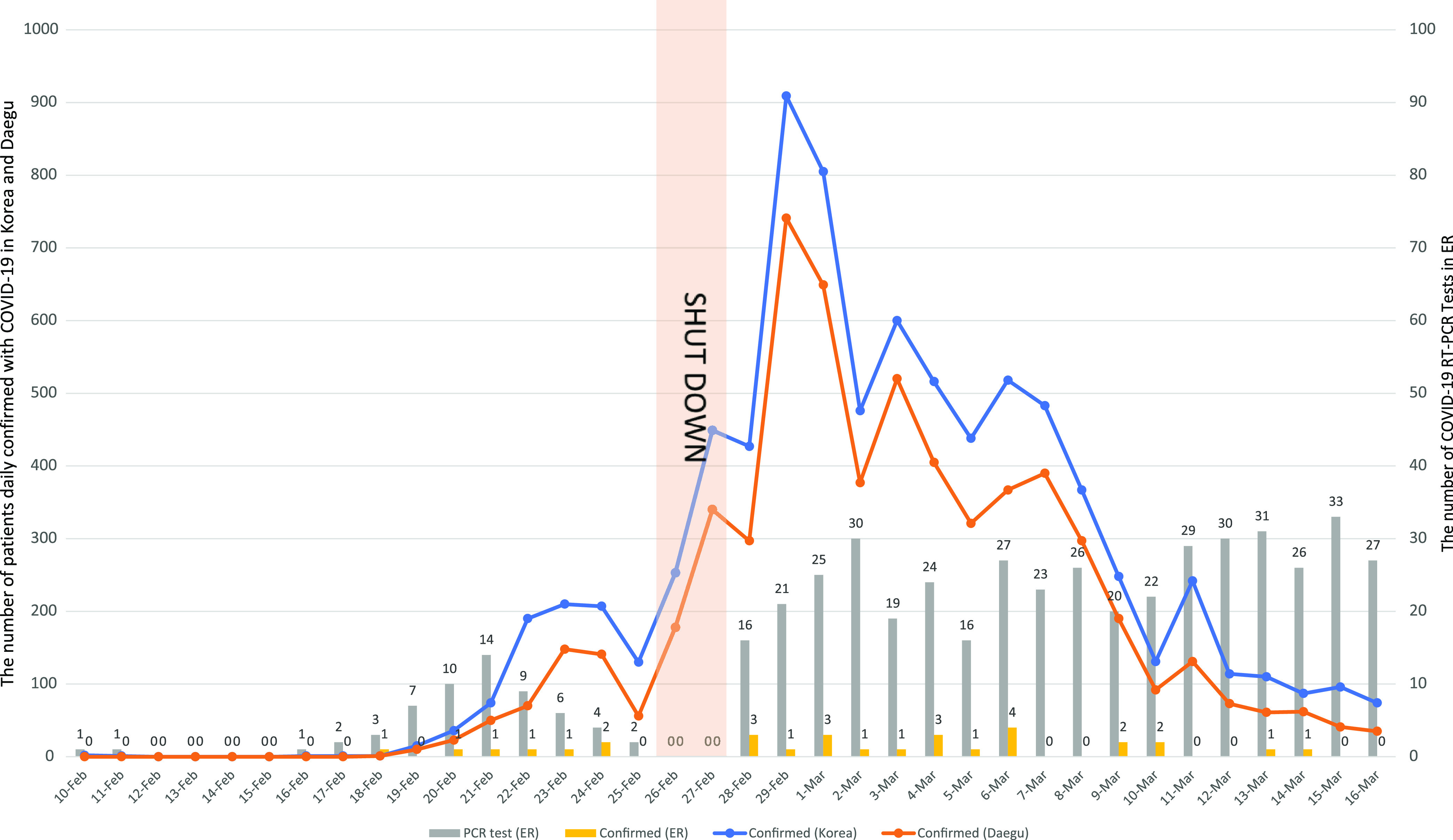
From the pre-shutdown period (February 10-25, 2020) to the post-shutdown period (February 28 to March 16, 2020), the mean hourly turnaround time decreased from 23:31 ±6:43 hours to 9:27 ±3:41 hours (P < .001). As a result, the proportion of the patients tested increased from 5.8% (N=1,037) to 64.6% (N=690) (P < .001) and the average number of tests per day increased from 3.8±4.3 to 24.7±5.0 (P < .001). All 23 patients with COVID-19 in the post-shutdown period were isolated in the ER without any problematic accidental exposure or nosocomial transmission. After the shutdown, several metrics increased. The median duration of stay in the ER among hospitalized patients increased from 4:30 hours (interquartile range [IQR], 2:17-9:48) to 14:33 hours (IQR, 6:55-24:50) (P < .001). Rates of intensive care unit admissions increased from 1.4% to 2.9% (P = .023), and mortality increased from 0.9% to 3.0% (P = .001).
Problematic accidental exposure and nosocomial transmission of COVID-19 can be successfully prevented through active isolation and surveillance policies and comprehensive PPE use despite longer ER stays and the presence of more severely ill patients during a severe COVID-19 outbreak.
我们报告了一起与一名未被隔离的 2019 年冠状病毒病(COVID-19)患者意外接触相关的急诊室(ER)关闭事件,我们在该事件中积累了相关经验。
韩国大邱市一家拥有 635 张床位的三级保健医院。
为防止疾病在医院内传播,我们随后对疑似症状、相关影像学表现或流行病学特征的患者进行隔离。对大多数需要住院的患者进行严重急性呼吸综合征冠状病毒 2(SARS-CoV-2)逆转录酶聚合酶链反应(RT-PCR)检测。我们实施了普遍的口罩政策和全面使用个人防护设备(PPE)。我们分析了这些干预措施的效果。
从关闭前时期(2020 年 2 月 10 日至 25 日)到关闭后时期(2020 年 2 月 28 日至 3 月 16 日),平均每小时周转时间从 23:31±6:43 小时减少到 9:27±3:41 小时(P<.001)。结果,接受检测的患者比例从 5.8%(N=1037)增加到 64.6%(N=690)(P<.001),每日平均检测次数从 3.8±4.3 增加到 24.7±5.0(P<.001)。关闭后时期的 23 名 COVID-19 患者均在急诊室隔离,没有发生任何有问题的意外暴露或医院内传播。关闭后,几个指标增加。住院患者在急诊室的停留中位数从 4:30 小时(四分位距 [IQR],2:17-9:48)增加到 14:33 小时(IQR,6:55-24:50)(P<.001)。重症监护病房(ICU)入院率从 1.4%增加到 2.9%(P=.023),死亡率从 0.9%增加到 3.0%(P=.001)。
尽管急诊室停留时间延长,且病情更严重的患者数量增加,但通过积极的隔离和监测政策以及全面使用个人防护设备,可成功预防 COVID-19 的有问题的意外暴露和医院内传播。