Department of Emergency Medicine, School of Medicine, Kyungpook National University, Daegu, Korea.
Department of Emergency Medicine, College of Medicine, Yeungnam University, Daegu, Korea.
J Korean Med Sci. 2020 May 18;35(19):e189. doi: 10.3346/jkms.2020.35.e189.
When an emergency-care patient is diagnosed with an emerging infectious disease, hospitals in Korea may temporarily close their emergency departments (EDs) to prevent nosocomial transmission. Since February 2020, multiple, consecutive ED closures have occurred due to the coronavirus disease 2019 (COVID-19) crisis in Daegu. However, sudden ED closures are in contravention of laws for the provision of emergency medical care that enable the public to avail prompt, appropriate, and 24-hour emergency medical care. Therefore, this study ascertained the vulnerability of the ED at tertiary hospitals in Daegu with regard to the current standards. A revised triage and surveillance protocol has been proposed to tackle the current crisis.
This study was retrospectively conducted at 6 level 1 or 2 EDs in a metropolitan city where ED closure due to COVID-19 occurred from February 18 to March 26, 2020. The present status of ED closure and patient characteristics and findings from chest radiography and laboratory investigations were assessed. Based on the experience from repeated ED closures and the modified systems that are currently used in EDs, revised triage and surveillance protocols have been developed and proposed.
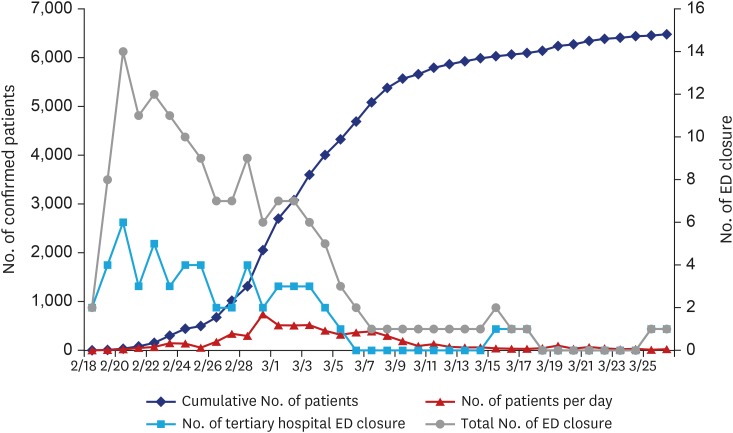
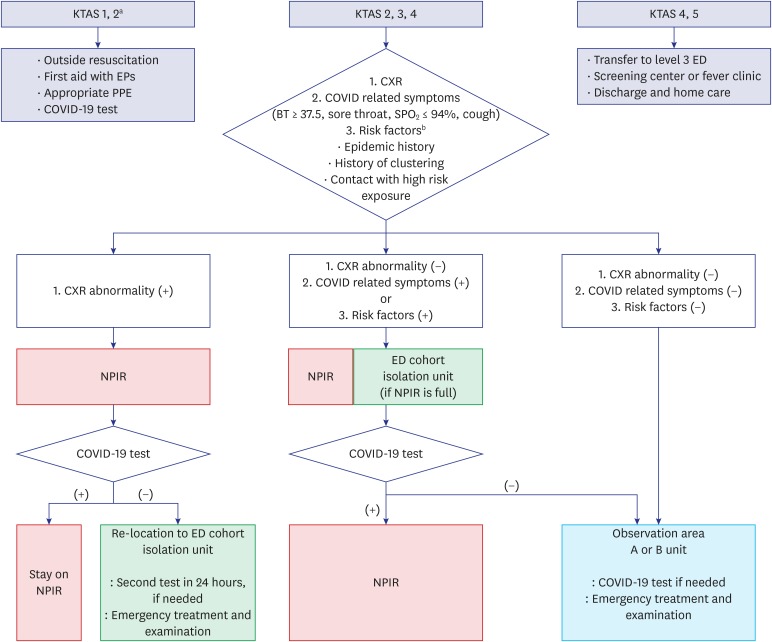
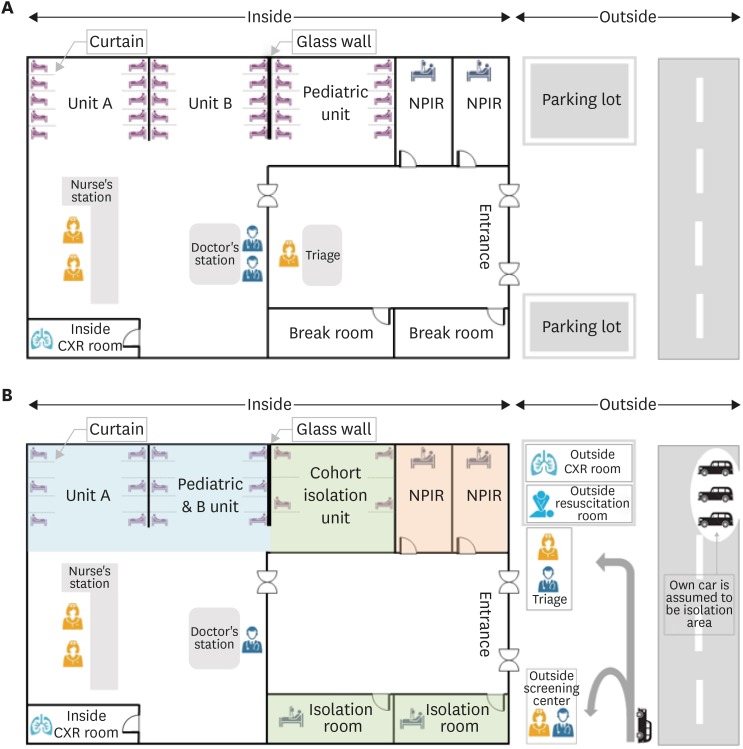
During the study period, 6 level 1 or 2 emergency rooms included in the study were shut down 27 times for 769 hours. Thirty-one confirmed COVID-19 cases, of whom 7 died, were associated with the incidence of ED closure. Typical patient presentation with respiratory symptoms of COVID-19 was seen in less than 50% of patients, whereas abnormal findings on chest imaging investigations were detected in 93.5% of the study population. The chest radiography facility, resuscitation rooms, and triage area were moved to locations outside the ED, and a new surveillance protocol was applied to determine the factors warranting quarantine, including symptoms, chest radiographic findings, and exposure to a source of infection. The incidence of ED closures decreased after the implementation of the revised triage and surveillance protocols.
Triage screening by emergency physicians and surveillance protocols with an externally located chest imaging facility were effective in the early isolation of COVID-19 patients. In future outbreaks of emerging infectious diseases, efforts should be focused toward the provision of continued ED treatment with the implementation of revised triage and surveillance protocols.
当急诊患者被诊断出患有新发传染病时,韩国的医院可能会暂时关闭急诊科,以防止医院内传播。自 2020 年 2 月以来,由于大邱市的 2019 年冠状病毒病(COVID-19)危机,已经发生了多次连续的急诊科关闭事件。然而,急诊科的突然关闭违反了提供紧急医疗服务的法律,这些法律使公众能够获得及时、适当和 24 小时的紧急医疗服务。因此,本研究根据当前标准确定了大邱市三级医院急诊科的脆弱性。提出了修订的分诊和监测方案以应对当前的危机。
本研究是在一个大都市的 6 个 1 级或 2 级急诊科进行的回顾性研究,这些急诊科因 COVID-19 于 2020 年 2 月 18 日至 3 月 26 日关闭。评估了急诊科关闭的现状以及患者的特征以及胸部 X 线摄影和实验室检查的结果。根据急诊科反复关闭的经验以及目前在急诊科使用的修改系统,制定并提出了修订的分诊和监测方案。
在研究期间,包括在研究中的 6 个 1 级或 2 级急诊室因 COVID-19 而关闭了 27 次,共 769 小时。与急诊科关闭相关的 31 例确诊的 COVID-19 病例中,有 7 例死亡。有呼吸道症状的 COVID-19 患者不到 50%,但研究人群中有 93.5%的人发现胸部影像学检查异常。胸部 X 射线摄影设备、复苏室和分诊区已搬至急诊科外,并且应用了新的监测方案来确定需要隔离的因素,包括症状、胸部 X 射线摄影结果和接触感染源。实施修订的分诊和监测方案后,急诊科关闭的发生率有所下降。
急诊医师进行的分诊筛查以及具有外部胸部成像设施的监测方案在早期隔离 COVID-19 患者方面非常有效。在未来新发传染病的爆发中,应专注于通过实施修订的分诊和监测方案来提供持续的急诊科治疗。