Frazier Hilaree N, Ghoweri Adam O, Anderson Katie L, Lin Ruei-Lung, Popa Gabriel J, Mendenhall Michael D, Reagan Lawrence P, Craven Rolf J, Thibault Olivier
Department of Pharmacology and Nutritional Sciences, University of Kentucky College of Medicine, Lexington, KY, United States.
Department of Molecular and Cellular Biochemistry, University of Kentucky College of Medicine, Lexington, KY, United States.
Front Neurosci. 2020 Jul 7;14:668. doi: 10.3389/fnins.2020.00668. eCollection 2020.
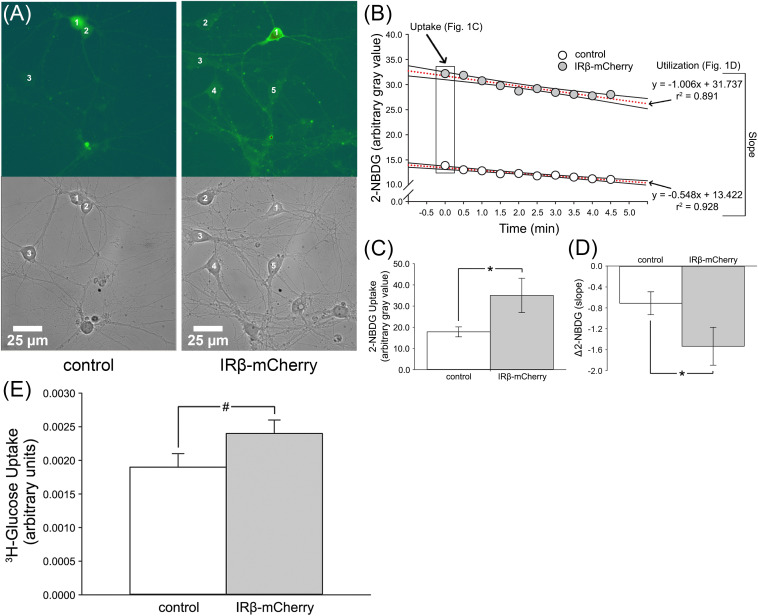
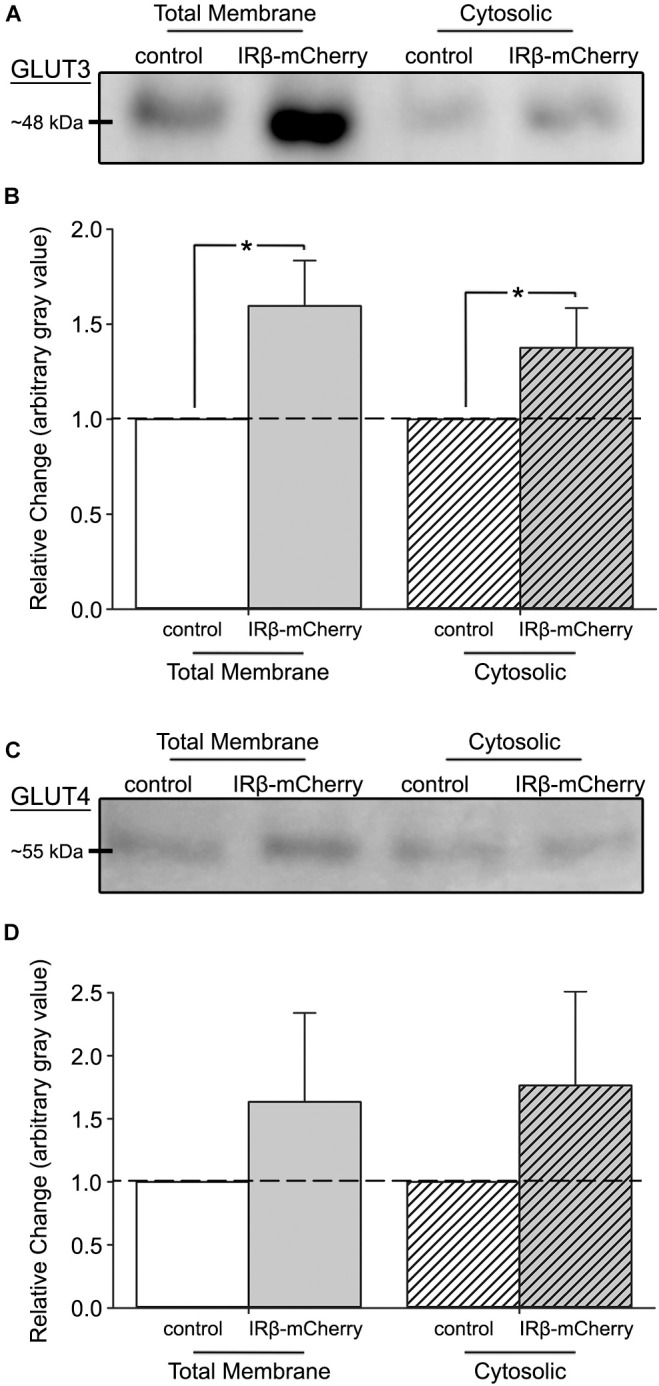
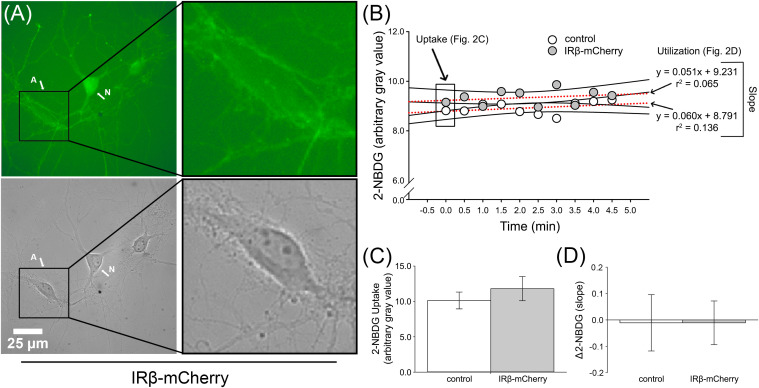
Insulin signaling is an integral component of healthy brain function, with evidence of positive insulin-mediated alterations in synaptic integrity, cerebral blood flow, inflammation, and memory. However, the specific pathways targeted by this peptide remain unclear. Previously, our lab used a molecular approach to characterize the impact of insulin signaling on voltage-gated calcium channels and has also shown that acute insulin administration reduces calcium-induced calcium release in hippocampal neurons. Here, we explore the relationship between insulin receptor signaling and glucose metabolism using similar methods. Mixed, primary hippocampal cultures were infected with either a control lentivirus or one containing a constitutively active human insulin receptor (IRβ). 2-NBDG imaging was used to obtain indirect measures of glucose uptake and utilization. Other outcome measures include Western immunoblots of GLUT3 and GLUT4 on total membrane and cytosolic subcellular fractions. Glucose imaging data indicate that neurons expressing IRβ show significant elevations in uptake and rates of utilization compared to controls. As expected, astrocytes did not respond to the IRβ treatment. Quantification of Western immunoblots show that IRβ is associated with significant elevations in GLUT3 expression, particularly in the total membrane subcellular fraction, but did not alter GLUT4 expression in either fraction. Our work suggests that insulin plays a significant role in mediating neuronal glucose metabolism, potentially through an upregulation in the expression of GLUT3. This provides further evidence for a potential therapeutic mechanism underlying the beneficial impact of intranasal insulin in the clinic.
胰岛素信号传导是健康大脑功能的一个不可或缺的组成部分,有证据表明胰岛素介导的突触完整性、脑血流量、炎症和记忆方面的积极改变。然而,这种肽所靶向的具体途径仍不清楚。此前,我们实验室采用分子方法来表征胰岛素信号传导对电压门控钙通道的影响,并且还表明急性给予胰岛素可减少海马神经元中钙诱导的钙释放。在此,我们使用类似方法探索胰岛素受体信号传导与葡萄糖代谢之间的关系。将混合的原代海马培养物用对照慢病毒或含有组成型活性人胰岛素受体(IRβ)的慢病毒进行感染。使用2-NBDG成像来间接测量葡萄糖摄取和利用情况。其他结果指标包括总膜和胞质亚细胞组分上GLUT3和GLUT4的Western免疫印迹。葡萄糖成像数据表明,与对照相比,表达IRβ的神经元在摄取和利用率方面有显著升高。正如预期的那样,星形胶质细胞对IRβ处理没有反应。Western免疫印迹的定量分析表明,IRβ与GLUT3表达的显著升高相关,特别是在总膜亚细胞组分中,但在两个组分中均未改变GLUT4的表达。我们的工作表明,胰岛素可能通过上调GLUT3的表达在介导神经元葡萄糖代谢中发挥重要作用。这为鼻内胰岛素在临床上的有益影响背后的潜在治疗机制提供了进一步的证据。