Wang Yajun, Chen Riling, Zhou Xia, Guo Runmin, Yin Jingwen, Li You, Ma Guoda
Maternal and Children's Health Research Institute, Shunde Women and Children's Hospital, Guangdong Medical University, Foshan 528300, China; Clinical Research Center, Affiliated Hospital of Guangdong Medical University, Zhanjiang 524001, China; Wolfson Institute for Biomedical Research, University College London, London WC1E 6BT, UK.
Maternal and Children's Health Research Institute, Shunde Women and Children's Hospital, Guangdong Medical University, Foshan 528300, China.
Mol Ther Nucleic Acids. 2020 Sep 4;21:614-622. doi: 10.1016/j.omtn.2020.06.028. Epub 2020 Jun 30.
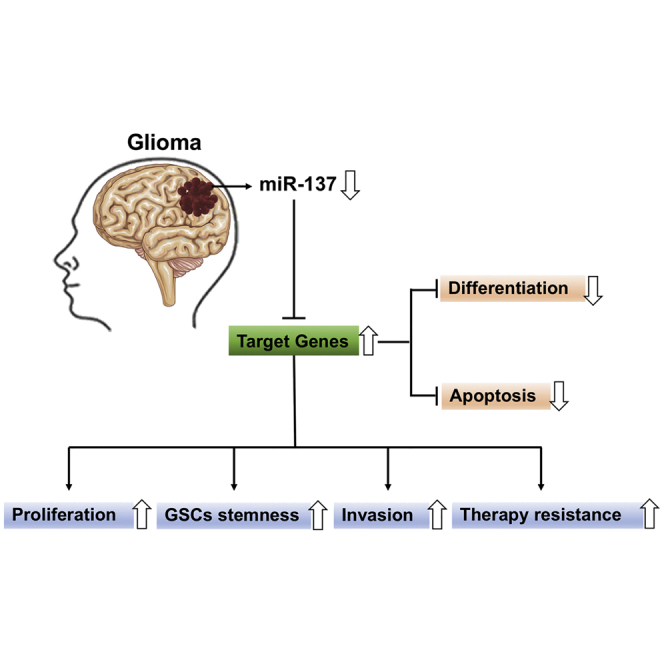
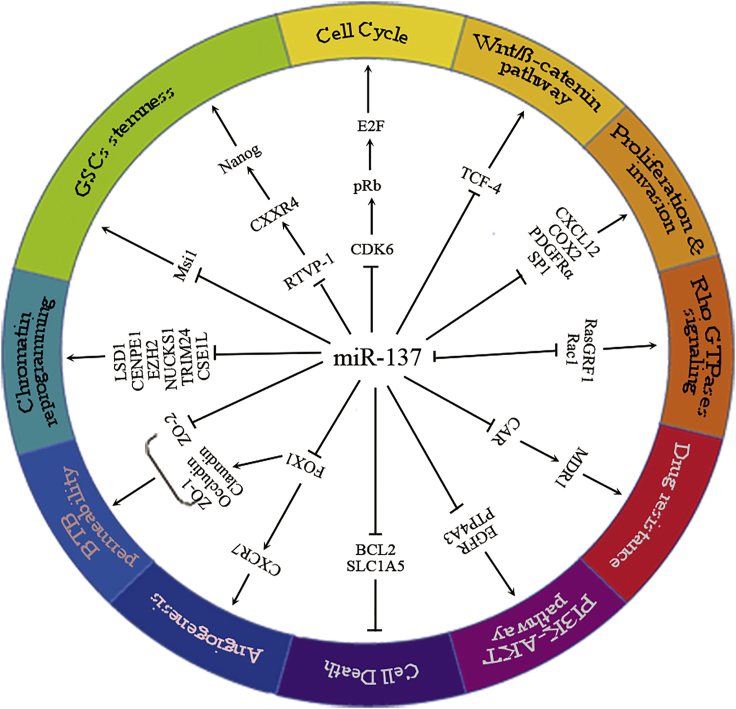
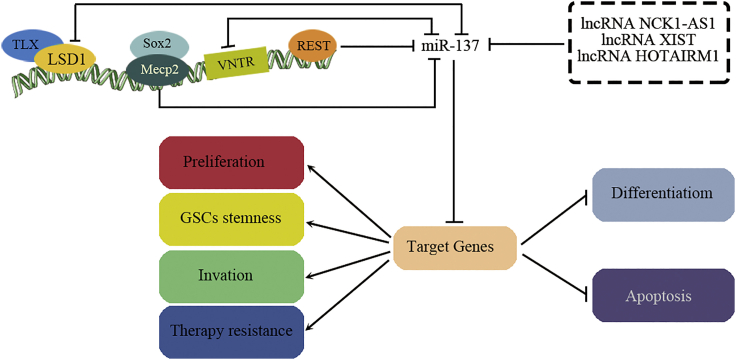
MicroRNA (miR)-137 is highly expressed in the brain and plays a crucial role in the development and prognosis of glioma. In this review, we aim to summarize the latest findings regarding miR-137 in glioma cell apoptosis, proliferation, migration, invasion, angiogenesis, drug resistance, and cancer treatment. In addition, we focus on the identified miR-137 targets and pathways in the occurrence and development of glioma. Finally, future implications for the diagnostic and therapeutic potential of miR-137 in glioma were discussed.
微小RNA(miR)-137在大脑中高度表达,在胶质瘤的发生发展和预后中起关键作用。在本综述中,我们旨在总结关于miR-137在胶质瘤细胞凋亡、增殖、迁移、侵袭、血管生成、耐药性及癌症治疗方面的最新研究结果。此外,我们重点关注已确定的miR-137在胶质瘤发生发展中的靶点和信号通路。最后,讨论了miR-137在胶质瘤诊断和治疗潜力方面的未来意义。