Makowska Marianna, Smolarz Beata, Romanowicz Hanna
Department of Anesthesiology and Operative Intensive Care Medicine, Charité-Universitätsmedizin Berlin, Corporate Member of Freie Universität Berlin, Humboldt-Universität zu Berlin, Augustenburger Platz 1, 13353 Berlin, Germany.
Laboratory of Cancer Genetics, Department of Pathology, Polish Mother's Memorial Hospital Research Institute, Rzgowska 281/289, 93-338 Lodz, Poland.
Int J Mol Sci. 2023 Feb 9;24(4):3521. doi: 10.3390/ijms24043521.
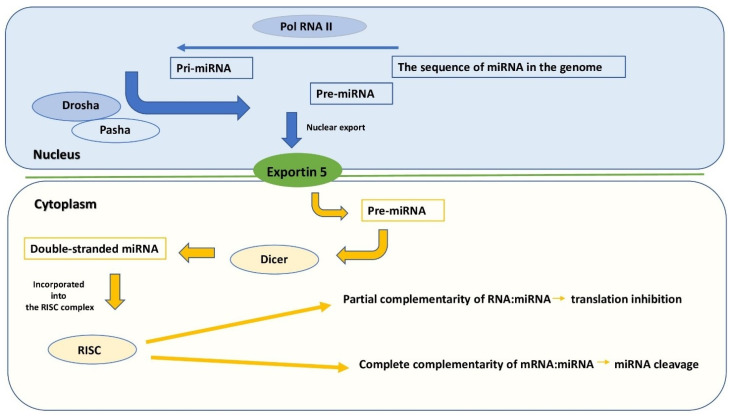
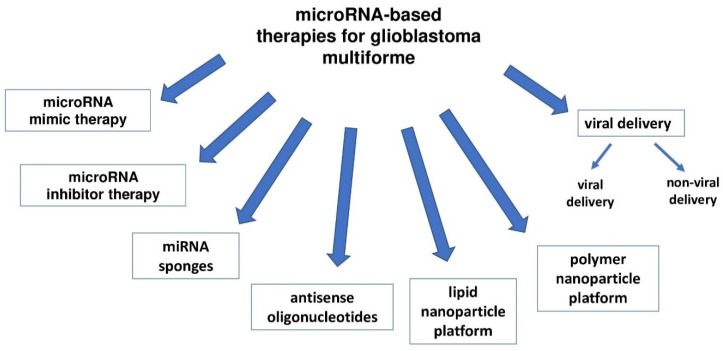
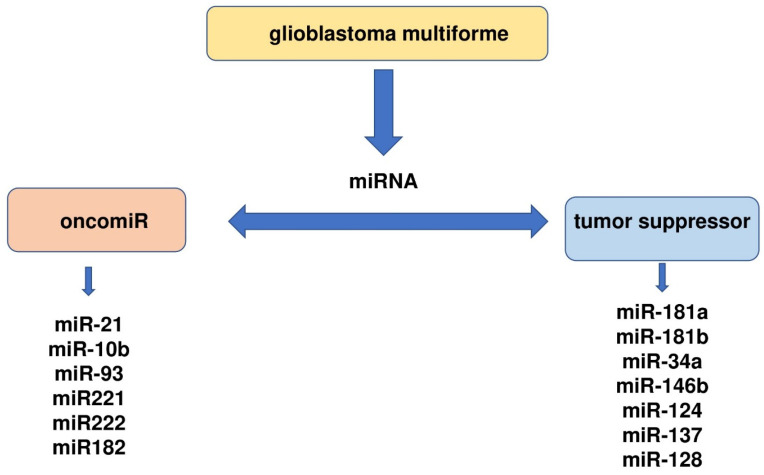
Glioblastoma multiforme (GBM) is the most common, malignant, poorly promising primary brain tumor. GBM is characterized by an infiltrating growth nature, abundant vascularization, and a rapid and aggressive clinical course. For many years, the standard treatment of gliomas has invariably been surgical treatment supported by radio- and chemotherapy. Due to the location and significant resistance of gliomas to conventional therapies, the prognosis of glioblastoma patients is very poor and the cure rate is low. The search for new therapy targets and effective therapeutic tools for cancer treatment is a current challenge for medicine and science. microRNAs (miRNAs) play a key role in many cellular processes, such as growth, differentiation, cell division, apoptosis, and cell signaling. Their discovery was a breakthrough in the diagnosis and prognosis of many diseases. Understanding the structure of miRNAs may contribute to the understanding of the mechanisms of cellular regulation dependent on miRNA and the pathogenesis of diseases underlying these short non-coding RNAs, including glial brain tumors. This paper provides a detailed review of the latest reports on the relationship between changes in the expression of individual microRNAs and the formation and development of gliomas. The use of miRNAs in the treatment of this cancer is also discussed.
多形性胶质母细胞瘤(GBM)是最常见、恶性程度高且预后不佳的原发性脑肿瘤。GBM的特征在于浸润性生长特性、丰富的血管生成以及快速且侵袭性的临床病程。多年来,胶质瘤的标准治疗一直是手术治疗辅以放疗和化疗。由于胶质瘤的位置以及其对传统疗法的显著抗性,胶质母细胞瘤患者的预后非常差且治愈率低。寻找新的治疗靶点和有效的癌症治疗工具是医学和科学当前面临的挑战。微小RNA(miRNA)在许多细胞过程中发挥关键作用,如生长、分化、细胞分裂、细胞凋亡和细胞信号传导。它们的发现是许多疾病诊断和预后方面的一项突破。了解miRNA的结构可能有助于理解依赖miRNA的细胞调控机制以及这些短非编码RNA相关疾病的发病机制,包括胶质脑肿瘤。本文详细综述了关于单个微小RNA表达变化与胶质瘤形成和发展之间关系的最新报道。还讨论了miRNA在这种癌症治疗中的应用。