Cai Guilan, Qiao Shanshan, Chen Kui
Department of Neurology, Beijing Friendship Hospital, Capital Medical University, 95 Yong'an Rd, Xicheng, Beijing, 100050, China.
Biol Res. 2015 Jul 22;48(1):37. doi: 10.1186/s40659-015-0030-y.
Gliomas are the most common primary tumors in the central nervous system. Due to complicated signaling pathways involved in glioma progression, effective targets for treatment and biomarkers for prognosis prediction are still scant.
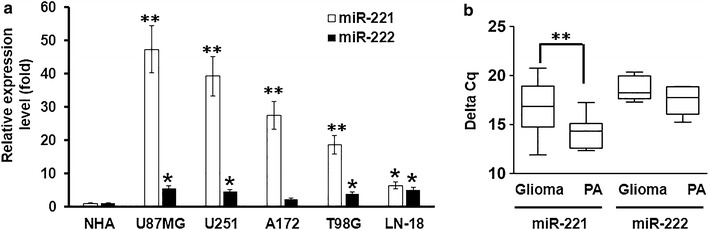
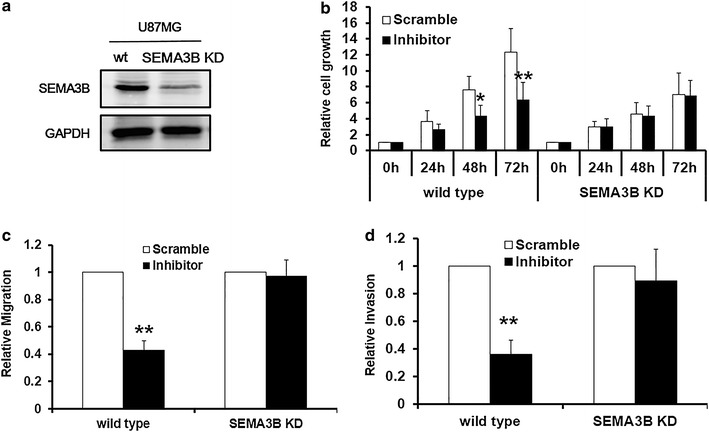
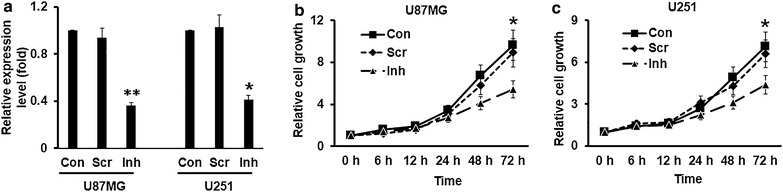
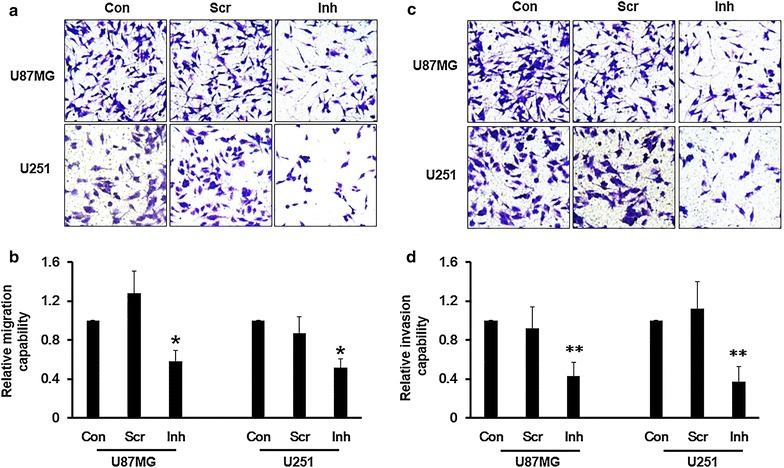
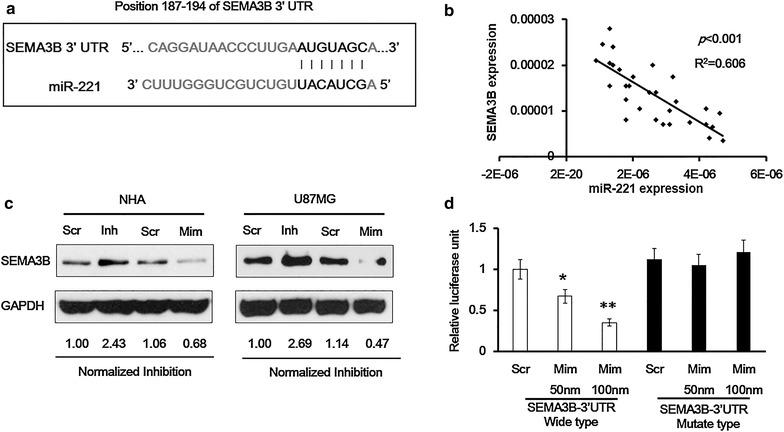
In this study we revealed that a new microRNA (miR), the miR-221, was highly expressed in the glioma cells, and suppression of miR-221 resulted in decreased cellular proliferation, migration, and invasion in glioma cells. Mechanistic experiments validated that miR-221 participates in regulating glioma cells proliferation and invasion via suppression of a direct target gene, the Semaphorin 3B (SEMA3B). The rescue experiment with miR-221 and SEMA3B both knockdown results in significant reversion of miR-221 induced phenotypes.
Taken together, our findings highlight an unappreciated role for miR-221 and SEMA3B in glioma.
胶质瘤是中枢神经系统最常见的原发性肿瘤。由于胶质瘤进展涉及复杂的信号通路,治疗的有效靶点和预后预测的生物标志物仍然匮乏。
在本研究中,我们发现一种新的微小RNA(miR),即miR-221,在胶质瘤细胞中高表达,抑制miR-221可导致胶质瘤细胞的增殖、迁移和侵袭减少。机制实验证实,miR-221通过抑制直接靶基因信号素3B(SEMA3B)参与调节胶质瘤细胞的增殖和侵袭。miR-221和SEMA3B均敲低的拯救实验导致miR-221诱导的表型显著逆转。
综上所述,我们的研究结果突出了miR-221和SEMA3B在胶质瘤中未被重视的作用。