Department of Biology, Aquatic Ecology, Lund University, Lund, SE-22362, Sweden.
Ecology. 2020 Nov;101(11):e03145. doi: 10.1002/ecy.3145. Epub 2020 Aug 19.
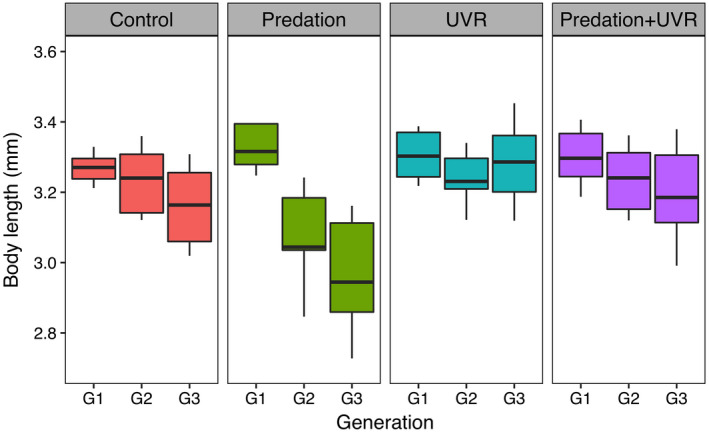
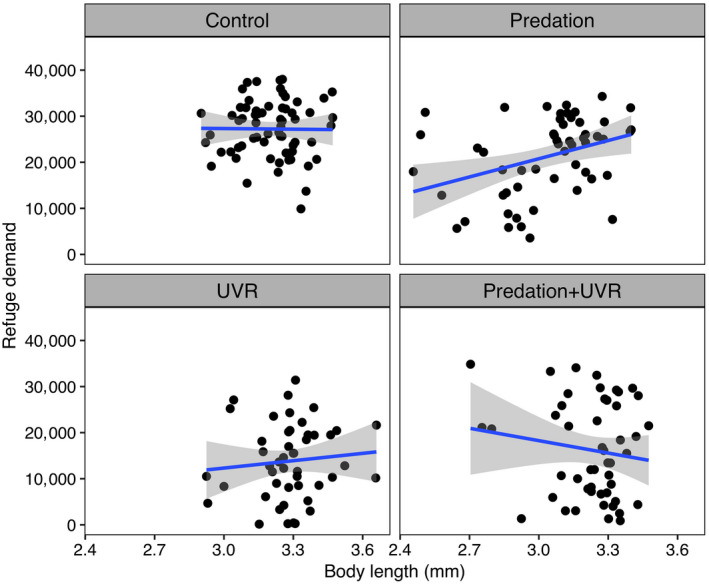
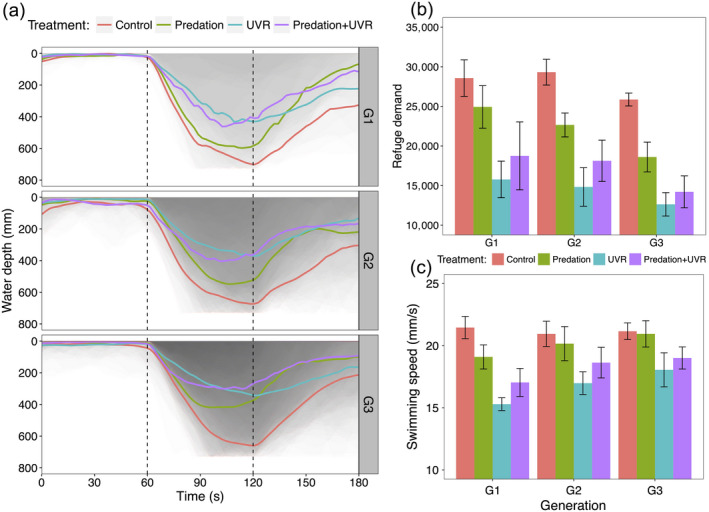
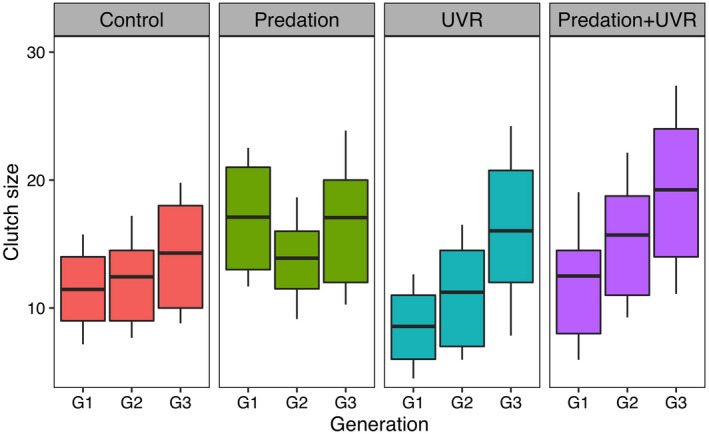
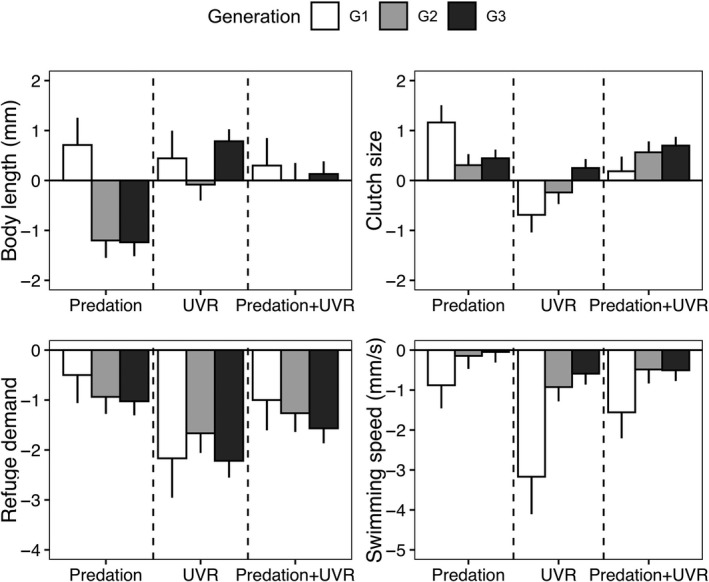
Our understanding on how organisms evolutionarily cope with simultaneously occurring, multiple threats over generations is still elusive. In a long-term experimental study, we therefore exposed clones of a freshwater cladoceran, Daphnia magna, to threats from predation and ultraviolet radiation (UVR) during three consecutive parthenogenetic generations. We show that Daphnia can adapt to different sets of threats within three generations through modifying morphology, swimming behavior, or life-history traits. When faced with predator cues, D. magna responded with reduced body size, whereas exposure to UVR induced behavioral tolerance when again exposed to this threat. Such UVR-tolerant behavior was initially associated with a reduced clutch size, but Daphnia restored the reproductive output gradually through generations. The findings advance our understanding on how those common invertebrates, with a global distribution, are able to persist and rapidly become successful in a changing environment.
我们对于生物如何在几代人的时间里应对同时发生的多种威胁的理解仍然难以捉摸。在一项长期的实验研究中,我们让淡水枝角类动物大眼水蚤的克隆体在三个连续的单性生殖世代中同时受到捕食和紫外线辐射(UVR)的威胁。结果表明,大眼水蚤可以在三代内通过改变形态、游泳行为或生活史特征来适应不同的威胁。当面临捕食者的线索时,大眼水蚤会通过减小体型来做出反应,而当再次暴露于这种威胁时,暴露于紫外线辐射会诱导出行为耐受。这种对紫外线辐射的耐受行为最初与产卵量减少有关,但大眼水蚤通过几代的时间逐渐恢复了生殖力。这些发现增进了我们对于这些具有全球分布的常见无脊椎动物如何在不断变化的环境中生存并迅速成功的理解。