Yan Qian, Ertao Zhai, Zhimei Zhang, Weigang Dai, Jianjun Peng, Jianhui Chen, Chuangqi Chen
Division of Gastrointestinal Surgery Center, The First Affiliated Hospital, Sun Yat-sen University, Guangzhou 510080, China.
Gastric Cancer Center, Sun Yat-sen University, Guangzhou 510080, China.
J Cancer. 2020 Jul 9;11(18):5264-5272. doi: 10.7150/jca.46446. eCollection 2020.
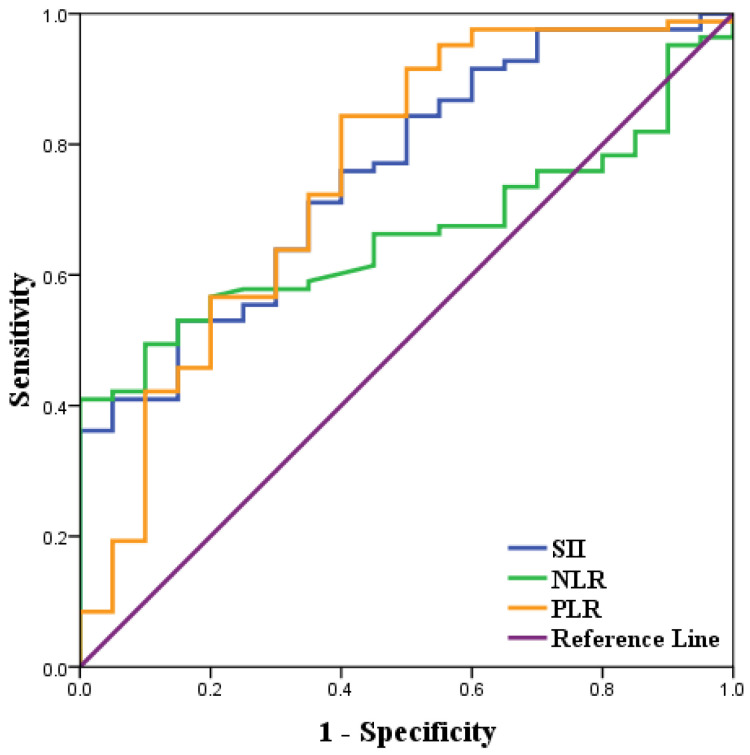
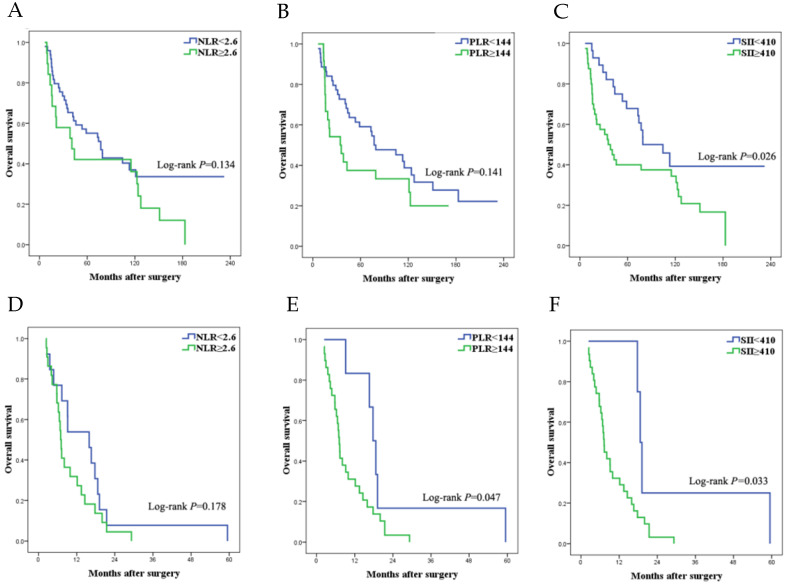
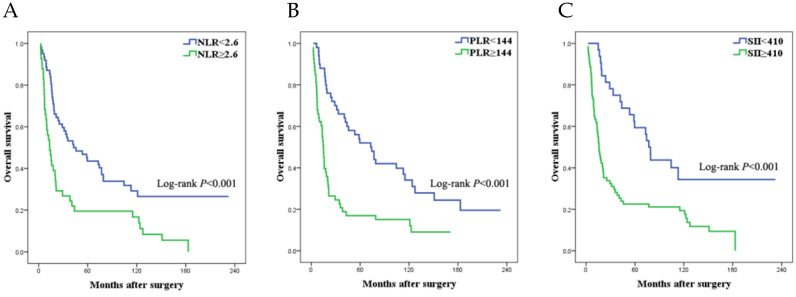
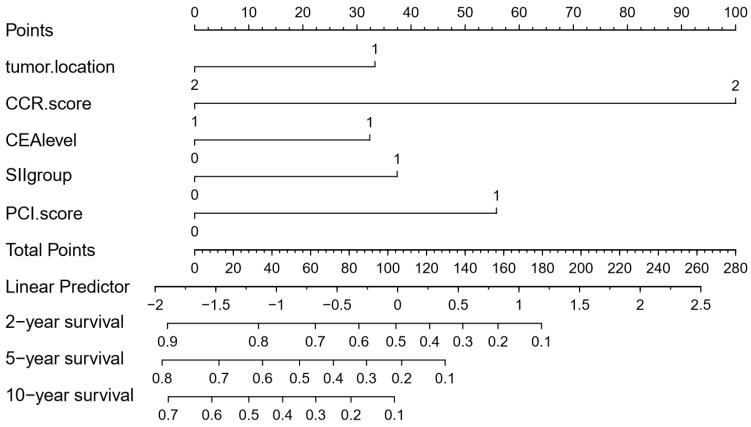
Synchronic colorectal peritoneal carcinomatosis (SCRPC) was recognized as a predictor of poor prognosis. The aim of this study was to investigate the role of neutrophil-to-lymphocyte ratio (NLR), platelet-to-lymphocyte ratio (PLR) and systemic immune-inflammation index (SII) on the survival outcome, which might help determine the treatment management of SCRPC patients. A total of 103 SCRPC patients following cytoreduction surgery (CRS) and systematic chemotherapy (CT) between 1997 and 2013 in the First Affiliated Hospital of Sun Yat-sen University were retrospectively analyzed. The comparison of the clinicopathological variables and systematic inflammatory biomarkers, including NLR, PLR and SII, was performed by Chi-test and Cox regression analysis. According to the results of multivariate analysis, a prognostic nomogram was generated, and its prediction ability was measured by the concordance index (C-index). The survival curves were generated using the Kaplan-Meier method and survival comparison between groups was conducted via the log-rank test. Univariate analysis revealed that elevated NLR, PLR and SII were significantly correlate with worse survival outcome. Only low SII value was recognized as an independent favorable prognostic factor for overall survival (HR=1.772, 95% CI=1.015-3.095, =0.044), except for NLR and PLR. The nomogram could perform well in the prediction of overall survival in SCRPC patients (c-index 0.782). Moreover, SII had strong prognostic discriminatory ability to predict survival outcome for the patients receiving completeness of cytoreduction score (CCR) 0/1 or CCR2/3, rather than NLR and PLR. SII was a better inflammation factor to predict the outcomes of SCRPC patients receiving CRS and systematic CT. Low SII value was the most favorable factor benefiting from different level of CRS and it was useful for determining the appropriate treatment strategy for SCRPC patients.
同步性结直肠腹膜癌转移(SCRPC)被认为是预后不良的一个预测指标。本研究的目的是探讨中性粒细胞与淋巴细胞比值(NLR)、血小板与淋巴细胞比值(PLR)及全身免疫炎症指数(SII)在生存结局中的作用,这可能有助于确定SCRPC患者的治疗方案。对1997年至2013年间在中山大学附属第一医院接受减瘤手术(CRS)和系统化疗(CT)的103例SCRPC患者进行了回顾性分析。通过卡方检验和Cox回归分析对包括NLR、PLR和SII在内的临床病理变量和系统性炎症生物标志物进行比较。根据多变量分析结果生成了预后列线图,并通过一致性指数(C指数)测量其预测能力。采用Kaplan-Meier法生成生存曲线,并通过对数秩检验进行组间生存比较。单变量分析显示,NLR、PLR和SII升高与较差的生存结局显著相关。除NLR和PLR外,仅低SII值被认为是总生存的独立有利预后因素(HR=1.772,95%CI=1.015-3.095,P=0.044)。该列线图在预测SCRPC患者总生存方面表现良好(C指数为0.782)。此外,对于接受减瘤完全评分(CCR)为0/1或CCR2/3的患者,SII在预测生存结局方面具有较强的预后判别能力,而不是NLR和PLR。SII是预测接受CRS和系统CT的SCRPC患者结局的更好炎症因子。低SII值是从不同水平的CRS中获益的最有利因素,对确定SCRPC患者的合适治疗策略有用。