Cavallo Salvatore
Expert Doctor in Non-Conventional Medicine, Professor and Member of the Board of the MMS, MMS (Medicina di Modulazione Dei Sistemi) Roma, Salvatore Cavallo Via G.B. Pergolesi, 28, 75100, Matera, Italy.
J Transl Autoimmun. 2020 Jan 28;3:100039. doi: 10.1016/j.jtauto.2020.100039. eCollection 2020.
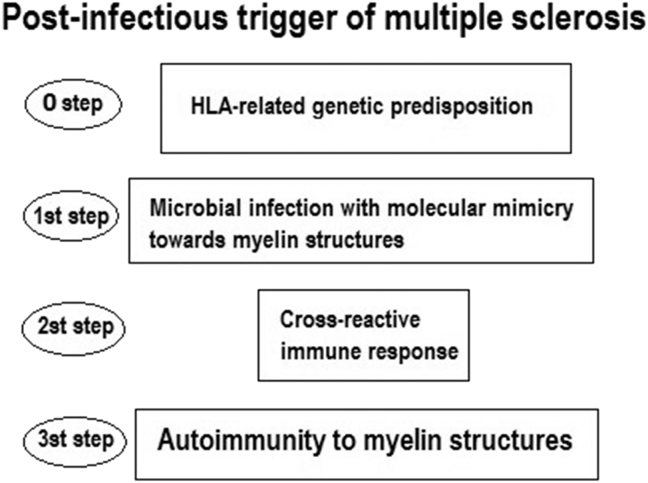
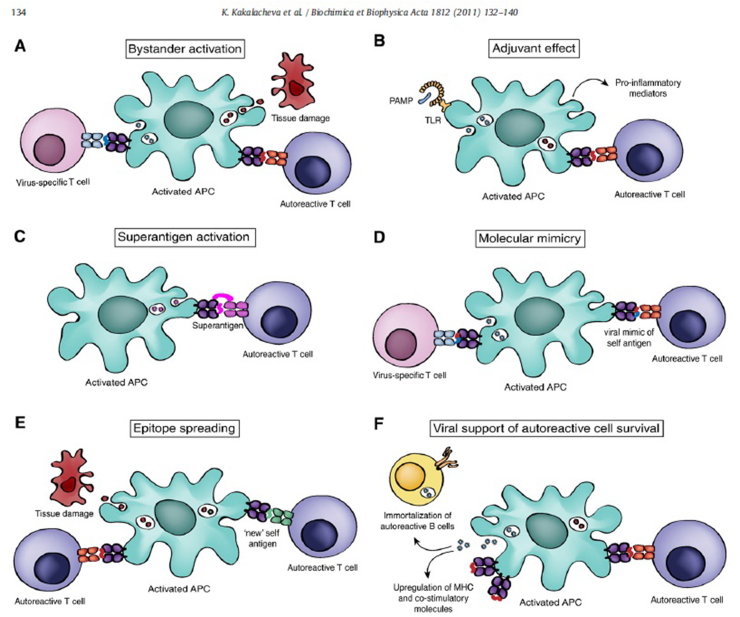
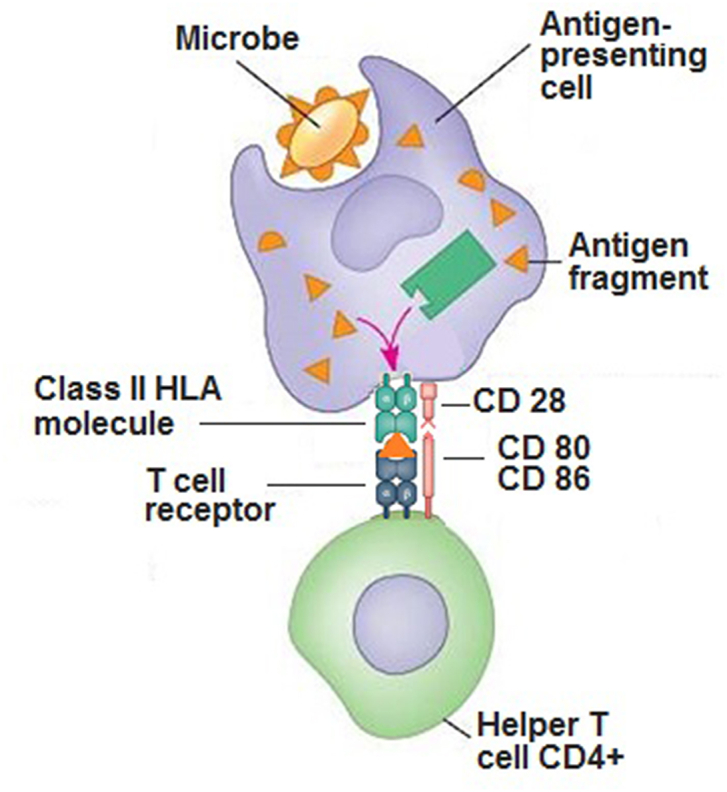
Multiple sclerosis (MS) is widely acknowledged to be an autoimmune disease affecting the neuronal myelin structure of the CNS. Autoantigens recognized as the target of this autoimmune process are: myelin basal protein, anti-proteolipid protein, antimyelin-associated glycoprotein and antimyelin-based oligodendrocytic basic protein. Ample evidence supports the idea of a dysregulation of immunological tolerance towards self-antigens of neuronal myelin structure triggered by one or more viral or bacterial microbial agents in predisposed HLA gene subjects. Genetic predisposition to MS has been highlighted by numerous studies associating the disease to specific HLA haplotypes. Moreover, a wide range of evidence supports the fact that MS may be consequence of one or more viral or bacterial infections such as measles virus, EBV, HHV6, HZV, Chlamydia pneumoniae, Helicobacter Pylori, and other microbial agents. Microbiota elements also seems to have a role on the determinism of the disease as a pathogenic or protective factor. The autoimmune pathogenetic process could arise when a molecular mimicry between a foreign microbial antigen and an auto-antigen occurs in an HLA gene subject competent for that particular antigen. The antigen-presenting cells in this case would induce the activation of a specific Th clone causing a cross-reaction between a foreign antigen and an autoantigen resulting in an autoimmune response.
多发性硬化症(MS)被广泛认为是一种影响中枢神经系统神经元髓鞘结构的自身免疫性疾病。被认为是这种自身免疫过程靶点的自身抗原包括:髓鞘碱性蛋白、抗蛋白脂蛋白、抗髓鞘相关糖蛋白和抗髓鞘少突胶质细胞碱性蛋白。大量证据支持这样一种观点,即在具有遗传易感性的HLA基因受试者中,一种或多种病毒或细菌微生物因子会引发对神经元髓鞘结构自身抗原的免疫耐受性失调。许多将该疾病与特定HLA单倍型相关联的研究突出了MS的遗传易感性。此外,大量证据支持MS可能是一种或多种病毒或细菌感染的结果,如麻疹病毒、EB病毒、HHV6、HZV、肺炎衣原体、幽门螺杆菌和其他微生物因子。微生物群成分似乎也作为致病或保护因素在该疾病的决定因素中发挥作用。当在对该特定抗原敏感的HLA基因受试者中,外来微生物抗原与自身抗原之间发生分子模拟时,自身免疫发病过程可能就会出现。在这种情况下,抗原呈递细胞会诱导特定Th克隆的激活,导致外来抗原与自身抗原之间发生交叉反应,从而引发自身免疫反应。