Faculty of Pharmacy and Medical Sciences, University of Petra, Amman, Jordan.
Dr. Panjwani Center for Molecular Medicine and Drug Research, International Center of Chemical and Biological Sciences, University of Karachi, Karachi, Pakistan.
PLoS One. 2020 Aug 3;15(8):e0235676. doi: 10.1371/journal.pone.0235676. eCollection 2020.
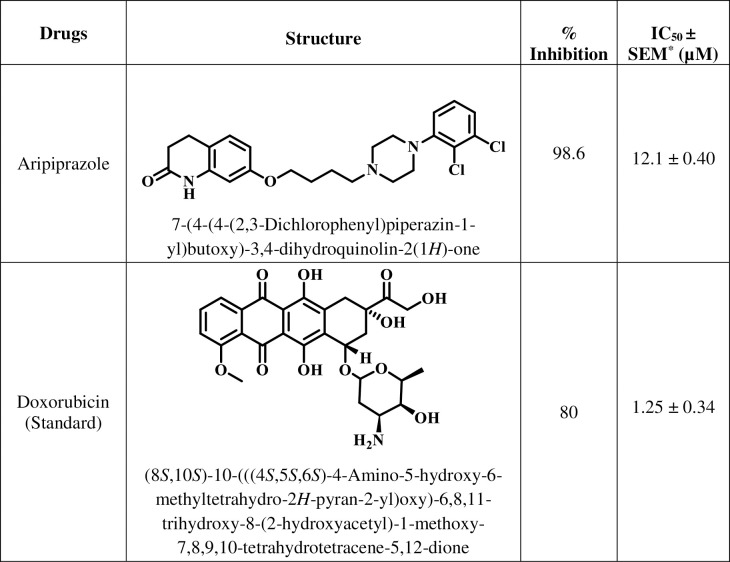
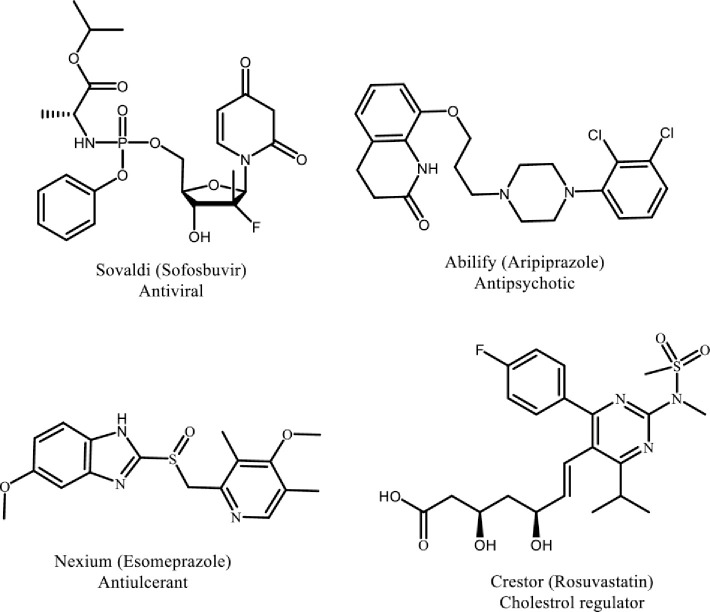
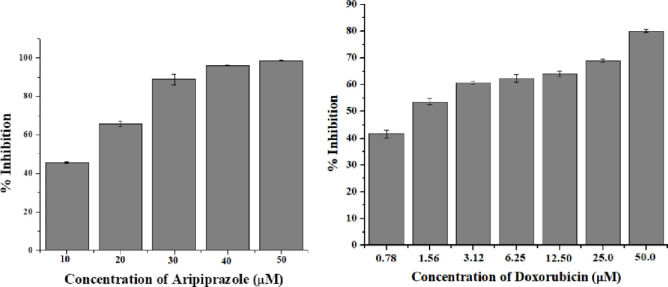
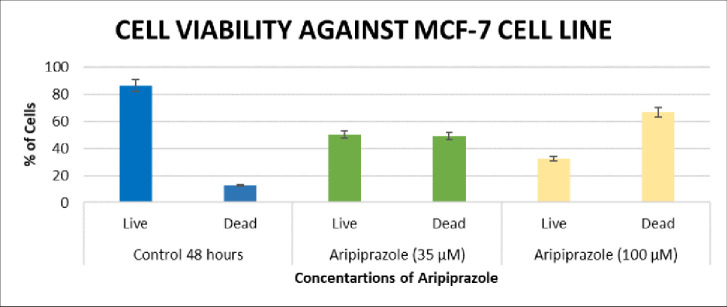
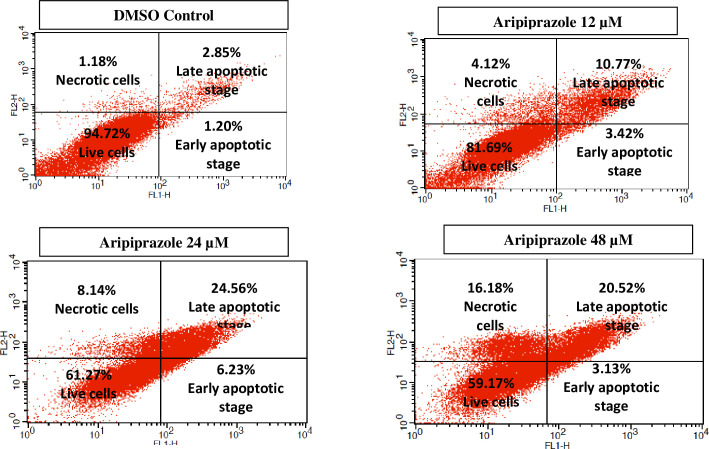
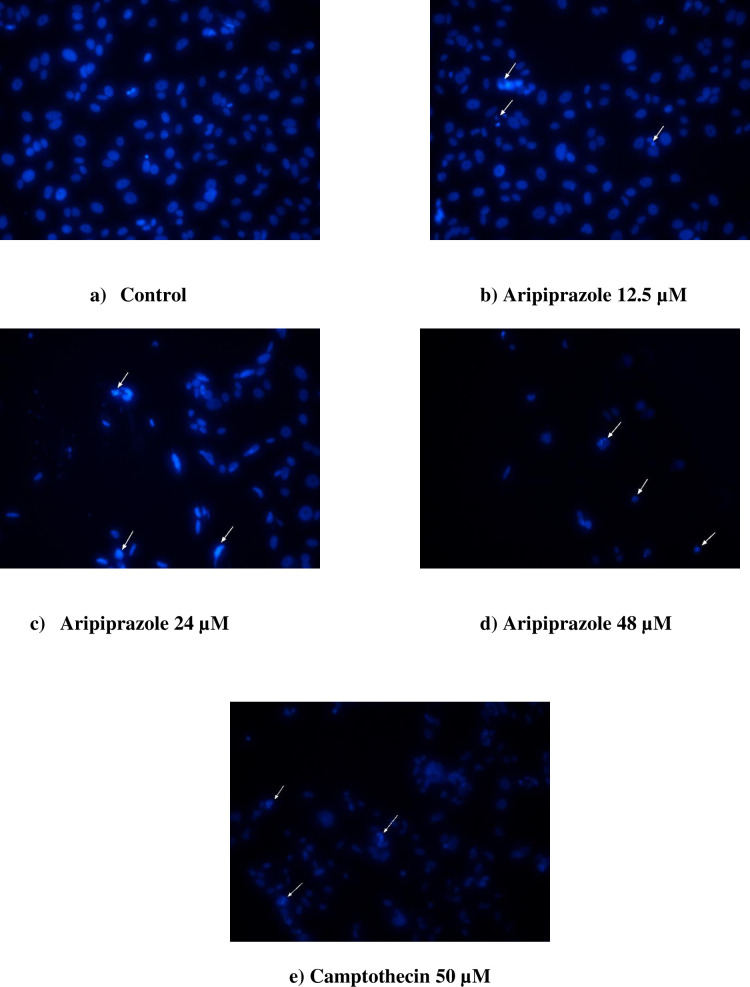
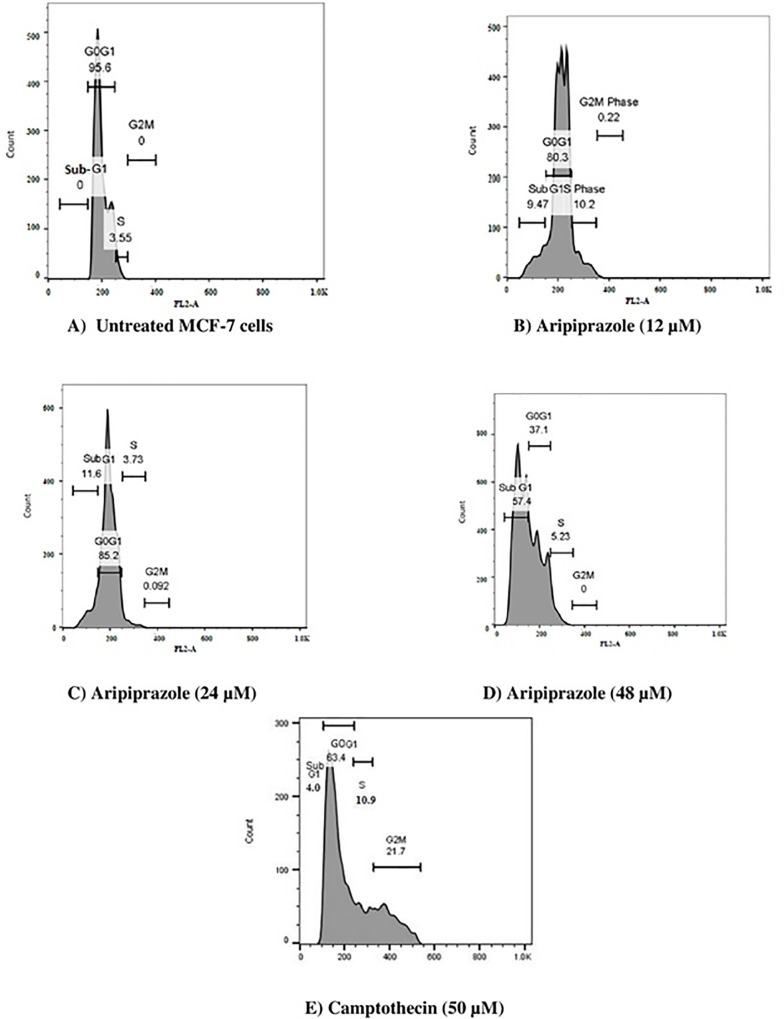
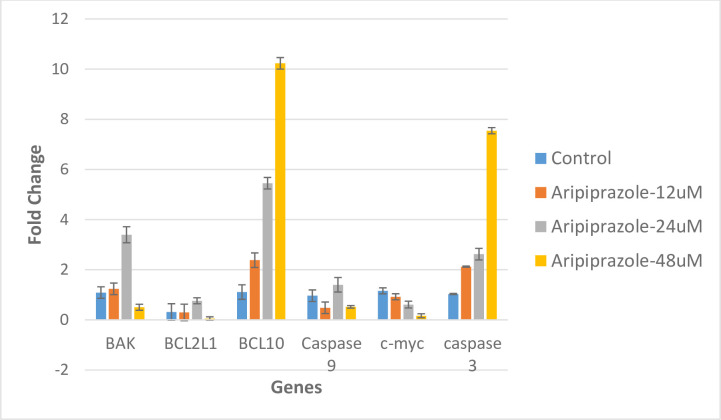
Breast cancer is the second leading cause of death among women globally. The existing treatment options for breast cancer are largely associated with severe toxicities, and lower efficacies. Therefore, there is an urgent need for the development of non-toxic effective drugs against breast cancer. For this purpose, drug repositioning strategy was used to evaluate the anti-cancer potential of a library of heterocyclic drugs. The major advantage of drug repurposing is that the pharmacokinetic, pharmacodynamic, and toxicity profiles of drugs are well documented. In the current study, we screened 97 drugs of different chemical classes, and among them aripiprazole, an antipsychotic drug, was found to be sufficiently active against breast cancer cell line MCF-7. Aripiprazole showed a cytotoxicity (IC50 = 12.1 ± 0.40 μM) to MCF-7 cells, comparable to the standard anticancer drug doxorubicin (IC50 = 1.25 ± 0.34 μM). Aripiprazole was also found to be active against other cancer cell lines, including MDA-MB-231 (IC50 = 19.83 ± 0.27 μM), AU565 (IC50 = 18.02 ± 0.44 μM), and BT-474 (IC50 = 36.42 ± 0.12 μM). Aripiprazole significantly inhibited the cell cycle progression at subG0G1 phase, and enhanced apoptosis in MCF-7 breast cancer cells. The drug was also able to significantly increase the nuclear condensation, and modulated the expression of certain genes involved in breast cancer, such as caspases 3, and 9, BAK-1, C-MYC, BCL2L1, BCL-10, and BCL-2. Further studies are needed to explore the effect of aripiprazole on intrinsic and extrinsic pathways of apoptosis in cancer cells.
乳腺癌是全球女性死亡的第二大主要原因。现有的乳腺癌治疗选择在很大程度上与严重的毒性和较低的疗效相关。因此,迫切需要开发针对乳腺癌的无毒有效药物。为此,我们使用药物重定位策略来评估杂环药物库的抗癌潜力。药物再利用的主要优势在于药物的药代动力学、药效学和毒性特征已有充分记录。在本研究中,我们筛选了 97 种不同化学类别的药物,其中抗精神病药物阿立哌唑对 MCF-7 乳腺癌细胞系表现出足够的活性。阿立哌唑对 MCF-7 细胞表现出细胞毒性(IC50=12.1±0.40μM),与标准抗癌药物多柔比星(IC50=1.25±0.34μM)相当。阿立哌唑对其他癌细胞系也表现出活性,包括 MDA-MB-231(IC50=19.83±0.27μM)、AU565(IC50=18.02±0.44μM)和 BT-474(IC50=36.42±0.12μM)。阿立哌唑能显著抑制 MCF-7 乳腺癌细胞周期在 subG0G1 期的进展,并增强细胞凋亡。该药物还能够显著增加核浓缩,并调节某些与乳腺癌相关的基因的表达,如 caspase3 和 9、BAK-1、C-MYC、BCL2L1、BCL-10 和 BCL-2。需要进一步研究来探索阿立哌唑对癌细胞内在和外在凋亡途径的影响。