Principal, Nota Bene Consulting Group, 1434 Vining St, V8R 1P8, Victoria, BC, Canada.
Centre of Excellence for Women's Health, V6H 3N1, Vancouver, BC, Canada.
BMC Pregnancy Childbirth. 2020 Aug 3;20(1):441. doi: 10.1186/s12884-020-03109-1.
In Canada, several community-based, multi-service programs aimed at reaching vulnerable pregnant or parenting women with substance use and complex issues have emerged. These programs offer basic needs and social supports along with perinatal, primary, and mental health care, as well as substance use services. Evaluations of these 'one-stop' programs have demonstrated positive outcomes; nevertheless, few published studies have focused on how these programs are structured, on their cross-sectoral partnerships, and on clients' perceptions of their services.
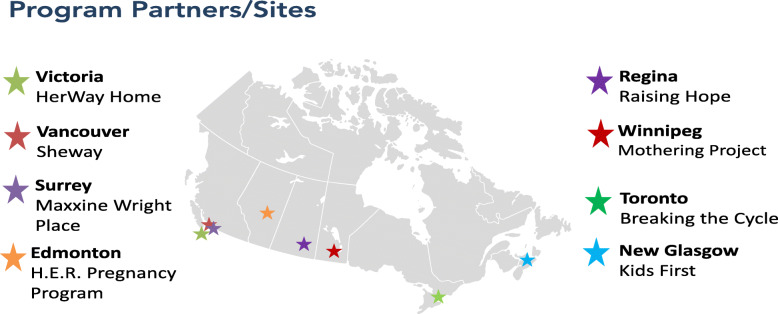
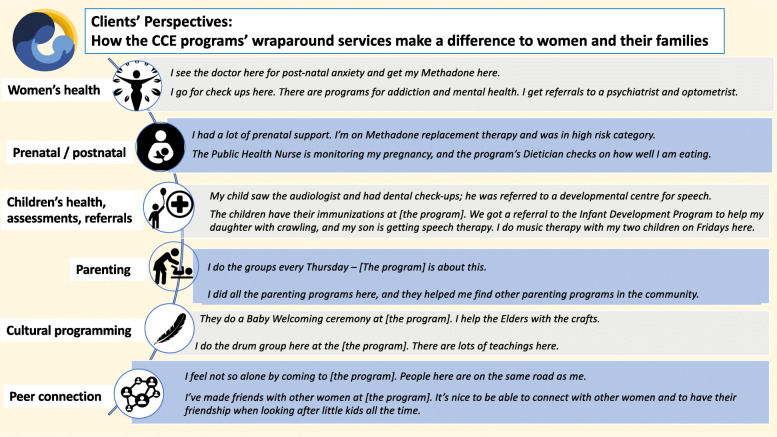
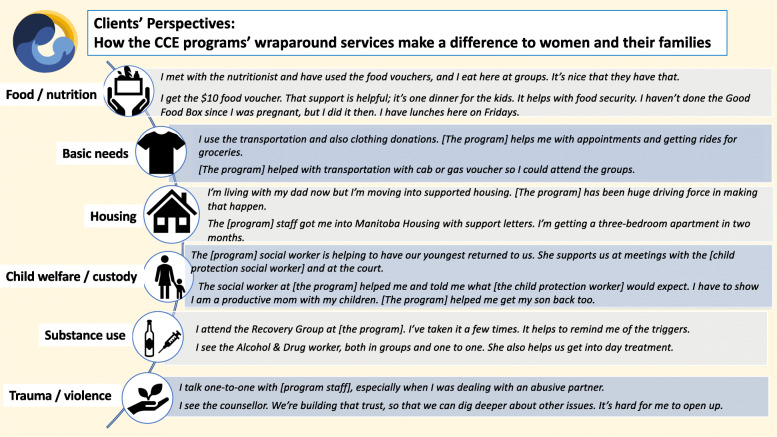
The Co-Creating Evidence (CCE) project was a three-year evaluation of eight multi-service programs located in six Canadian jurisdictions. The study used a mixed-methods design involving semi-structured interviews, questionnaires, output data, and de-identified client data. This article focuses on qualitative interviews undertaken with 125 clients during the first round of site visits, supplemented by interview data with program staff and service partners.
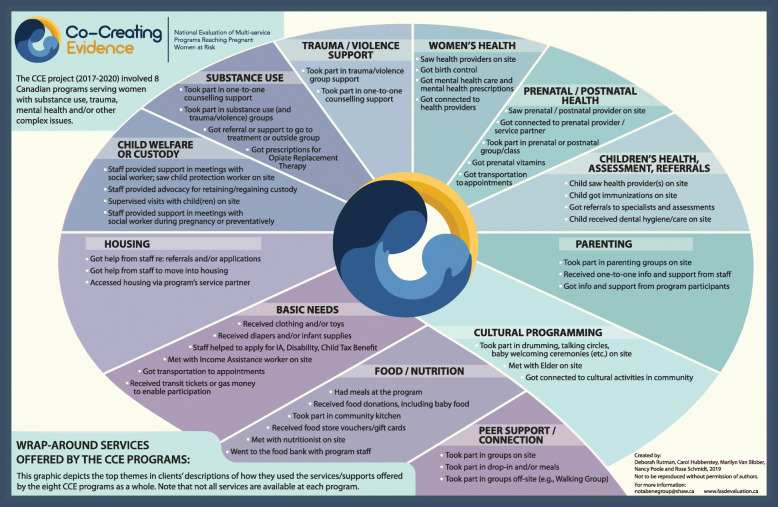
Each of the programs in the CCE study employs a multi-service model that both reflects a wrap-around approach to care and is intentionally geared to removing barriers to accessing services. The programs are either operated by a health authority (n = 4) or by a community-based agency (n = 4). The programs' focus on the social determinants of health, and their provision of primary, prenatal, perinatal and mental health care services is essential; similarly, on-site substance use and trauma/violence related services is pivotal. Further, programs' support in relation to women's child welfare issues promotes collaboration, common understanding of expectations, and helps to prevent child/infant removals.
The programs involved in the Co-Creating Evidence study have impressively blended social and primary care and prenatal care. Their success in respectfully and flexibly responding to women's diverse needs, interests and readiness, within a community-based, wraparound service delivery model paves the way for others offering pre- and postnatal programming.
在加拿大,出现了几个以社区为基础、多服务项目,旨在为有药物使用和复杂问题的弱势孕妇或产妇提供服务。这些项目提供基本需求和社会支持,以及围产期、初级和心理健康护理,以及药物使用服务。对这些“一站式”项目的评估显示出积极的结果;然而,很少有发表的研究关注这些项目的结构、跨部门合作伙伴关系以及客户对其服务的看法。
共同创造证据(CCE)项目是对加拿大六个司法管辖区的八个多服务项目进行的为期三年的评估。该研究采用混合方法设计,包括半结构化访谈、问卷调查、产出数据和去识别客户数据。本文重点介绍了在第一轮现场访问期间对 125 名客户进行的定性访谈,并补充了对项目工作人员和服务合作伙伴的访谈数据。
CCE 研究中的每个项目都采用多服务模式,既反映了全面护理的方法,又有意消除了获得服务的障碍。这些项目由卫生当局(n=4)或社区机构(n=4)运营。这些项目专注于健康的社会决定因素,以及提供初级、产前、围产期和心理健康护理服务是至关重要的;同样,提供现场药物使用和创伤/暴力相关服务也是至关重要的。此外,项目在妇女儿童福利问题上的支持促进了合作、对期望的共同理解,并有助于防止儿童/婴儿被带走。
参与共同创造证据研究的项目令人印象深刻地融合了社会和初级保健以及产前保健。它们成功地以一种基于社区的、全面的服务提供模式,尊重和灵活地回应妇女的多样化需求、兴趣和准备情况,为其他提供产前和产后项目铺平了道路。