Nair Meera, Martin William P, Zhernovkov Vadim, Elliott Jessie A, Fearon Naomi, Eckhardt Hans, McCormack Janet, Godson Catherine, Brennan Eoin Patrick, Fandriks Lars, Docherty Neil G, le Roux Carel W
Diabetes Complications Research Centre, School of Medicine, University College Dublin, Dublin, Ireland.
Systems Biology Ireland, Dublin, Ireland.
BMJ Open Diabetes Res Care. 2020 Jul;8(1). doi: 10.1136/bmjdrc-2019-001113.
Roux-en-Y gastric bypass surgery (RYGB) reduces albuminuria and the long-term incidence of end-stage renal disease in patients with obesity and diabetes. Preclinical modeling in experimental diabetic kidney disease demonstrates that improvements in glomerular structure likely underpin these findings.
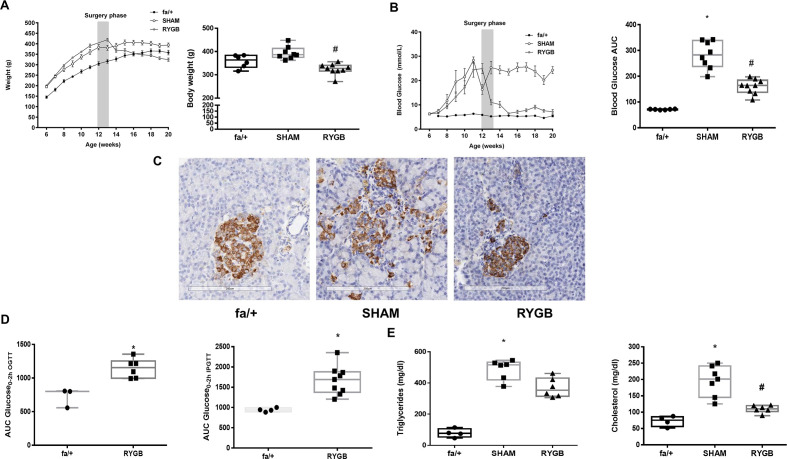
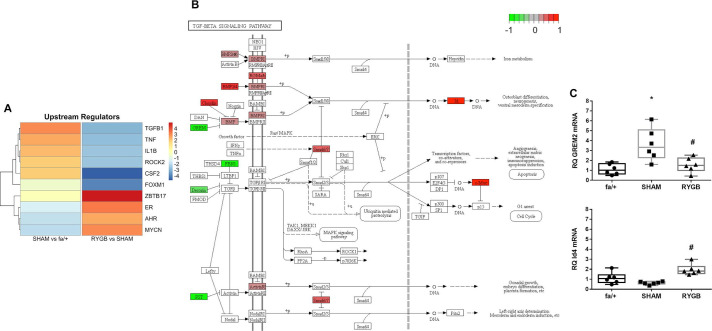
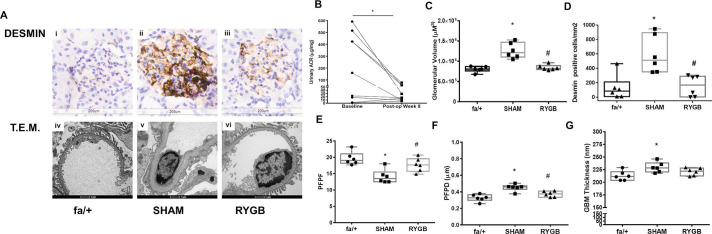
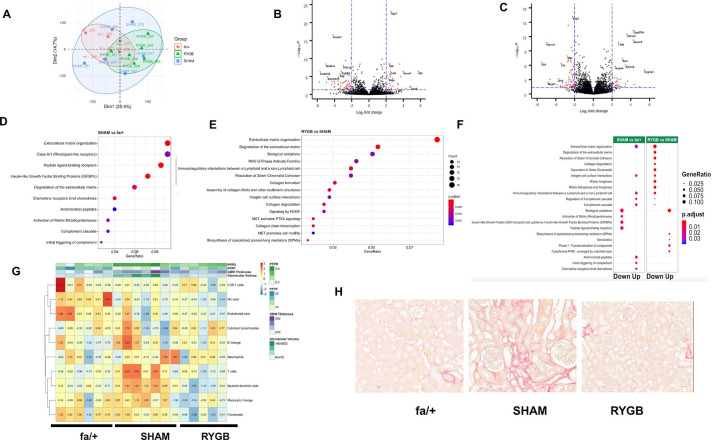
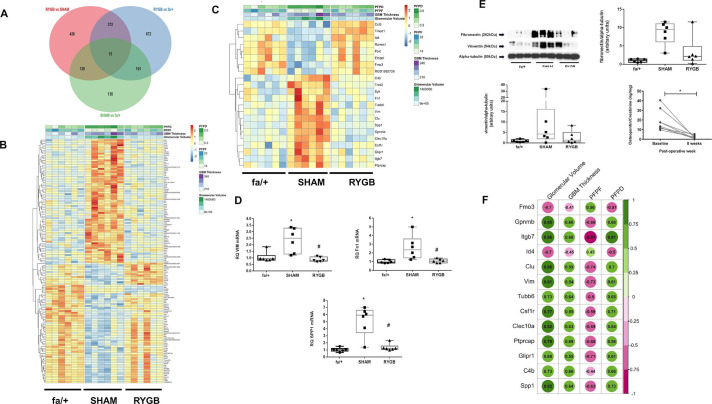
In adult male Zucker diabetic fatty (ZDF) rats, we profiled the effect of RYGB on weight and metabolic control as well biochemical, structural and ultrastructural indices of diabetic renal injury. Furthermore, we sequenced the renal cortical transcriptome in these rats and used bioinformatic pathway analyses to characterize the transcriptional alterations governing the renal reparative response to RYGB.
In parallel with improvements in weight and metabolic control, RYGB reduced albuminuria, glomerulomegaly, podocyte stress and podocyte foot process effacement. Pathway analysis of RYGB-induced transcriptomic changes in the renal cortex highlighted correction of disease-associated alterations in fibrosis, inflammation and biological oxidation pathways. RYGB reversed disease-associated changes in the expression of transforming growth factor (TGF)-β superfamily genes that strongly correlated with improvements in structural measures of glomerulopathy.
Improved glomerular structure in ZDF rats following RYGB is underpinned by pathway level changes, including interruption of the TGF-β-driven early profibrotic programme. Our data provide an important layer of experimental support for clinical evidence demonstrating that RYGB arrests renal damage in patients with obesity and type 2 diabetes.
Roux-en-Y胃旁路手术(RYGB)可降低肥胖和糖尿病患者的蛋白尿及终末期肾病的长期发病率。实验性糖尿病肾病的临床前模型表明,肾小球结构的改善可能是这些研究结果的基础。
在成年雄性Zucker糖尿病肥胖(ZDF)大鼠中,我们分析了RYGB对体重和代谢控制的影响,以及糖尿病肾损伤的生化、结构和超微结构指标。此外,我们对这些大鼠的肾皮质转录组进行了测序,并使用生物信息通路分析来表征控制肾脏对RYGB修复反应的转录变化。
与体重和代谢控制的改善同时,RYGB降低了蛋白尿、肾小球肥大、足细胞应激和足细胞足突消失。对RYGB诱导的肾皮质转录组变化进行通路分析,突出了纤维化、炎症和生物氧化通路中与疾病相关的改变的校正。RYGB逆转了与疾病相关的转化生长因子(TGF)-β超家族基因表达的变化,这些变化与肾小球病结构指标的改善密切相关。
RYGB后ZDF大鼠肾小球结构的改善以通路水平的变化为基础,包括TGF-β驱动的早期纤维化程序的中断。我们的数据为临床证据提供了重要的实验支持,证明RYGB可阻止肥胖和2型糖尿病患者的肾损伤。