Department of Obstetrics, Gynecology and Reproductive Sciences, and Center for Reproductive Science and Medicine, University of California, San Diego, La Jolla, CA, USA.
Department of Pharmacology, University of California, San Diego, La Jolla, CA, USA.
Sci Rep. 2020 Aug 3;10(1):13063. doi: 10.1038/s41598-020-69913-z.
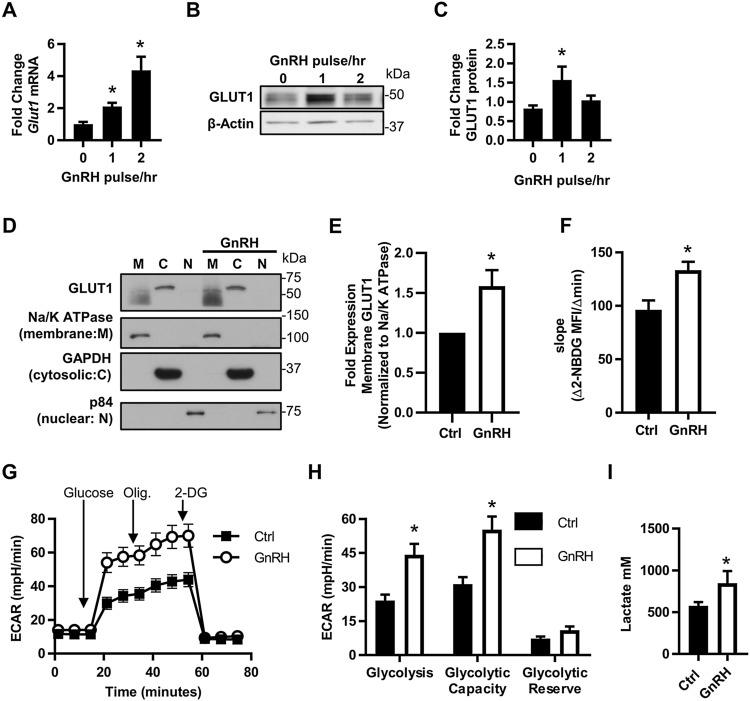
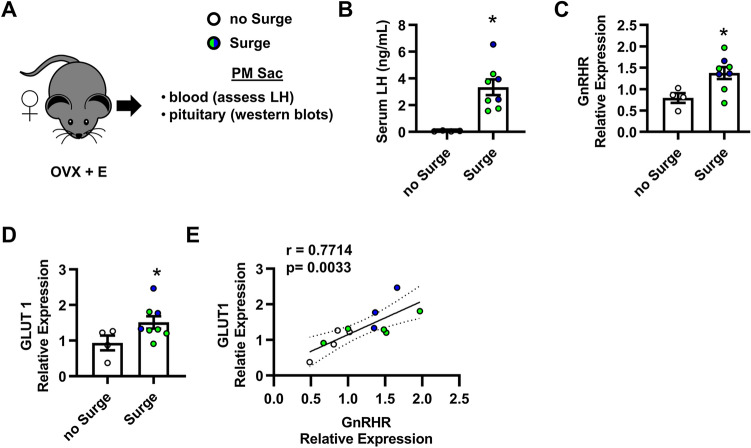
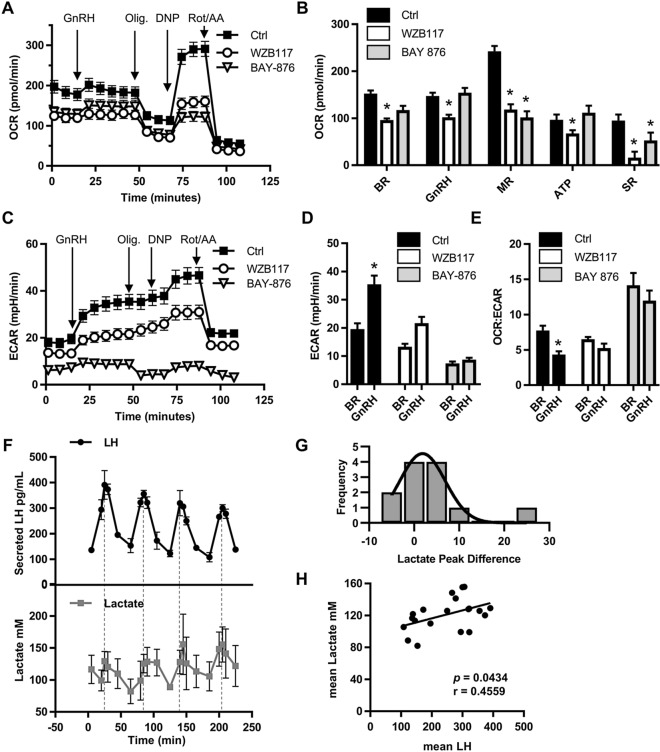
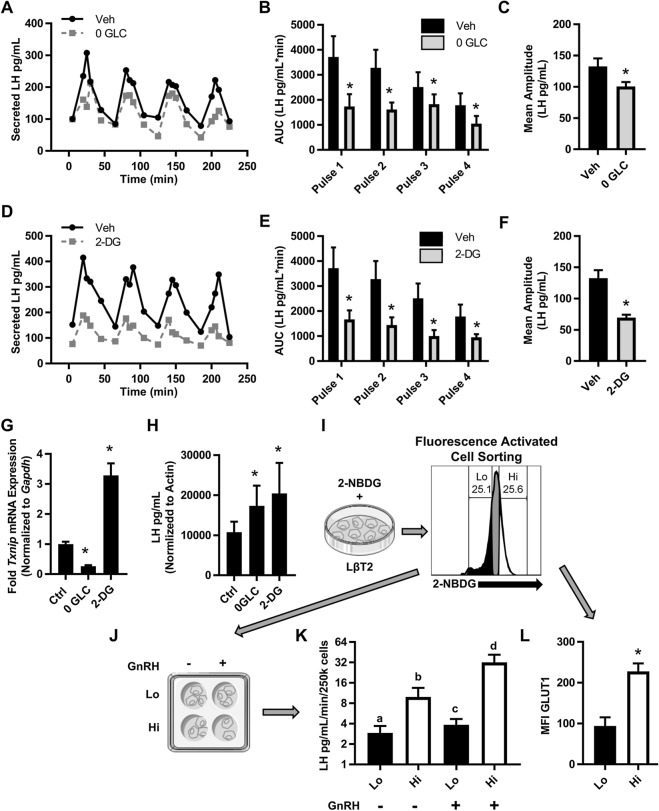
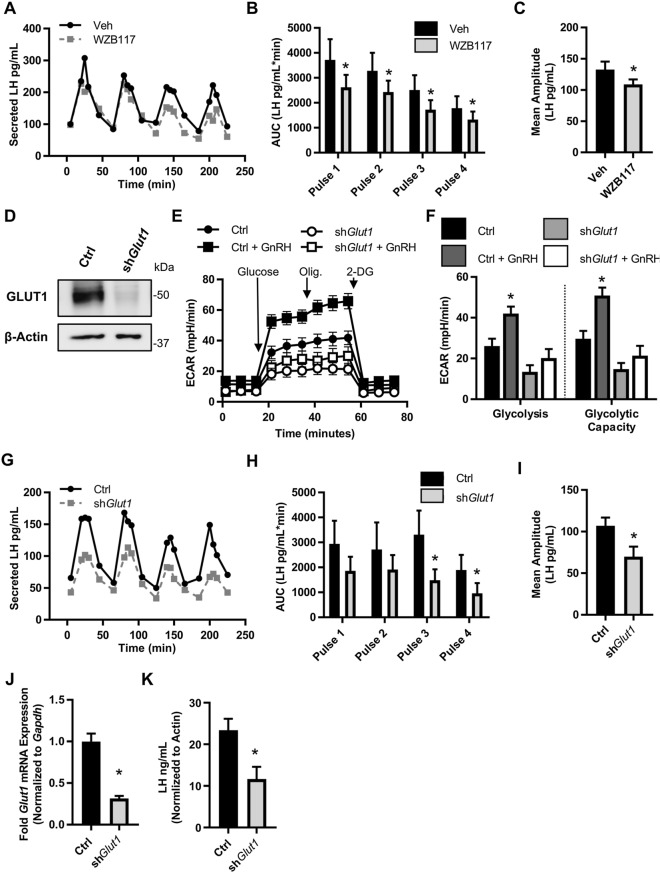
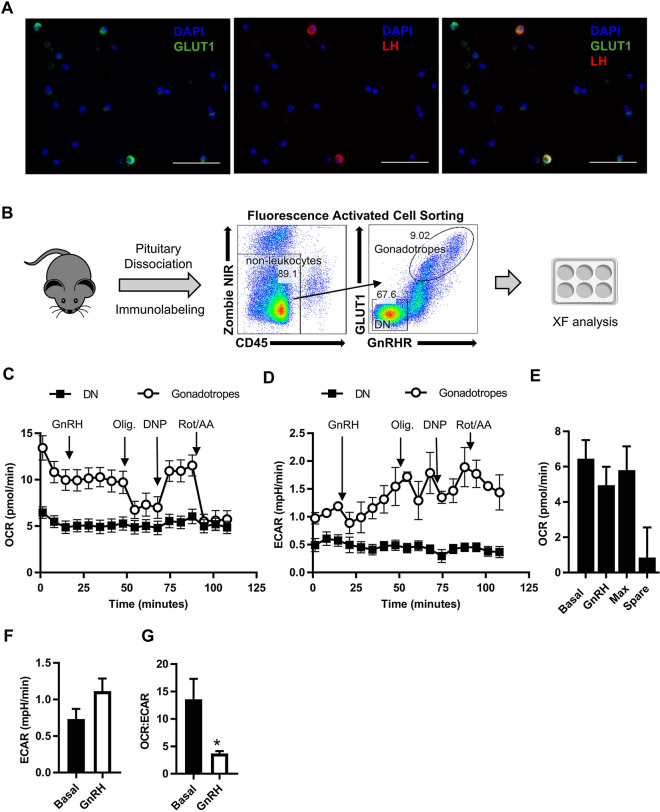
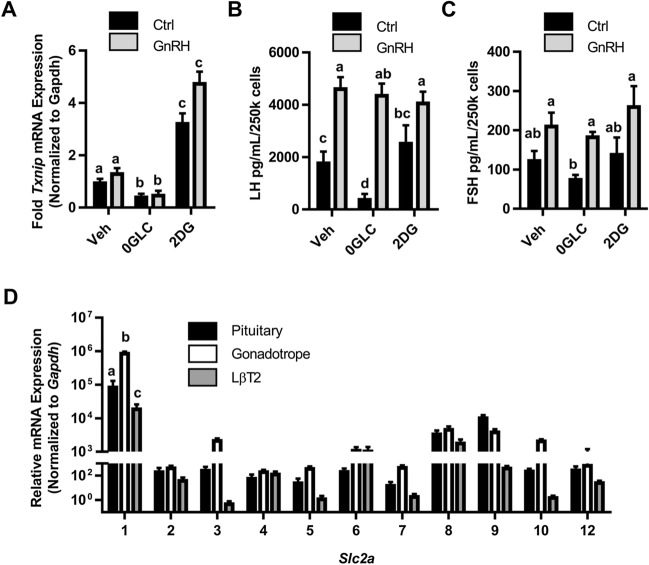
The mechanisms mediating suppression of reproduction in response to decreased nutrient availability remain undefined, with studies suggesting regulation occurs within the hypothalamus, pituitary, or gonads. By manipulating glucose utilization and GLUT1 expression in a pituitary gonadotrope cell model and in primary gonadotropes, we show GLUT1-dependent stimulation of glycolysis, but not mitochondrial respiration, by the reproductive neuropeptide GnRH. GnRH stimulation increases gonadotrope GLUT1 expression and translocation to the extracellular membrane. Maximal secretion of the gonadotropin Luteinizing Hormone is supported by GLUT1 expression and activity, and GnRH-induced glycolysis is recapitulated in primary gonadotropes. GLUT1 expression increases in vivo during the GnRH-induced ovulatory LH surge and correlates with GnRHR. We conclude that the gonadotropes of the anterior pituitary sense glucose availability and integrate this status with input from the hypothalamus via GnRH receptor signaling to regulate reproductive hormone synthesis and secretion.
介导对营养物质缺乏反应的生殖抑制的机制尚不清楚,研究表明调节发生在下丘脑、垂体或性腺中。通过在垂体促性腺细胞模型和原代促性腺细胞中操纵葡萄糖利用和 GLUT1 表达,我们显示 GnRH 依赖性刺激生殖神经肽刺激糖酵解,但不刺激线粒体呼吸。 GnRH 刺激增加促性腺激素细胞 GLUT1 的表达和转位到细胞外膜。GLUT1 的表达和活性支持促性腺激素黄体生成素的最大分泌,并且 GnRH 诱导的糖酵解在原代促性腺细胞中重现。GLUT1 在体内表达在 GnRH 诱导的排卵 LH 激增期间增加,并与 GnRHR 相关。我们得出结论,垂体前叶的促性腺细胞感知葡萄糖的可用性,并通过 GnRH 受体信号将这种状态与来自下丘脑的输入整合,以调节生殖激素的合成和分泌。