National Heart and Lung Institute, Imperial College London, Du Cane Road, London, W12 0NN, UK.
British Heart Foundation Centre for Research Excellence and Centre for Regenerative Medicine, Imperial College London, London, W12 0NN, UK.
Sci Rep. 2020 Aug 3;10(1):13016. doi: 10.1038/s41598-020-69495-w.
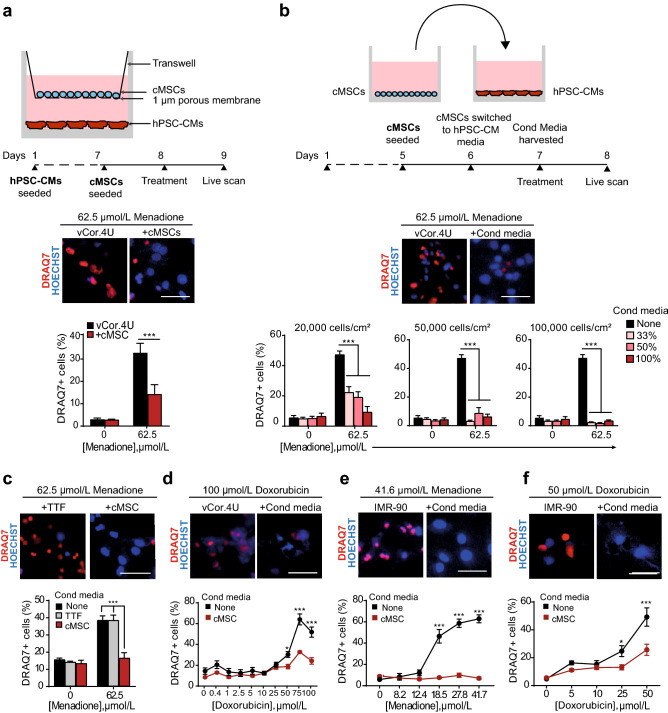
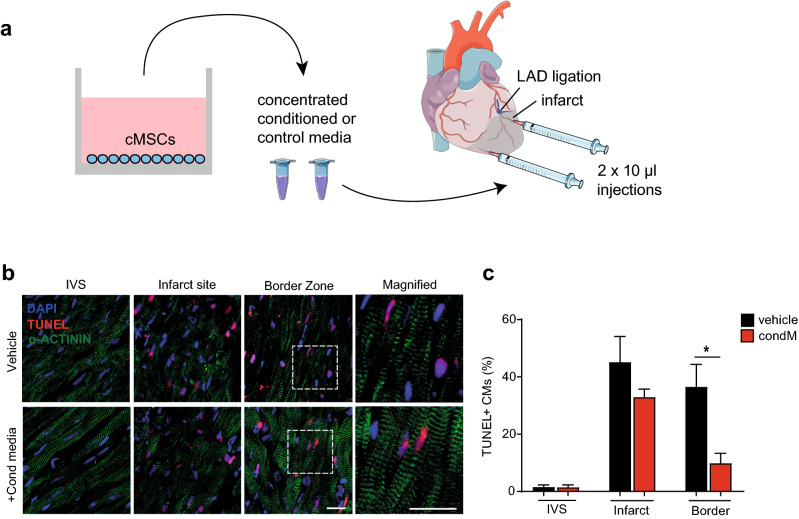
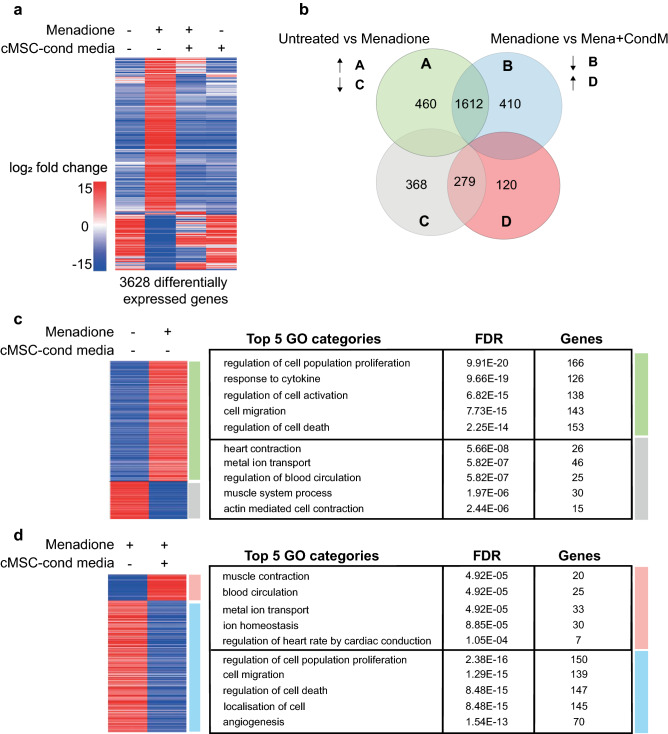
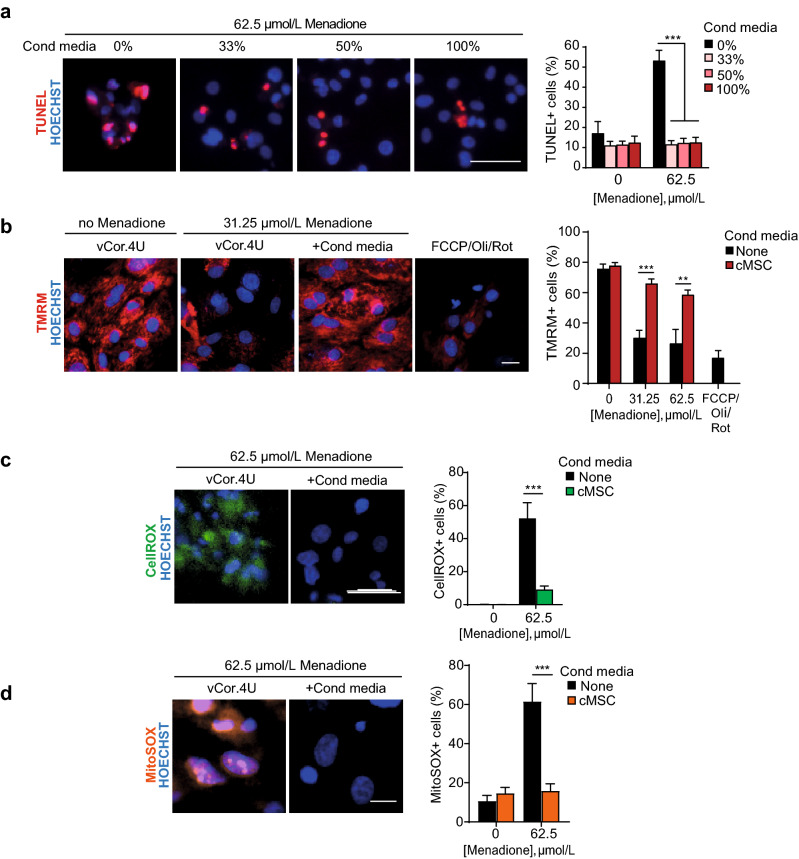
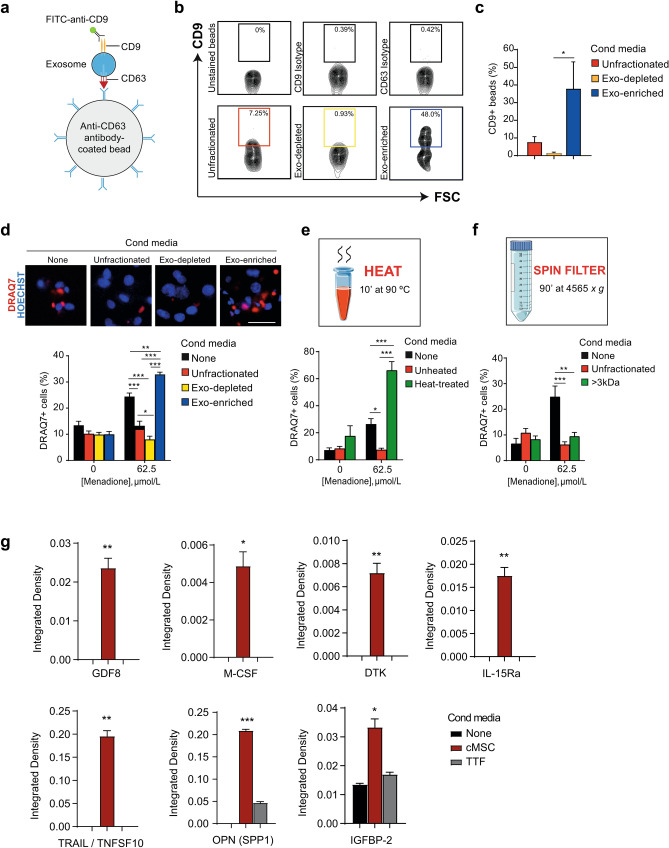
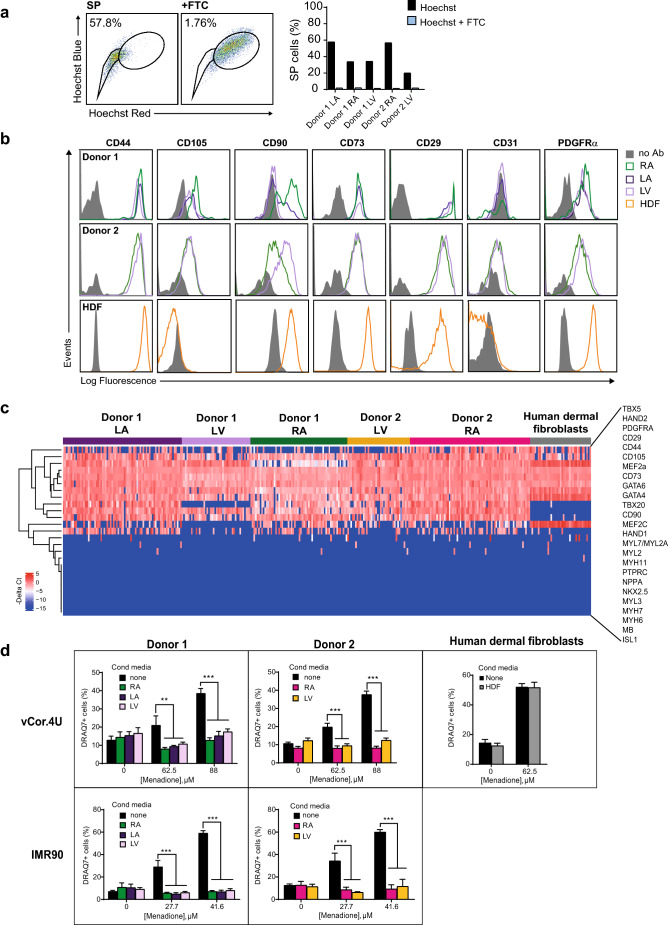
Ischemic heart disease remains the foremost cause of death globally, with survivors at risk for subsequent heart failure. Paradoxically, cell therapies to offset cardiomyocyte loss after ischemic injury improve long-term cardiac function despite a lack of durable engraftment. An evolving consensus, inferred preponderantly from non-human models, is that transplanted cells benefit the heart via early paracrine signals. Here, we tested the impact of paracrine signals on human cardiomyocytes, using human pluripotent stem cell-derived cardiomyocytes (hPSC-CMs) as the target of mouse and human cardiac mesenchymal stromal cells (cMSC) with progenitor-like features. In co-culture and conditioned medium studies, cMSCs markedly inhibited human cardiomyocyte death. Little or no protection was conferred by mouse tail tip or human skin fibroblasts. Consistent with the results of transcriptomic profiling, functional analyses showed that the cMSC secretome suppressed apoptosis and preserved cardiac mitochondrial transmembrane potential. Protection was independent of exosomes under the conditions tested. In mice, injecting cMSC-conditioned media into the infarct border zone reduced apoptotic cardiomyocytes > 70% locally. Thus, hPSC-CMs provide an auspicious, relevant human platform to investigate extracellular signals for cardiac muscle survival, substantiating human cardioprotection by cMSCs, and suggesting the cMSC secretome or its components as potential cell-free therapeutic products.
缺血性心脏病仍然是全球首要的死亡原因,幸存者有发生心力衰竭的风险。具有讽刺意味的是,尽管细胞移植后无法持久嵌合,但用于抵消缺血性损伤后心肌细胞损失的细胞疗法仍能改善长期心功能。一种新出现的共识主要是从非人类模型推断得出的,即移植细胞通过早期旁分泌信号有益于心脏。在这里,我们使用人多能干细胞来源的心肌细胞(hPSC-CMs)作为具有祖细胞样特征的小鼠和人心脏间充质基质细胞(cMSC)的靶标,检测了旁分泌信号对人心肌细胞的影响。在共培养和条件培养基研究中,cMSCs 显著抑制了人心肌细胞的死亡。小鼠尾尖或人皮肤成纤维细胞几乎没有或没有提供保护。与转录组谱分析的结果一致,功能分析表明,cMSC 分泌组抑制细胞凋亡并维持心脏线粒体跨膜电位。在测试条件下,保护与外泌体无关。在小鼠中,将 cMSC 条件培养基注射到梗死边界区可使局部凋亡的心肌细胞减少>70%。因此,hPSC-CMs 为研究心肌细胞存活的细胞外信号提供了一个有希望的、相关的人类平台,证实了 cMSCs 对人类的心脏保护作用,并提示 cMSC 分泌组或其成分可能作为潜在的无细胞治疗产品。