Department of Drug Discovery Sciences, Boehringer Ingelheim Pharma GmbH & Co. KG, Biberach an der Riß, Germany.
Department of Immunology and Respiratory Diseases Research, Boehringer Ingelheim Pharma GmbH & Co. KG, Biberach an der Riß, Germany.
Sci Rep. 2020 Aug 3;10(1):13022. doi: 10.1038/s41598-020-69948-2.
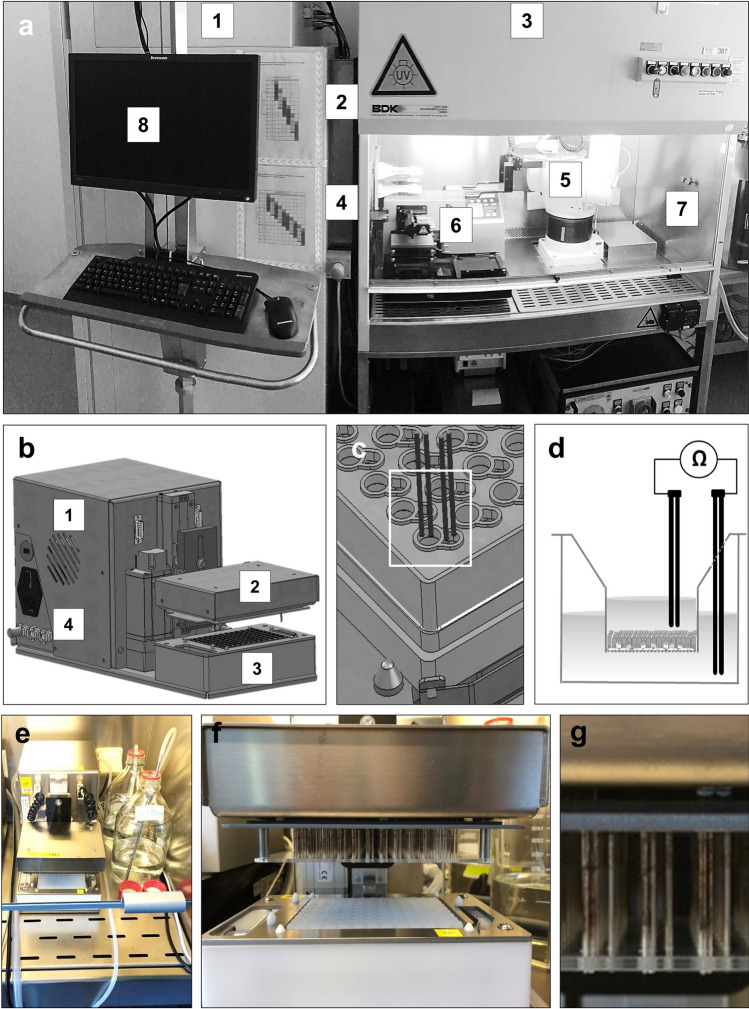
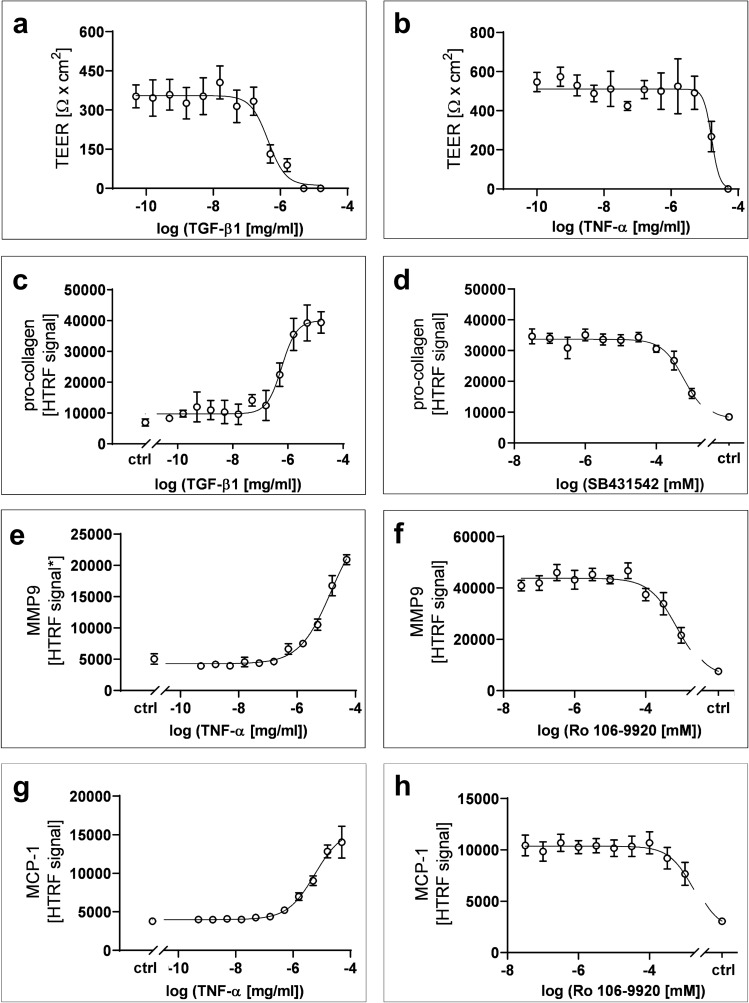
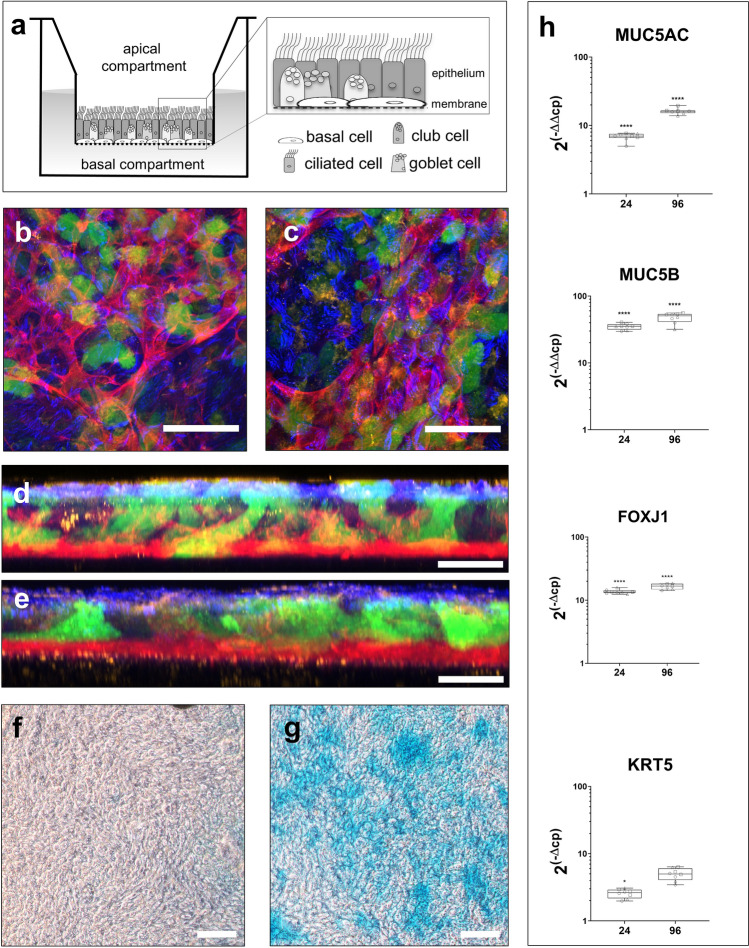
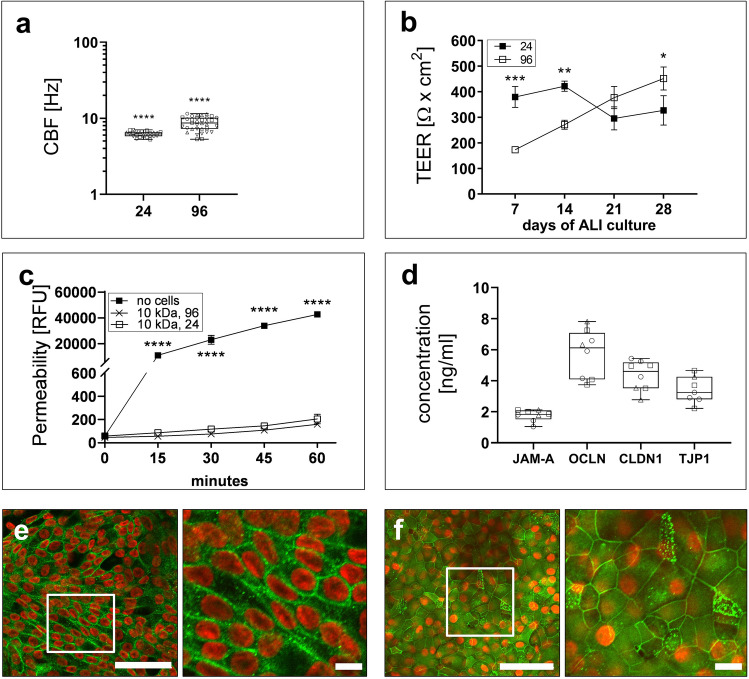
In order to overcome the challenges associated with a limited number of airway epithelial cells that can be obtained from clinical sampling and their restrained capacity to divide ex vivo, miniaturization of respiratory drug discovery assays is of pivotal importance. Thus, a 96-well microplate system was developed where primary human small airway epithelial (hSAE) cells were cultured at an air-liquid interface (ALI). After four weeks of ALI culture, a pseudostratified epithelium containing basal, club, goblet and ciliated cells was produced. The 96-well ALI cultures displayed a cellular composition, ciliary beating frequency, and intercellular tight junctions similar to 24-well conditions. A novel custom-made device for 96-parallelized transepithelial electric resistance (TEER) measurements, together with dextran permeability measurements, confirmed that the 96-well culture developed a tight barrier function during ALI differentiation. 96-well hSAE cultures were responsive to transforming growth factor β1 (TGF-β1) and tumor necrosis factor α (TNF-α) in a concentration dependent manner. Thus, the miniaturized cellular model system enables the recapitulation of a physiologically responsive, differentiated small airway epithelium, and a robotic integration provides a medium throughput approach towards pharmaceutical drug discovery, for instance, in respect of fibrotic distal airway/lung diseases.
为了克服从临床样本中获得的气道上皮细胞数量有限以及体外分裂能力有限的挑战,呼吸药物发现测定的小型化至关重要。因此,开发了一种 96 孔微板系统,其中在气液界面 (ALI) 培养原代人小气道上皮 (hSAE) 细胞。经过四周的 ALI 培养,产生了含有基底细胞、杯状细胞、纤毛细胞和纤毛细胞的假复层上皮。96 孔 ALI 培养物显示出与 24 孔条件相似的细胞组成、纤毛跳动频率和细胞间紧密连接。一种用于 96 平行跨上皮电阻 (TEER) 测量的新型定制设备以及葡聚糖通透性测量,证实了 96 孔培养物在 ALI 分化过程中形成了紧密的屏障功能。96 孔 hSAE 培养物对转化生长因子 β1 (TGF-β1) 和肿瘤坏死因子 α (TNF-α) 的反应呈浓度依赖性。因此,这种小型化细胞模型系统能够再现具有生理反应性的分化小气道上皮,并且机器人集成提供了一种高通量方法,用于药物发现,例如在纤维化远端气道/肺部疾病方面。