Hu Sin-Fen, Wei Wei-Lun, Hong Syuan-Fei, Fang Ru-Ying, Wu Hsin-Yi, Lin Pin-Chun, Sanobar Neda, Wang Hsin-Ping, Sulistio Margo, Wu Chun-Ta, Lo Hsiao-Feng, Lin Shih-Shun
Institute of Biotechnology, National Taiwan University, Taipei, 106, Taiwan.
Instrumentation Center, National Taiwan University, Taipei, 106, Taiwan.
Bot Stud. 2020 Aug 3;61(1):22. doi: 10.1186/s40529-020-00299-x.
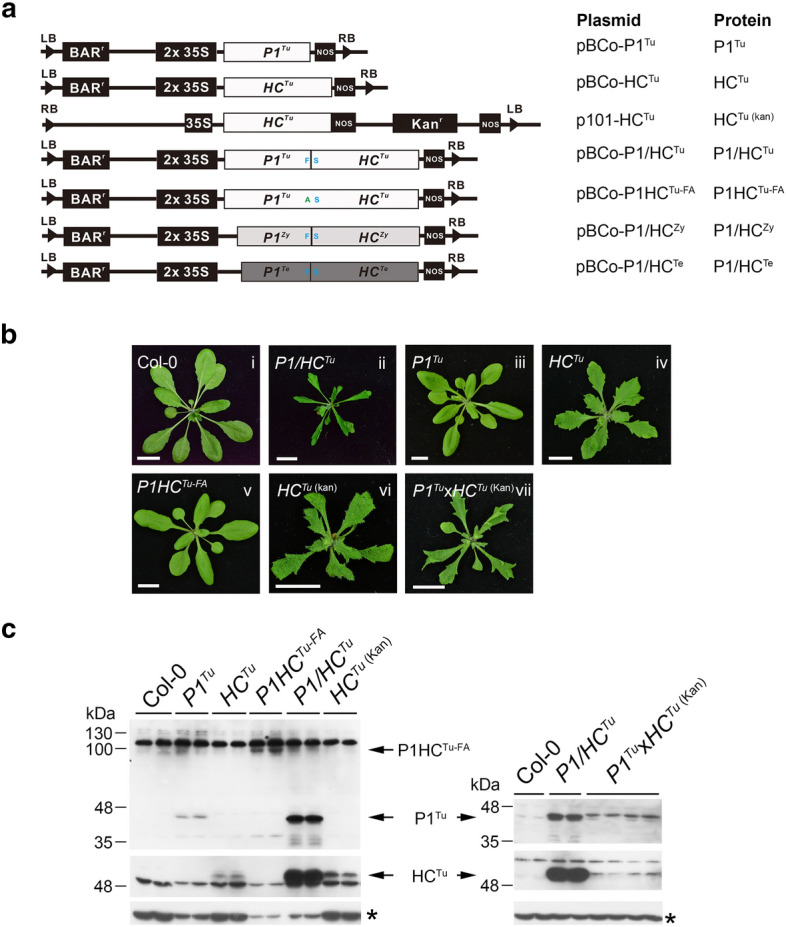
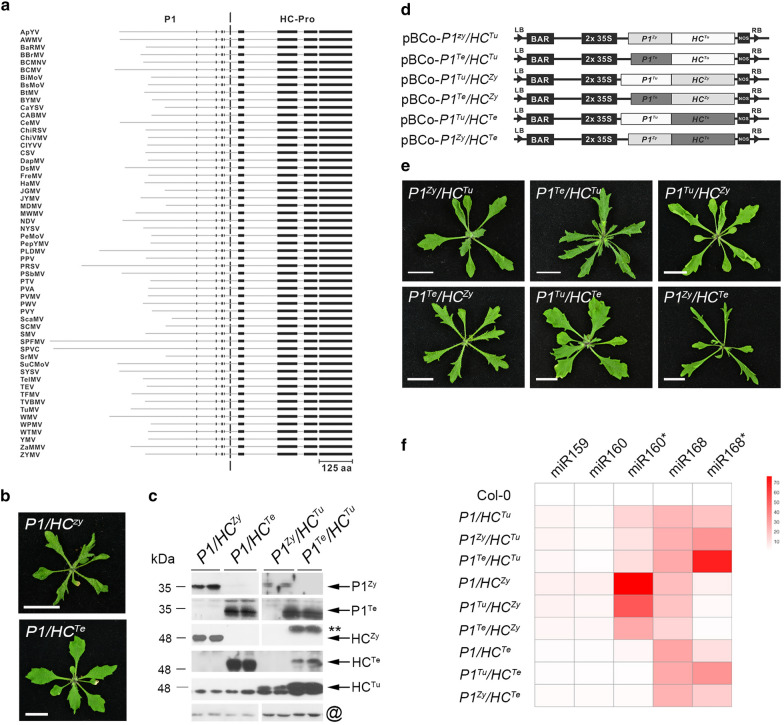
Posttranscriptional gene silencing (PTGS) is one of the most important mechanisms for plants during viral infection. However, viruses have also developed viral suppressors to negatively control PTGS by inhibiting microRNA (miRNA) and short-interfering RNA (siRNA) regulation in plants. The first identified viral suppressor, P1/HC-Pro, is a fusion protein that was translated from potyviral RNA. Upon infecting plants, the P1 protein itself is released from HC-Pro by the self-cleaving activity of P1. P1 has an unknown function in enhancing HC-Pro-mediated PTGS suppression. We performed proteomics to identify P1-interacting proteins. We also performed transcriptomics that were generated from Col-0 and various P1/HC-Pro-related transgenic plants to identify novel genes. The results showed several novel genes were identified through the comparative network analysis that might be involved in P1/HC-Pro-mediated PTGS suppression.
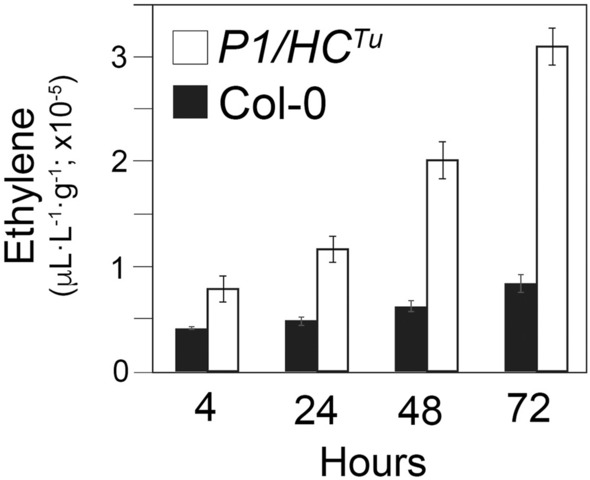
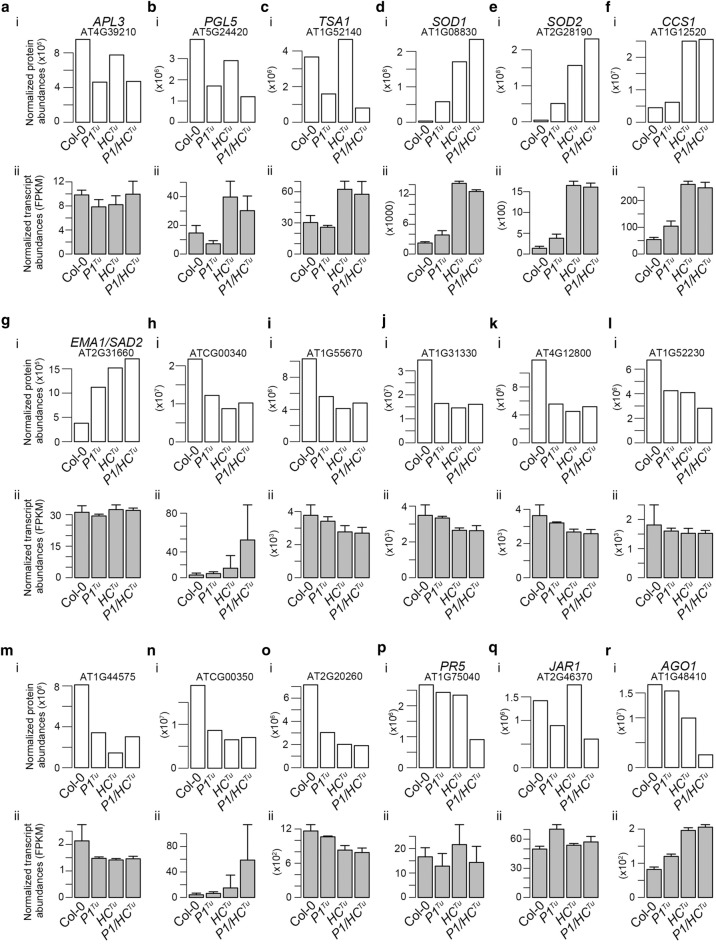
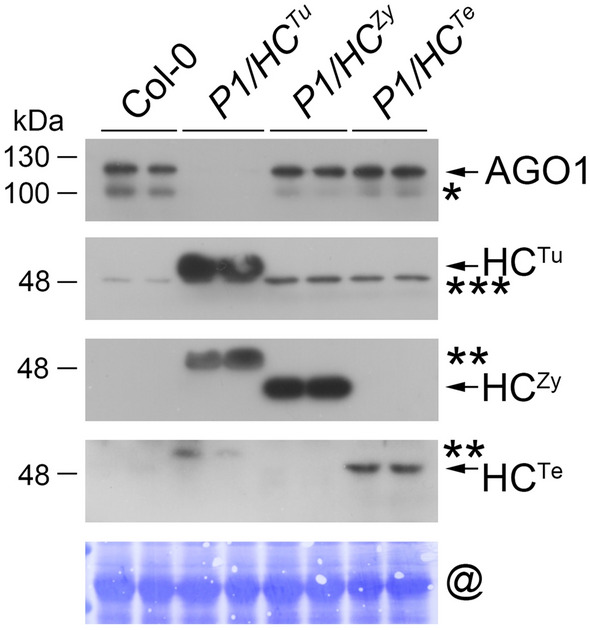
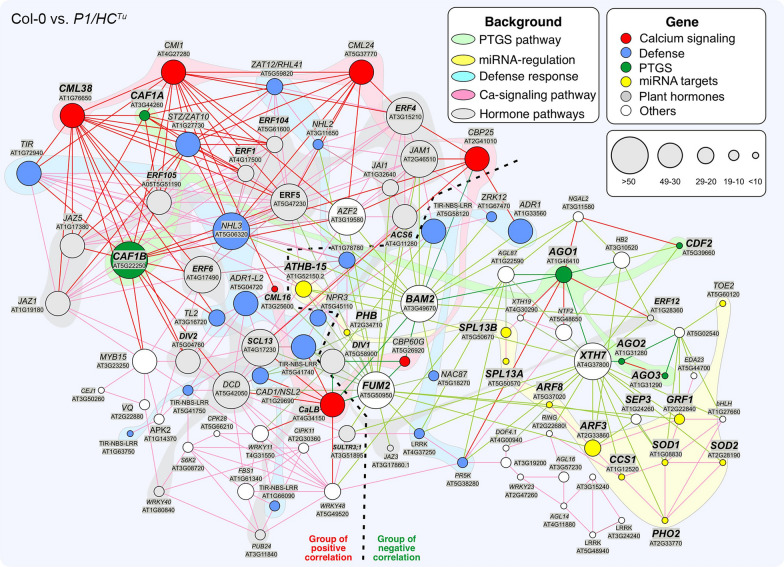
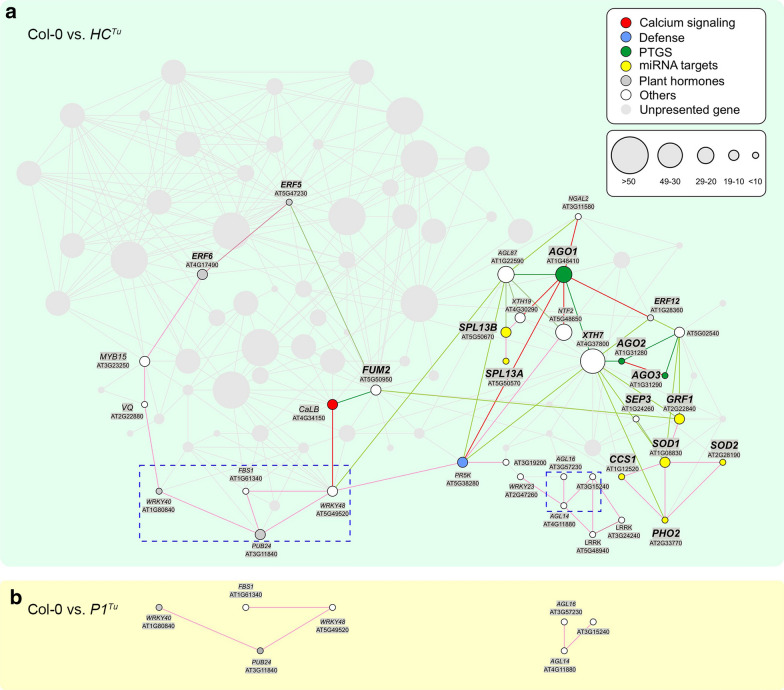
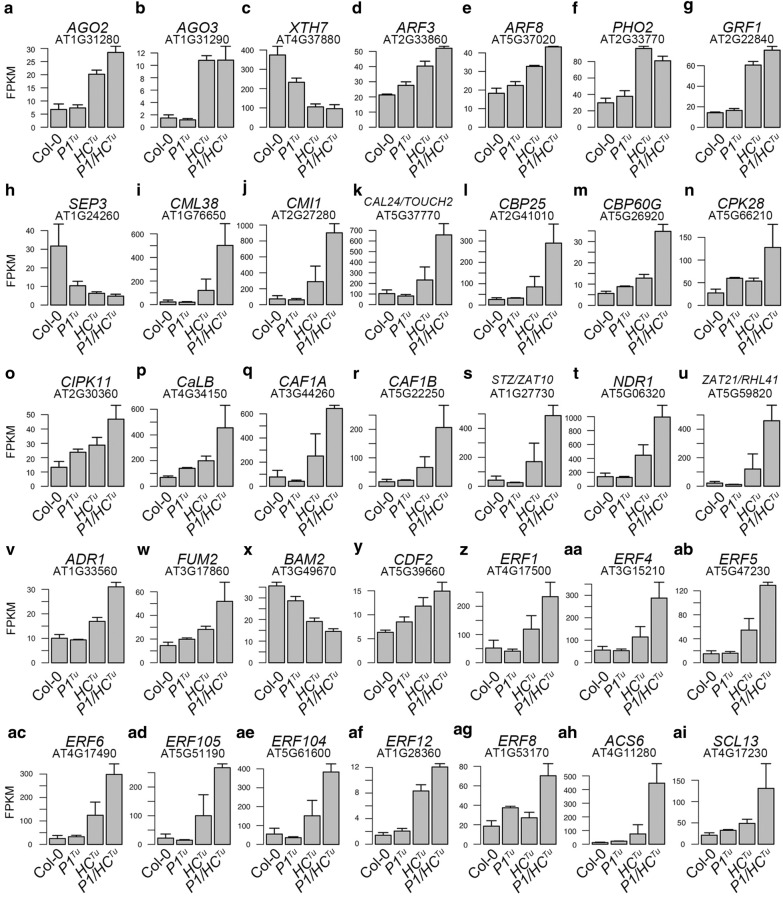
First, we demonstrated that P1 enhances HC-Pro function and that the mechanism might work through P1 binding to VERNALIZATION INDEPENDENCE 3/SUPERKILLER 8 (VIP3/SKI8), a subunit of the exosome, to interfere with the 5'-fragment of the PTGS-cleaved RNA degradation product. Second, the AGO1 was specifically posttranslationally degraded in transgenic Arabidopsis expressing P1/HC-Pro of turnip mosaic virus (TuMV) (P1/HC plant). Third, the comparative network highlighted potentially critical genes in PTGS, including miRNA targets, calcium signaling, hormone (JA, ET, and ABA) signaling, and defense response.
Through these genetic and omics approaches, we revealed an overall perspective to identify many critical genes involved in PTGS. These new findings significantly impact in our understanding of P1/HC-Pro-mediated PTGS suppression.
转录后基因沉默(PTGS)是植物在病毒感染期间最重要的机制之一。然而,病毒也进化出了病毒抑制子,通过抑制植物中的微小RNA(miRNA)和小干扰RNA(siRNA)调控来负面控制PTGS。第一个被鉴定出的病毒抑制子P1/HC-Pro是一种从马铃薯Y病毒属病毒RNA翻译而来的融合蛋白。感染植物后,P1蛋白通过自身的自我切割活性从HC-Pro中释放出来。P1在增强HC-Pro介导的PTGS抑制中具有未知功能。我们进行了蛋白质组学研究以鉴定与P1相互作用的蛋白质。我们还对Col-0和各种与P1/HC-Pro相关的转基因植物进行了转录组学研究以鉴定新基因。结果表明,通过比较网络分析鉴定出了几个可能参与P1/HC-Pro介导的PTGS抑制的新基因。
首先,我们证明P1增强了HC-Pro的功能,其机制可能是通过P1与外切体亚基VERNALIZATION INDEPENDENCE 3/SUPERKILLER 8(VIP3/SKI8)结合,干扰PTGS切割的RNA降解产物的5'片段。其次,AGO1在表达芜菁花叶病毒(TuMV)的P1/HC-Pro的转基因拟南芥(P1/HC植物)中被特异性地翻译后降解。第三,比较网络突出了PTGS中潜在的关键基因,包括miRNA靶标、钙信号、激素(茉莉酸、乙烯和脱落酸)信号以及防御反应。
通过这些遗传学和组学方法,我们揭示了一个全面的视角来鉴定许多参与PTGS的关键基因。这些新发现对我们理解P1/HC-Pro介导的PTGS抑制有重大影响。