Moens Pieter, Bracke Vincent, Soete Colin, Vanden Hautte Sander, Nieves Avendano Diego, Ooijevaar Ted, Devos Steven, Volckaert Bruno, Van Hoecke Sofie
IDLab, Ghent University-imec, Technologiepark-Zwijnaarde 122, 9052 Gent, Belgium.
Corelab DecisionS, Flanders Make, Celestijnenlaan 300, 3001 Leuven, Belgium.
Sensors (Basel). 2020 Aug 2;20(15):4308. doi: 10.3390/s20154308.
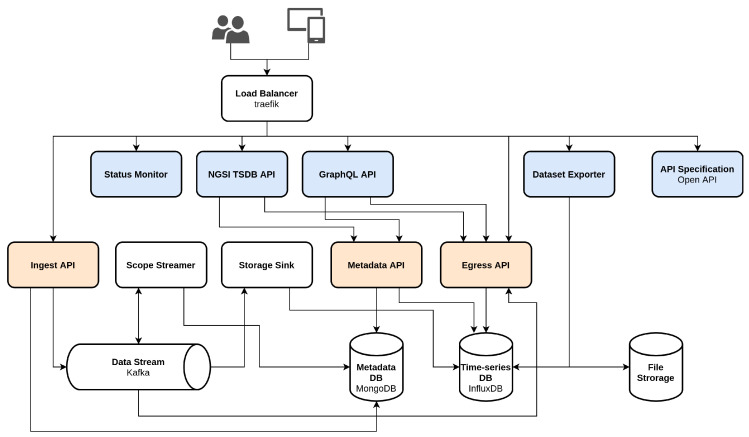
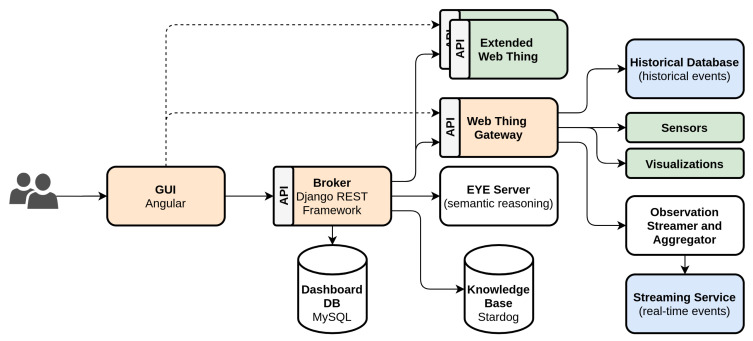
The wide adoption of smart machine maintenance in manufacturing is blocked by open challenges in the Industrial Internet of Things (IIoT) with regard to robustness, scalability and security. Solving these challenges is of uttermost importance to mission-critical industrial operations. Furthermore, effective application of predictive maintenance requires well-trained machine learning algorithms which on their turn require high volumes of reliable data. This paper addresses both challenges and presents the Smart Maintenance Living Lab, an open test and research platform that consists of a fleet of drivetrain systems for accelerated lifetime tests of rolling-element bearings, a scalable IoT middleware cloud platform for reliable data ingestion and persistence, and a dynamic dashboard application for fleet monitoring and visualization. Each individual component within the presented system is discussed and validated, demonstrating the feasibility of IIoT applications for smart machine maintenance. The resulting platform provides benchmark data for the improvement of machine learning algorithms, gives insights into the design, implementation and validation of a complete architecture for IIoT applications with specific requirements concerning robustness, scalability and security and therefore reduces the reticence in the industry to widely adopt these technologies.
制造业中智能机器维护的广泛应用受到工业物联网(IIoT)在鲁棒性、可扩展性和安全性方面公开挑战的阻碍。解决这些挑战对于关键任务型工业运营至关重要。此外,预测性维护的有效应用需要训练有素的机器学习算法,而这反过来又需要大量可靠的数据。本文解决了这两个挑战,并介绍了智能维护生活实验室,这是一个开放的测试和研究平台,它由一组用于滚动轴承加速寿命测试的传动系统、一个用于可靠数据摄取和持久化的可扩展物联网中间件云平台以及一个用于车队监控和可视化的动态仪表板应用程序组成。文中对所展示系统中的每个单独组件进行了讨论和验证,证明了物联网应用于智能机器维护的可行性。由此产生的平台为改进机器学习算法提供了基准数据,深入了解了具有特定鲁棒性、可扩展性和安全性要求的物联网应用完整架构的设计、实施和验证,因此减少了行业对广泛采用这些技术的顾虑。