Biosciences Laboratory, Istituto Scientifico Romagnolo per lo Studio e la Cura dei Tumori (IRST) IRCCS, 47014 Meldola, Italy.
Department of Oncology and Hematology, Division of Oncology, University of Modena and Reggio Emilia, 41125 Modena, Italy.
Int J Mol Sci. 2020 Jul 31;21(15):5500. doi: 10.3390/ijms21155500.
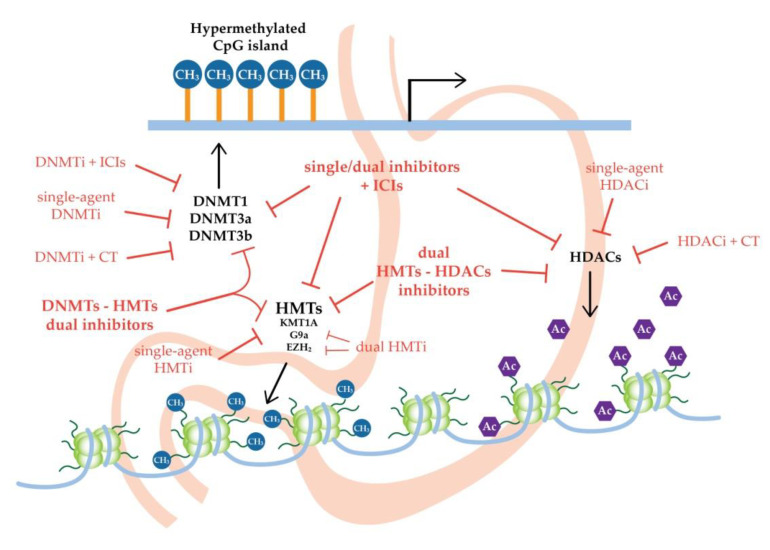
Gastric cancer (GC) is one of the deadliest malignancies worldwide. Complex disease heterogeneity, late diagnosis, and suboptimal therapies result in the poor prognosis of patients. Besides genetic alterations and environmental factors, it has been demonstrated that alterations of the epigenetic machinery guide cancer onset and progression, representing a hallmark of gastric malignancies. Moreover, epigenetic mechanisms undergo an intricate crosstalk, and distinct epigenomic profiles can be shaped under different microenvironmental contexts. In this scenario, targeting epigenetic mechanisms could be an interesting therapeutic strategy to overcome gastric cancer heterogeneity, and the efforts conducted to date are delivering promising results. In this review, we summarize the key epigenetic events involved in gastric cancer development. We conclude with a discussion of new promising epigenetic strategies for gastric cancer treatment.
胃癌(GC)是全球最致命的恶性肿瘤之一。复杂的疾病异质性、晚期诊断和不理想的治疗导致患者预后不良。除了遗传改变和环境因素外,已经证明表观遗传机制的改变指导着癌症的发生和发展,这是胃恶性肿瘤的一个标志。此外,表观遗传机制之间存在着复杂的相互作用,并且在不同的微环境背景下可以形成不同的表观基因组图谱。在这种情况下,针对表观遗传机制可能是克服胃癌异质性的一个有趣的治疗策略,迄今为止所做的努力正在取得有希望的结果。在这篇综述中,我们总结了涉及胃癌发展的关键表观遗传事件。最后,我们讨论了用于胃癌治疗的新的有前途的表观遗传策略。