Endo Kei, Kuroda Hidekatsu, Kanazawa Jo, Sato Takuro, Fujiwara Yudai, Abe Tamami, Sato Hiroki, Kooka Youhei, Oikawa Takayoshi, Sawara Kei, Takikawa Yasuhiro
Division of Hepatology, Department of Internal Medicine, Iwate Medical University School of Medicine, Iwate 028-3695, Japan.
Cancers (Basel). 2020 Aug 3;12(8):2146. doi: 10.3390/cancers12082146.
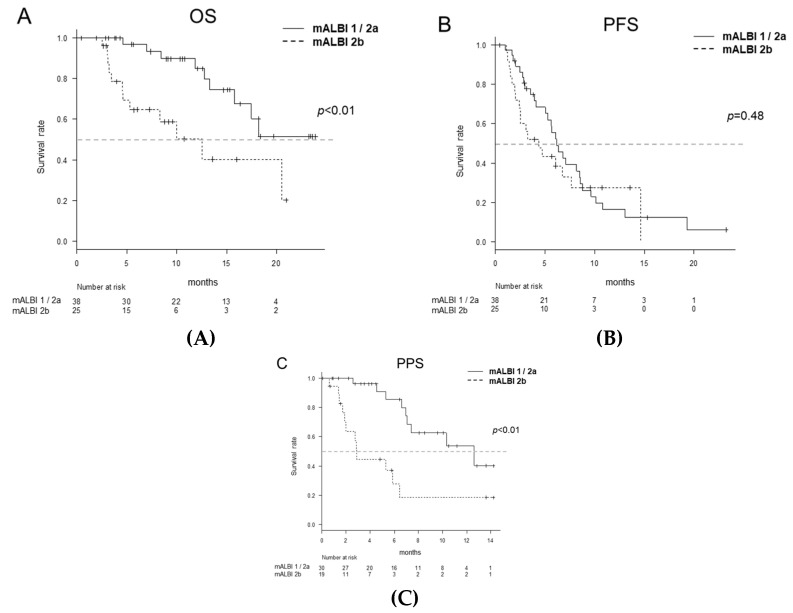
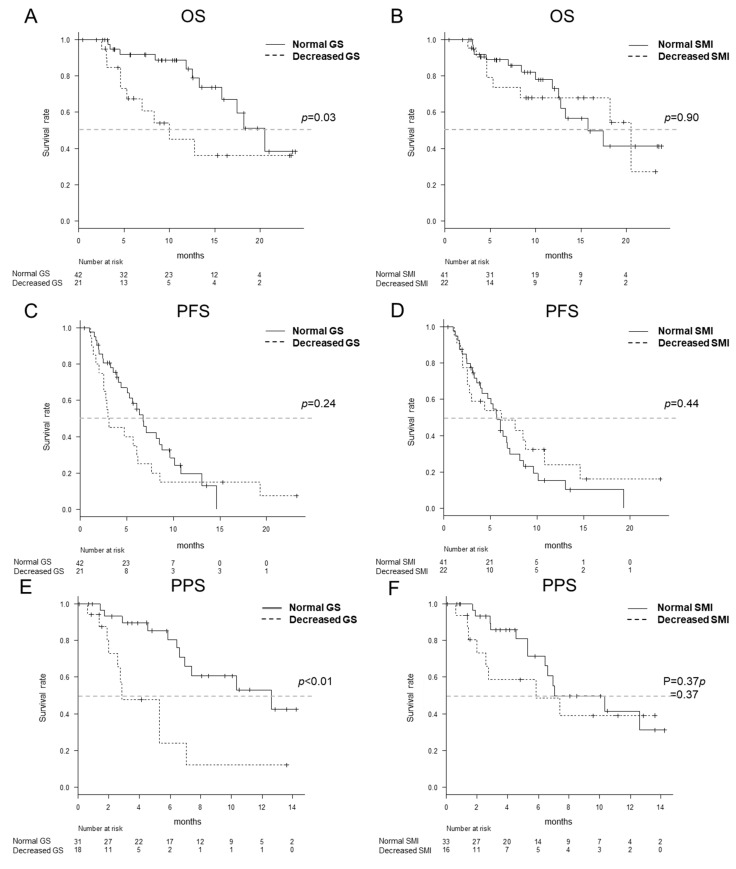
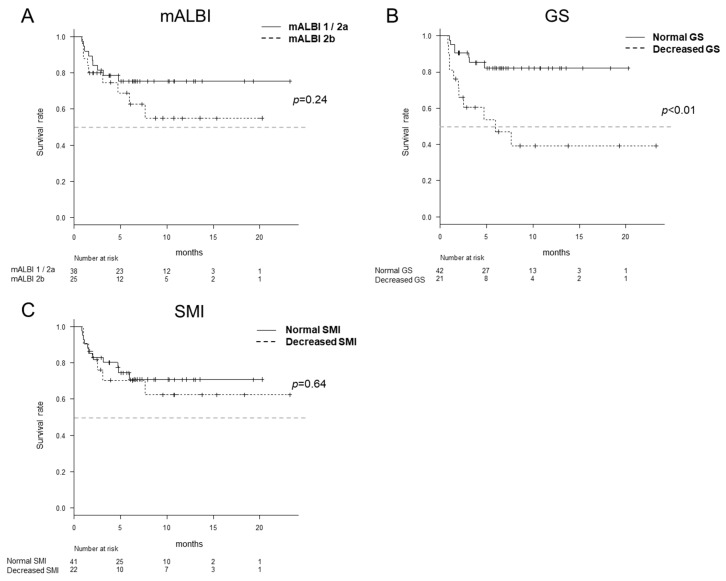
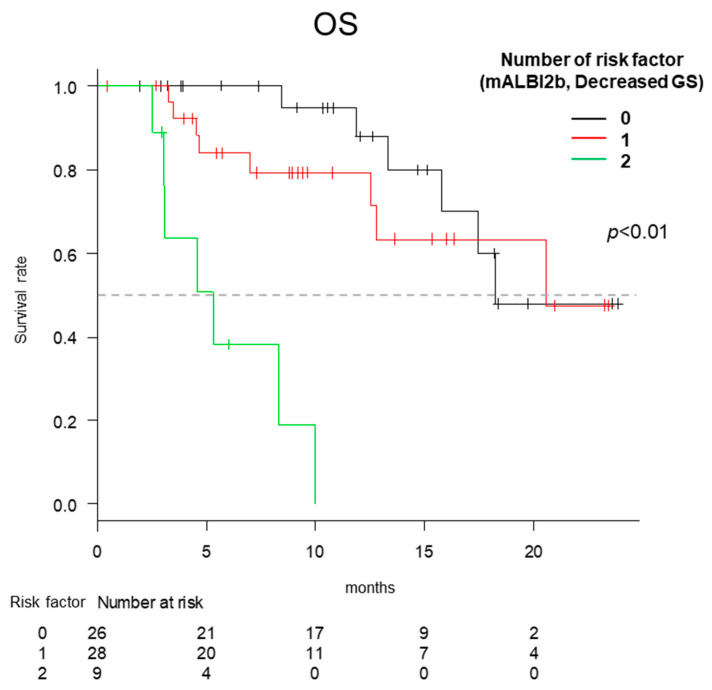
Although sarcopenia is characterized by a loss of muscle strength and skeletal muscle mass, few studies have evaluated the effect of muscle strength on hepatocellular carcinoma (HCC) patients. We evaluated the impact of sarcopenia-related factors (grip strength (GS) and the skeletal muscle index (SMI)) on the survival among lenvatinib-treated unresectable HCC (u-HCC) patients. This single-center cohort study was conducted at a university hospital. The study population included 63 lenvatinib-treated u-HCC patients managed between April 2018 and April 2020. A decreased GS and decreased SMI were found in 21 (33.3%) and 22 (34.9%) patients, respectively. The overall survival (OS) of the normal GS group was significantly higher than that of the decreased GS group, while that of the normal and decreased SMI groups did not differ markedly. There were no significant differences in the progression-free survival between the normal GS and decreased GS groups or the normal SMI and decreased SMI groups. A multivariate Cox proportional hazards model showed that modified albumin-bilirubin-grade (mALBI) 2b (hazard ratio (HR) 4.39) and a decreased GS (HR 3.55) were independently associated with an increased risk of poor prognosis. In addition to the hepatic functional reserve, a decreased GS was a poor prognostic factor in lenvatinib-treated u-HCC patients.
虽然肌肉减少症的特征是肌肉力量和骨骼肌质量的丧失,但很少有研究评估肌肉力量对肝细胞癌(HCC)患者的影响。我们评估了肌肉减少症相关因素(握力(GS)和骨骼肌指数(SMI))对接受乐伐替尼治疗的不可切除HCC(u-HCC)患者生存率的影响。这项单中心队列研究在一家大学医院进行。研究人群包括2018年4月至2020年4月期间接受乐伐替尼治疗的63例u-HCC患者。分别在21例(33.3%)和22例(34.9%)患者中发现GS降低和SMI降低。正常GS组的总生存期(OS)显著高于GS降低组,而正常SMI组和降低SMI组的总生存期无明显差异。正常GS组和降低GS组之间或正常SMI组和降低SMI组之间的无进展生存期无显著差异。多变量Cox比例风险模型显示,改良白蛋白-胆红素分级(mALBI)2b(风险比(HR)4.39)和GS降低(HR 3.55)与预后不良风险增加独立相关。除肝功能储备外,GS降低是接受乐伐替尼治疗的u-HCC患者的不良预后因素。