Freie Universität Berlin, Berlin, Germany.
HU Berlin, Berlin, Germany.
Epidemiol Infect. 2020 Aug 6;148:e183. doi: 10.1017/S0950268820001752.
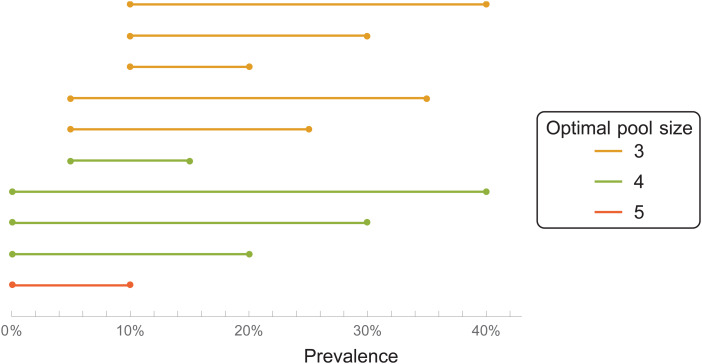
Diagnostic testing for the novel coronavirus is an important tool to fight the coronavirus disease (Covid-19) pandemic. However, testing capacities are limited. A modified testing protocol, whereby a number of probes are 'pooled' (i.e. grouped), is known to increase the capacity for testing. Here, we model pooled testing with a double-average model, which we think to be close to reality for Covid-19 testing. The optimal pool size and the effect of test errors are considered. The results show that the best pool size is three to five, under reasonable assumptions. Pool testing even reduces the number of false positives in the absence of dilution effects.
诊断检测对于对抗新型冠状病毒疾病(Covid-19)大流行至关重要。然而,检测能力有限。已知修改后的检测方案,即将多个探针“合并”(即分组),可以提高检测能力。在这里,我们使用双平均值模型对合并检测进行建模,我们认为该模型对于 Covid-19 检测接近现实。考虑了最佳池大小和测试错误的影响。结果表明,在合理假设下,最佳池大小为三到五个。即使在没有稀释效应的情况下,合并检测也会减少假阳性的数量。