Fang Yingye, Kaszuba Tomasz, Imoukhuede P I
Imoukhuede Systems Biology Laboratory, Department of Biomedical Engineering, McKelvey School of Engineering, Washington University in St. Louis, St. Louis, MO, United States.
Front Physiol. 2020 Jul 15;11:831. doi: 10.3389/fphys.2020.00831. eCollection 2020.
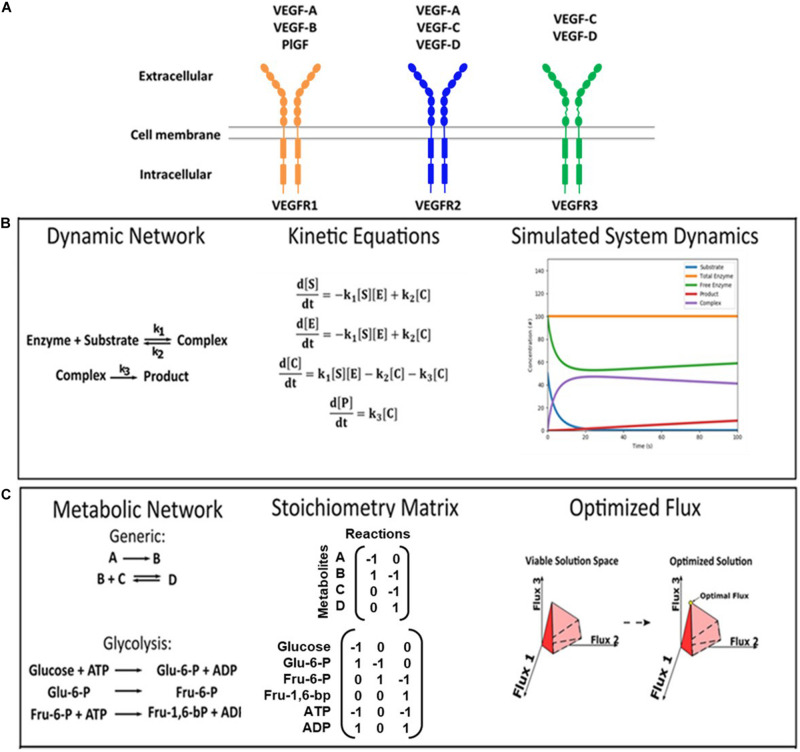
Healthy adipose tissue expansion and metabolism during weight gain require coordinated angiogenesis and lymphangiogenesis. These vascular growth processes rely on the vascular endothelial growth factor (VEGF) family of ligands and receptors (VEGFRs). Several studies have shown that controlling vascular growth by regulating VEGF:VEGFR signaling can be beneficial for treating obesity; however, dysregulated angiogenesis and lymphangiogenesis are associated with several chronic tissue inflammation symptoms, including hypoxia, immune cell accumulation, and fibrosis, leading to obesity-related metabolic disorders. An ideal obesity treatment should minimize adipose tissue expansion and the advent of adverse metabolic consequences, which could be achieved by normalizing VEGF:VEGFR signaling. Toward this goal, a systematic investigation of the interdependency of vascular and metabolic systems in obesity and tools to predict personalized treatment ranges are necessary to improve patient outcomes through vascular-targeted therapies. Systems biology can identify the critical VEGF:VEGFR signaling mechanisms that can be targeted to regress adipose tissue expansion and can predict the metabolic consequences of different vascular-targeted approaches. Establishing a predictive, biologically faithful platform requires appropriate computational models and quantitative tissue-specific data. Here, we discuss the involvement of VEGF:VEGFR signaling in angiogenesis, lymphangiogenesis, adipogenesis, and macrophage specification - key mechanisms that regulate adipose tissue expansion and metabolism. We then provide useful computational approaches for simulating these mechanisms, and detail quantitative techniques for acquiring tissue-specific parameters. Systems biology, through computational models and quantitative data, will enable an accurate representation of obese adipose tissue that can be used to direct the development of vascular-targeted therapies for obesity and associated metabolic disorders.
体重增加期间健康的脂肪组织扩张和代谢需要协调的血管生成和淋巴管生成。这些血管生长过程依赖于血管内皮生长因子(VEGF)配体和受体(VEGFRs)家族。多项研究表明,通过调节VEGF:VEGFR信号通路来控制血管生长可能有益于治疗肥胖症;然而,血管生成和淋巴管生成失调与多种慢性组织炎症症状相关,包括缺氧、免疫细胞积聚和纤维化,进而导致肥胖相关的代谢紊乱。理想的肥胖症治疗应尽量减少脂肪组织扩张和不良代谢后果的出现,这可以通过使VEGF:VEGFR信号通路正常化来实现。为了实现这一目标,有必要对肥胖症中血管和代谢系统的相互依存关系进行系统研究,并开发预测个性化治疗范围的工具,以通过血管靶向治疗改善患者预后。系统生物学可以识别可靶向用于消退脂肪组织扩张的关键VEGF:VEGFR信号机制,并预测不同血管靶向方法的代谢后果。建立一个具有预测性、生物学可信度的平台需要合适的计算模型和定量的组织特异性数据。在这里,我们讨论VEGF:VEGFR信号通路在血管生成、淋巴管生成、脂肪生成和巨噬细胞分化中的作用——这些是调节脂肪组织扩张和代谢的关键机制。然后,我们提供用于模拟这些机制的有用计算方法,并详细介绍获取组织特异性参数的定量技术。通过计算模型和定量数据,系统生物学将能够准确呈现肥胖脂肪组织,可用于指导针对肥胖症及相关代谢紊乱的血管靶向治疗的开发。