Department of Medical Epidemiology and Biostatistics, Karolinska Institutet, Stockholm, Sweden.
Science for Life Laboratory, Department of Gene Technology, School of Engineering Sciences in Chemistry, Biotechnology and Health, KTH Royal Institute of Technology, Stockholm, Sweden.
Clin Transl Gastroenterol. 2020 Jul;11(7):e00191. doi: 10.14309/ctg.0000000000000191.
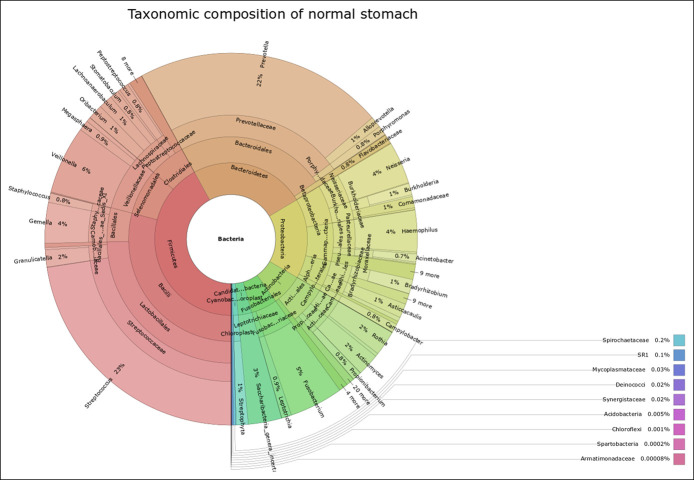
Non-Helicobacter pylori microbiota might account for some cases with unexplained chronic gastritis that may in a minority eventually progress to gastric cancer through the Correa cascade. We characterized gastric microbiota by describing the normal stomach, compared it with early precancerous lesions and other disease states, and assessed whether H. pylori status affects bacterial diversity.
In a population-based study of those with and without gastrointestinal symptoms, cytology brush samples were collected during endoscopy from 316 individuals. Mucosal status was classified as normal mucosa (171), nonatrophic H. pylori gastritis (33), atrophic gastritis (12), or antral chemical gastritis (61). The 16S rRNA gene sequencing and analysis were performed to characterize the microbiota.
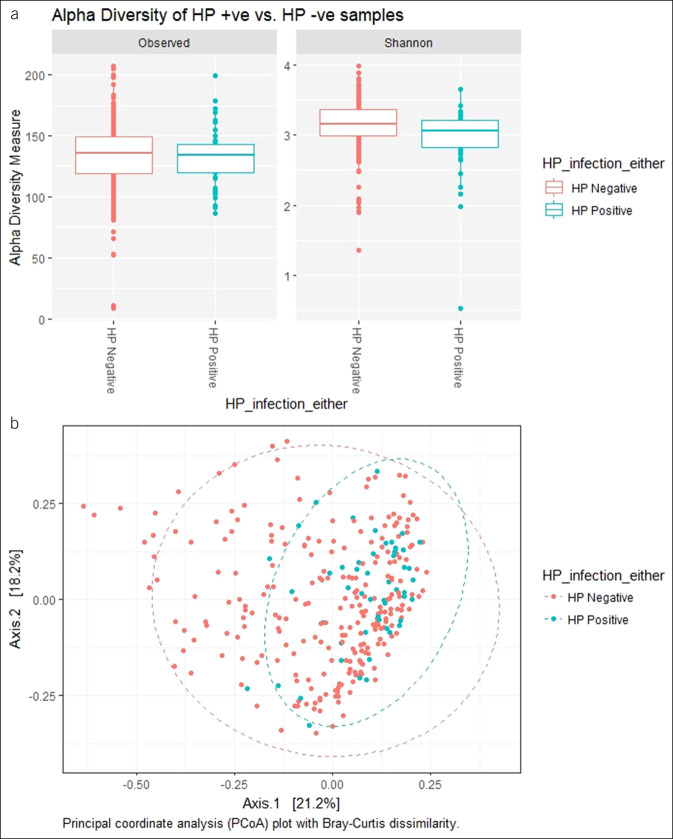
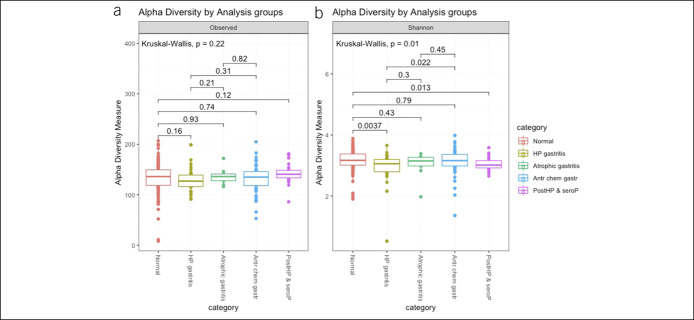
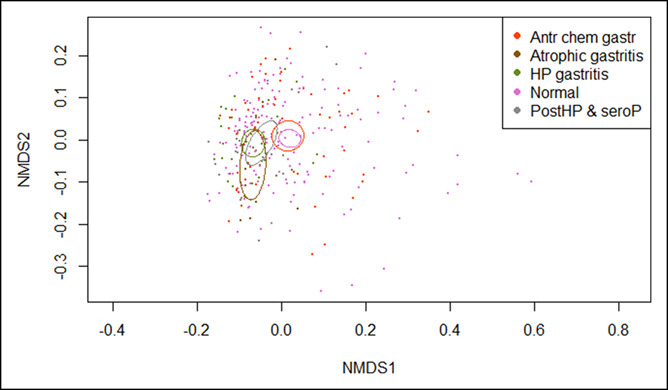
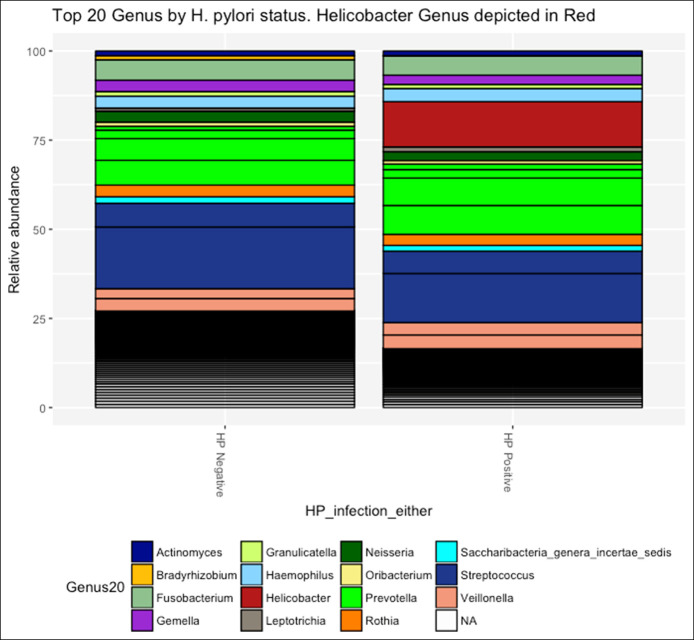
Microbiota in atrophic gastritis and nonatrophic H. pylori gastritis stomachs were dysbiotic and differed from those in the normal stomach (P = 0.001). The normal stomach had the highest microbial diversity, followed by antral chemical gastritis. The atrophic gastritis and chronic H. pylori gastritis groups had the lowest diversity, a difference that was statistically significant (P = 0.01). Besides H. pylori, non-H. pylori bacteria accounted for group differences. Microbial network analysis showed that the normal group network was most highly connected, whereas the H. pylori gastritis group had the lowest connection. We found an increasing positive co-occurrence of oral bacteria in the stomach because samples deviated from the normal network, some of which were pathogens. The H. pylori-negative group had the highest microbial diversity (Shannon index) compared with the H. pylori-positive group (P = 0.001).
In this low-H. pylori prevalence general population, the gastric mucosal microbiota of the normal stomach differed significantly from those with nonatrophic or atrophic gastritis. There was an increasing abundance of pathogenic bacteria from the normal state to early precancerous states.
非幽门螺杆菌微生物群可能是一些不明原因的慢性胃炎的原因,这些胃炎在少数情况下可能会通过科雷亚级联反应发展为胃癌。我们通过描述正常胃来描述胃微生物群,将其与早期癌前病变和其他疾病状态进行比较,并评估幽门螺杆菌状态是否会影响细菌多样性。
在一项基于人群的有或无胃肠道症状的研究中,对 316 名个体进行内镜检查时采集细胞学刷样。黏膜状态分为正常黏膜(171 例)、非萎缩性幽门螺杆菌胃炎(33 例)、萎缩性胃炎(12 例)和胃窦化学性胃炎(61 例)。进行 16S rRNA 基因测序和分析以描述微生物群。
萎缩性胃炎和非萎缩性幽门螺杆菌胃炎胃中的微生物群是失调的,与正常胃不同(P=0.001)。正常胃的微生物多样性最高,其次是胃窦化学性胃炎。萎缩性胃炎和慢性幽门螺杆菌胃炎组的多样性最低,差异具有统计学意义(P=0.01)。除了幽门螺杆菌,非幽门螺杆菌细菌也导致了组间差异。微生物网络分析显示,正常组网络的连接度最高,而幽门螺杆菌胃炎组的连接度最低。我们发现,由于样本偏离了正常网络,一些口腔细菌在胃中呈正协同出现的频率增加,其中一些是病原体。与幽门螺杆菌阳性组相比,幽门螺杆菌阴性组的微生物多样性(香农指数)更高(P=0.001)。
在这个低幽门螺杆菌流行的一般人群中,正常胃的胃黏膜微生物群与非萎缩性或萎缩性胃炎有显著差异。从正常状态到早期癌前状态,致病性细菌的丰度逐渐增加。