Ghali Michael G Z, Ghali George Z
Department of Neurological Surgery, Karolinska Institutet, Stockholm, Sweden.
Department of Neuroscience, University of Helsinki, Helsinki, Finland.
Front Neurosci. 2020 Jul 10;14:395. doi: 10.3389/fnins.2020.00395. eCollection 2020.
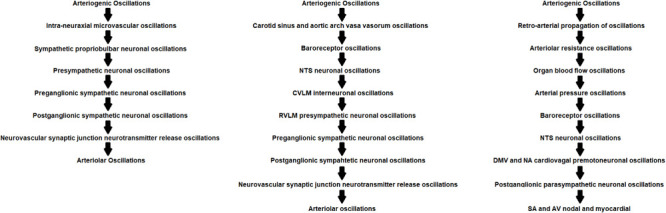
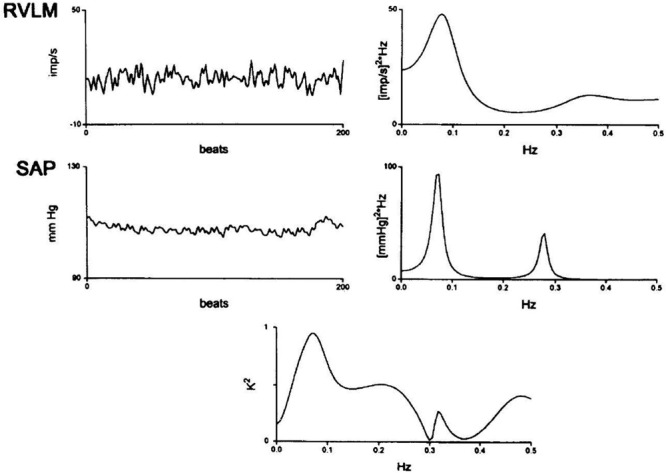
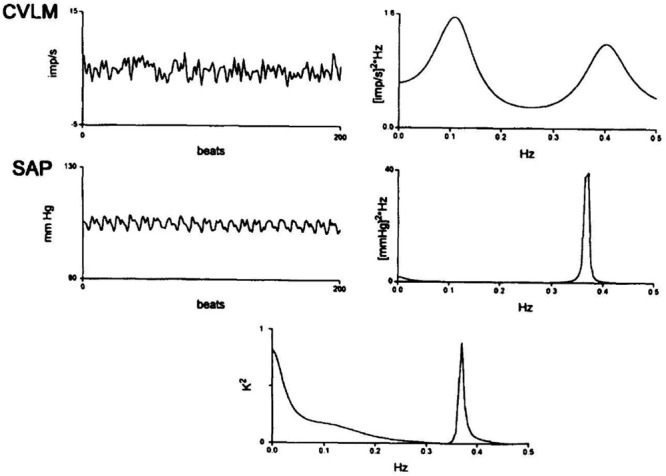
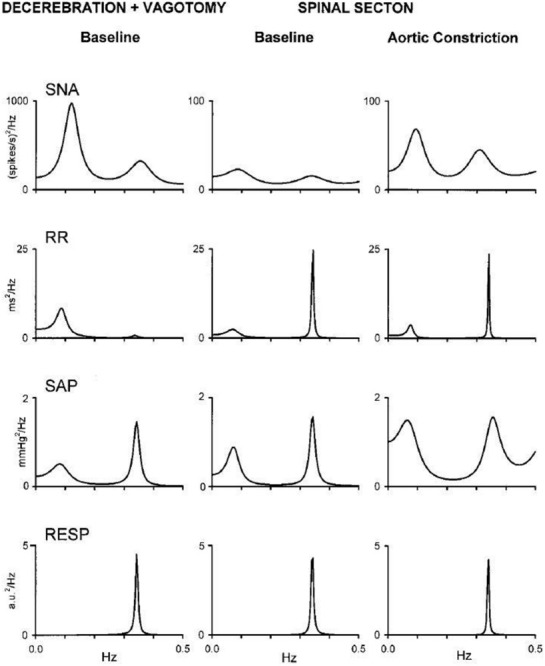
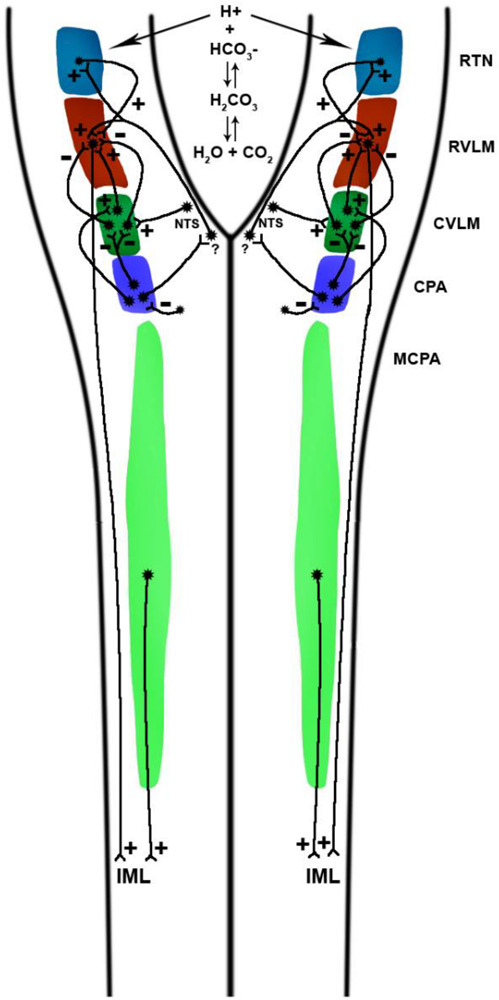
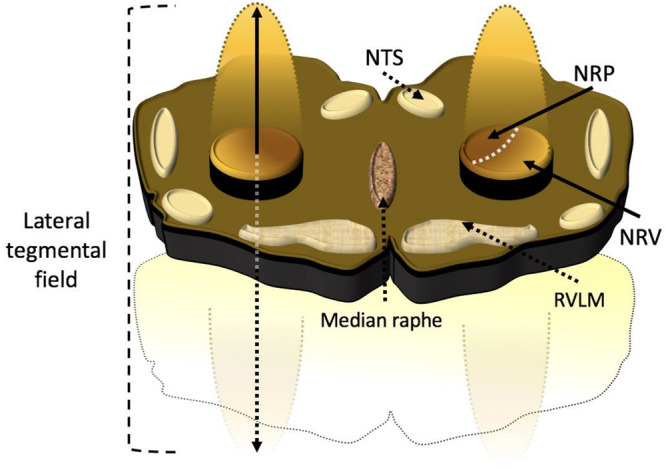
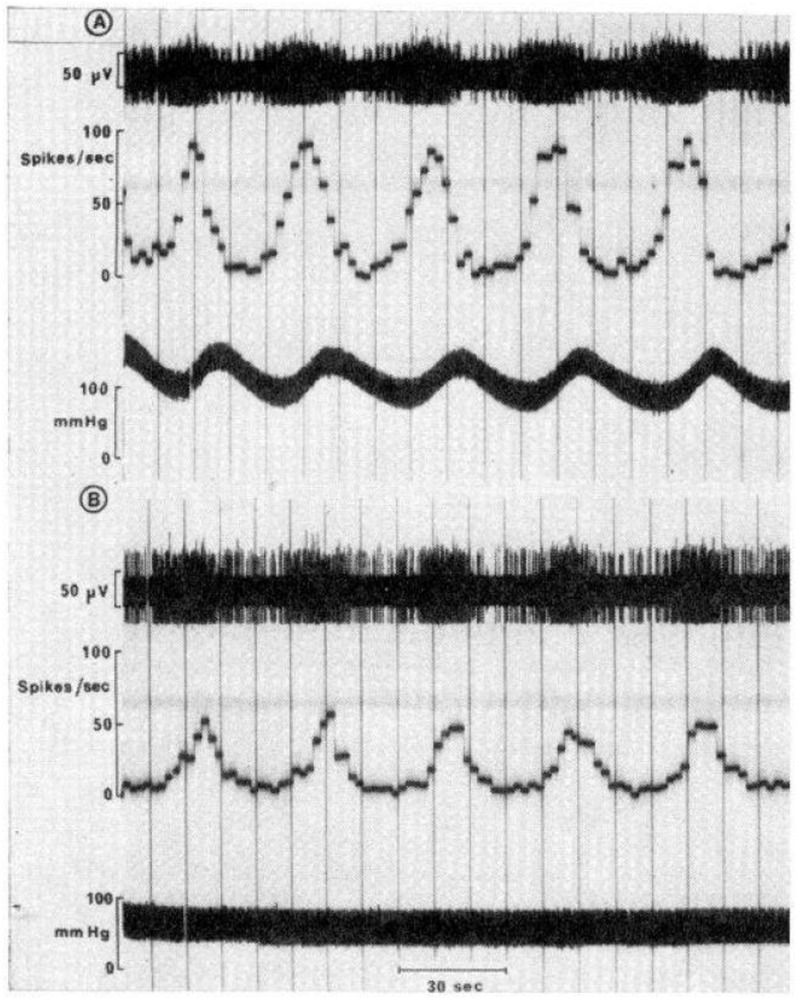
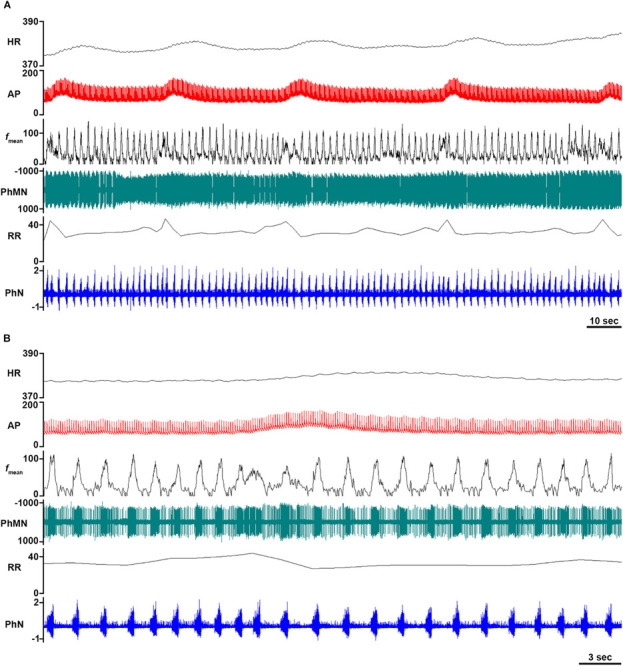
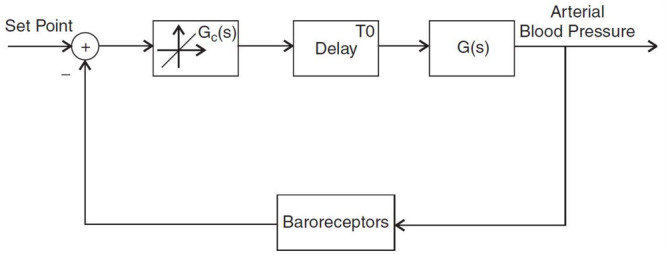
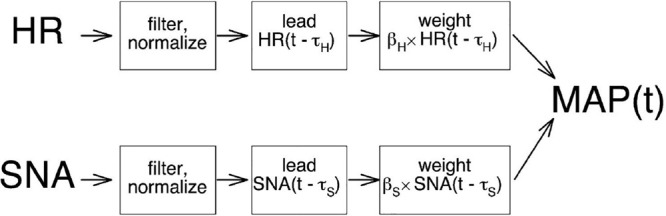
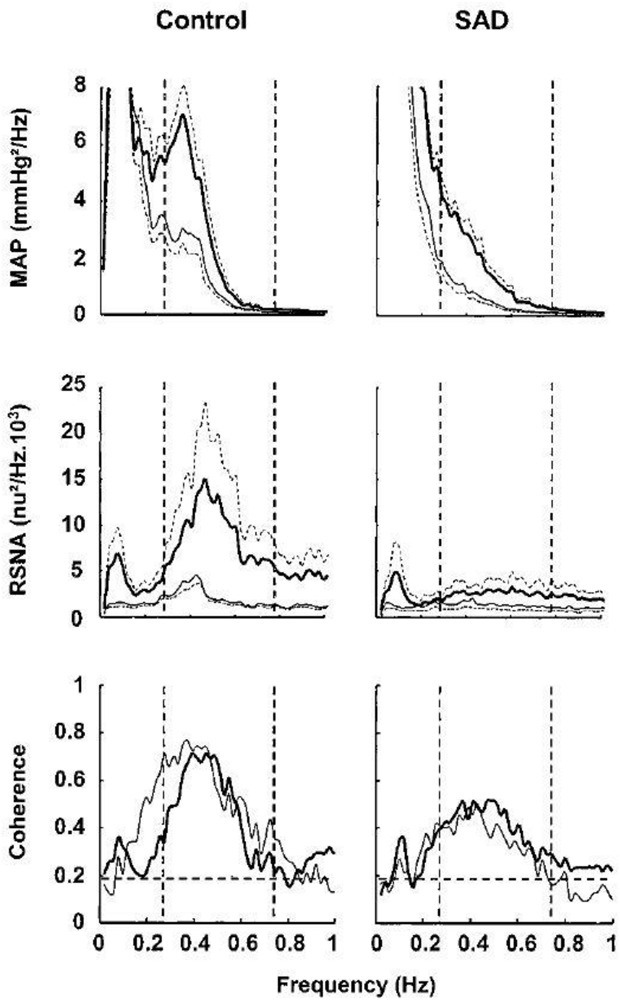
Mayer waves may synchronize overlapping propriobulbar interneuronal microcircuits constituting the respiratory rhythm and pattern generator, sympathetic oscillators, and cardiac vagal preganglionic neurons. Initially described by Sir Sigmund Mayer in the year 1876 in the arterial pressure waveform of anesthetized rabbits, authors have since extensively observed these oscillations in recordings of hemodynamic variables, including arterial pressure waveform, peripheral resistance, and blood flow. Authors would later reveal the presence of these oscillations in sympathetic neural efferent discharge and brainstem and spinal zones corresponding with sympathetic oscillators. Mayer wave central tendency proves highly consistent within, though the specific frequency band varies extensively across, species. Striking resemblance of the Mayer wave central tendency to the species-specific baroreflex resonant frequency has led the majority of investigators to comfortably presume, and generate computational models premised upon, a baroreflex origin of these oscillations. Empirical interrogation of this conjecture has generated variable results and derivative interpretations. Sinoaortic denervation and effector sympathectomy variably reduces or abolishes spectral power contained within the Mayer wave frequency band. Refractorines of Mayer wave generation to barodeafferentation lends credence to the hypothesis these waves are chiefly generated by brainstem propriobulbar and spinal cord propriospinal interneuronal microcircuit oscillators and likely modulated by the baroreflex. The presence of these waves in unitary discharge of medullary lateral tegmental field and rostral ventrolateral medullary neurons (contemporaneously exhibiting fast sympathetic rhythms [2-6 and 10 Hz bands]) in spectral variability in vagotomized pentobarbital-anesthetized and unanesthetized midcollicular (i.e., intercollicular) decerebrate cats supports genesis of Mayer waves by supraspinal sympathetic microcircuit oscillators. Persistence of these waves following high cervical transection in vagotomized unanesthetized midcollicular decerebrate cats would seem to suggest sympathetic microcircuit oscillators generate these waves. The widespread presence of Mayer waves in brainstem sympathetic-related and non-sympathetic-related cells would seem to betray a general tendency of neurons to oscillate at this frequency. We have thus presented an extensive and, hopefully cohesive, discourse evaluating, and evolving the interpretive consideration of, evidence seeking to illumine our understanding of origins of, and insight into mechanisms contributing to, the genesis of Mayer waves. We have predicated our arguments and conjectures in the substance and matter of empirical data, though we have occasionally waxed philosophical beyond these traditional confines in suggesting interpretations exceeding these limits. We believe our synthesis and interpretation of the relevant literature will fruitfully inspire future studies from the perspective of a more intimate appreciation and conceptualization of network mechanisms generating oscillatory variability in neuronal and neural outputs. Our evaluation of Mayer waves informs a novel set of disciplines we term quantum neurophysics extendable to describing subatomic reality. Beyond informing our appreciation of mechanisms generating sympathetic oscillations, Mayer waves may constitute an intrinsic property of neurons extant throughout the cerebrum, brainstem, and spinal cord or reflect an emergent property of interactions between arteriogenic and neuronal oscillations.
迈尔波可能会使构成呼吸节律和模式发生器、交感振荡器以及心脏迷走神经节前神经元的重叠固有延髓中间神经元微电路同步。1876年,西格蒙德·迈尔爵士最初在麻醉兔的动脉压波形中描述了这些波,此后作者们在包括动脉压波形、外周阻力和血流在内的血流动力学变量记录中广泛观察到了这些振荡。作者们后来发现这些振荡存在于交感神经传出放电以及与交感振荡器相对应的脑干和脊髓区域。迈尔波的中心趋势在物种内部高度一致,不过其特定频段在不同物种间差异很大。迈尔波中心趋势与物种特异性压力反射共振频率惊人地相似,这使得大多数研究者欣然假定并建立了基于压力反射起源的这些振荡的计算模型。对这一推测的实证研究产生了不同的结果和衍生解释。去窦弓神经支配和效应器交感神经切除术会不同程度地降低或消除迈尔波频段内的频谱功率。迈尔波产生对压力感受器传入的不应性支持了这些波主要由脑干固有延髓和脊髓固有脊髓中间神经元微电路振荡器产生且可能受压力反射调节的假说。在切断迷走神经的戊巴比妥麻醉和未麻醉的中脑间(即中脑间)去大脑猫中,延髓外侧被盖区和延髓头端腹外侧神经元的单位放电中存在这些波(同时呈现快速交感节律[2 - 6和10赫兹频段]),这支持了脊髓上交感微电路振荡器产生迈尔波。在切断迷走神经的未麻醉中脑间去大脑猫中,高颈段横断后这些波仍持续存在,这似乎表明交感微电路振荡器产生了这些波。迈尔波在脑干交感相关和非交感相关细胞中的广泛存在似乎表明神经元有以这个频率振荡的普遍趋势。因此,我们进行了广泛且有望具有连贯性的论述,评估并发展了对证据的解释性思考,这些证据旨在阐明我们对迈尔波起源的理解以及对其产生机制的洞察。我们的论点和推测基于实证数据的实质内容,不过在提出超出这些传统界限的解释时,我们偶尔也会进行一些哲学思考。我们相信,我们对相关文献的综合与解释将从更深入理解和概念化产生神经元和神经输出振荡变异性的网络机制的角度,富有成效地激发未来的研究。我们对迈尔波的评估为我们称为量子神经物理学的一组新学科提供了信息,该学科可扩展用于描述亚原子现实。除了有助于我们理解产生交感振荡的机制外,迈尔波可能是整个大脑、脑干和脊髓中神经元的固有属性,或者反映了动脉源性振荡和神经元振荡之间相互作用的涌现属性。